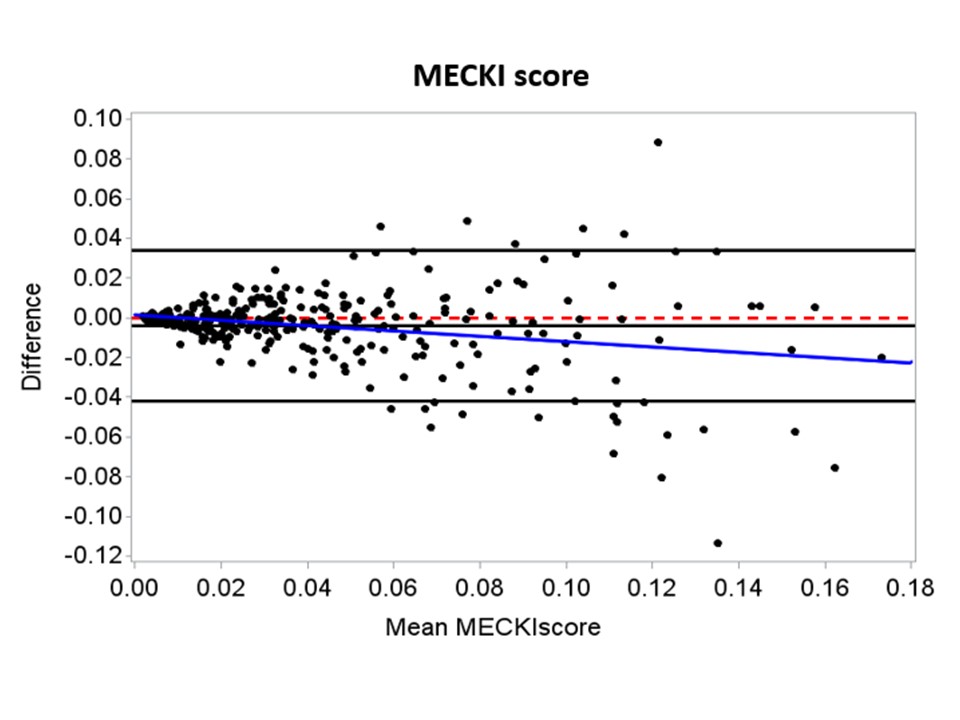
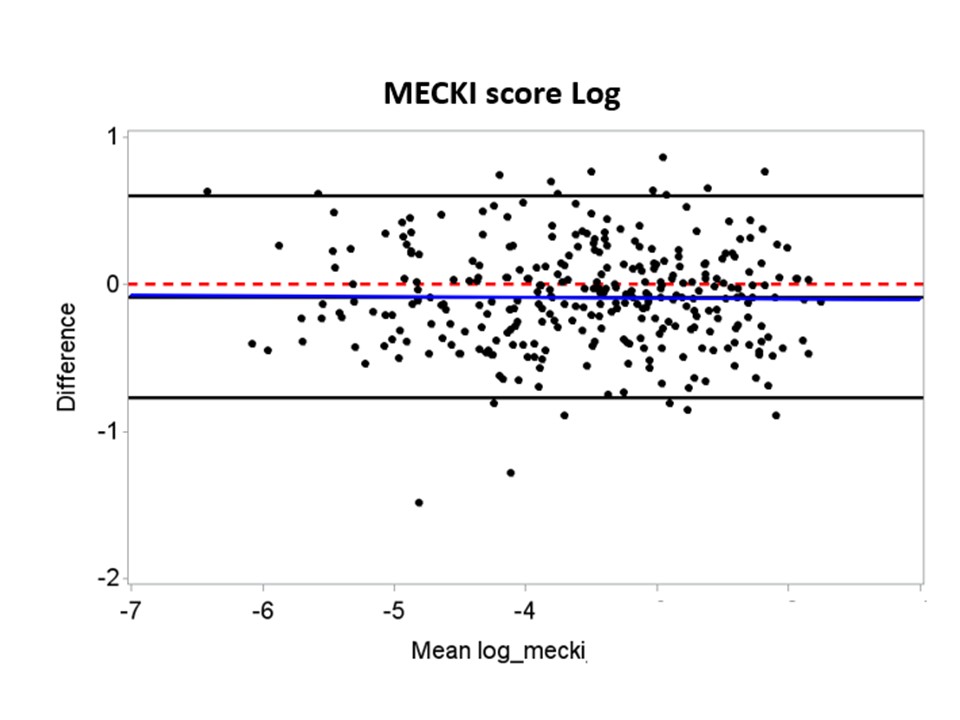
Background. Cardiopulmonary exercise testing (CPET) provides several prognostic parameters in patients with heart failure (HF), including peak VO₂, VE/VCO₂ slope, and anaerobic threshold (AT). However, the reproducibility of these variables may be affected by effort-dependence, operator variability, and methodological issues. Since the MECKI score integrates CPET with laboratory and echocardiographic parameters, understanding its short-term variability is crucial to distinguish random fluctuations from clinically meaningful changes. Aim. This study aimed to assess the short-term variability of the MECKI score and its individual components in patients with heart failure with reduced ejection fraction (HFrEF), to define thresholds that separate biological variability from true clinical change. Methods. We prospectively enrolled 404 HFrEF patients (LVEF <40%) across four Italian HF centers. All patients underwent two CPETs approximately one week apart, with laboratory and echocardiographic data collected at both time points. The MECKI score and its components (peak VO₂, VE/VCO₂ slope, hemoglobin, serum sodium, LVEF, and eGFR) were calculated for each test. Patients with conditions introducing excessive variability (e.g., dialysis) were excluded. Variability was assessed by comparing repeated measures and calculating intra-patient differences. Results. The study population had a mean age of 65±12 years, 83.4% were male, and HF etiology was ischemic in 46% and non-ischemic in 47%. Medical therapy was in line with contemporary guidelines (ACEi/ARB/ARNI 96%, beta-blockers 95%, SGLT2i 83%, MRA 82%). At baseline, AT was not identifiable in 45 patients, and in 53 patients at the second test; 331 patients had AT consistently identified in both tests and were included in the main analysis. Periodic breathing was observed in 48 cases at the first and 45 at the second test. Across the study population, short-term variability of MECKI score values was low (Figure 1): mean difference (bias) was -0.004, with limits of agreement ranging from -0.042 to 0.034, indicating good agreement within the expected variability of the variable Conclusion. The MECKI score shows high short-term reproducibility in ambulatory HFrEF patients. These findings reinforce the reliability of the MECKI score in clinical practice and research, supporting its use as a stable prognostic tool for heart failure patients.