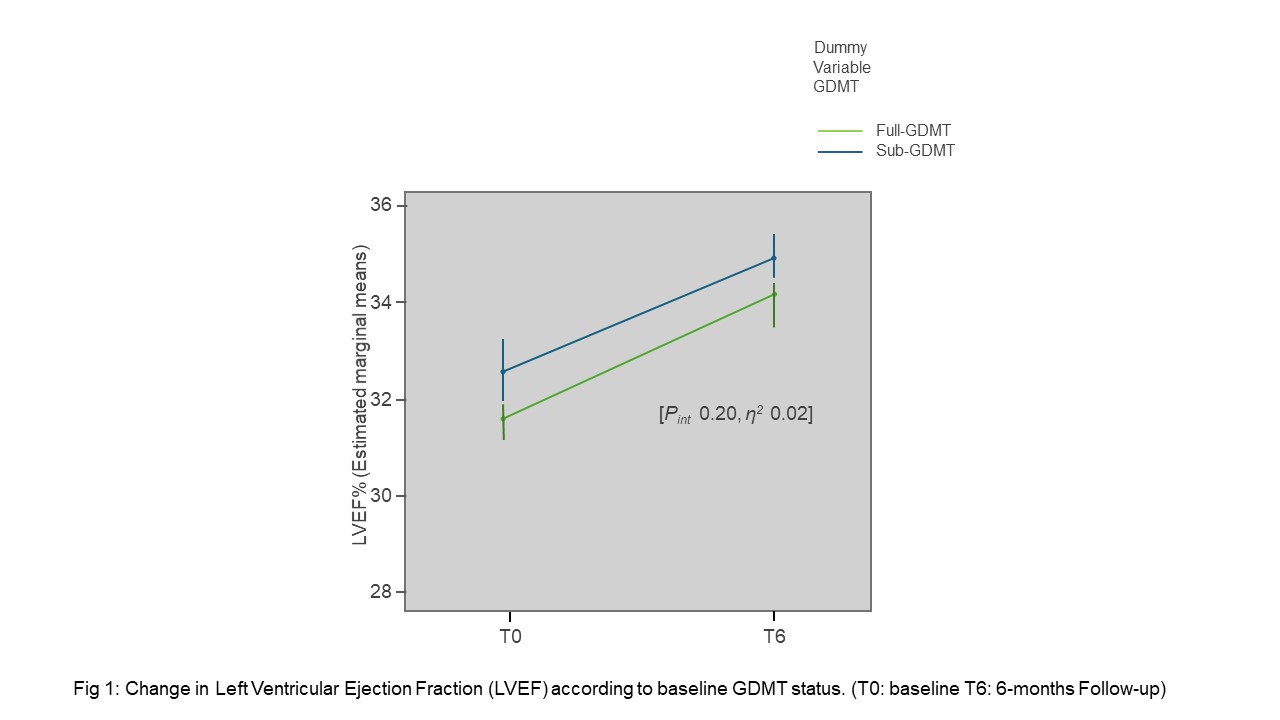
Background: Vericiguat, a soluble guanylate cyclase (sGC) stimulator, has demonstrated a significant reduction in cardiovascular events in heart failure with reduced ejection fraction (HFrEF). While recent real-world evidence suggests its potential to promote structural reverse remodeling, it remains debated whether its impact on structural remodeling is a synergistic effect with optimized medical therapy (based on the "four pillars" or GDMT), or if the drug promotes myocardial recovery through an independent pathway. We investigated whether the improvement in Left Ventricular Ejection Fraction (LVEF) after vericiguat initiation is influenced by the degree of baseline GDMT optimization. Methods: We performed a longitudinal analysis of 72 HFrEF patients (LVEF < 40%) treated with vericiguat. At baseline, patients were stratified into two groups according to their therapeutic status: Full-GDMT (presence of all four pillars: ARNI/ACEi, Beta-blockers, MRA, and SGLT2i) and Sub-optimal GDMT (absence of at least one of the four pillars). The primary objective was to compare the 6-month change in LVEF ( Δ LVEF) between these two groups to determine if the effect of vericiguat was linked to the pre-existing therapeutic regimen. Results: At 6 months, mean LVEF significantly increased across the entire cohort (from 31.9 ± 2.1% to 34.2 ± 3.1%; p < 0.01). Crucially, no significant difference was found in the magnitude of LVEF recovery between the two groups: the mean increase in LVEF was 3.1 ± 0.8% in the Full-GDMT group and 2.9 ± 0.8% in the Sub-optimal GDMT group. A two-way ANOVA confirmed that the structural benefit of vericiguat was consistent across both groups, showing no significant interaction between treatment effect and baseline therapy status ( P for interaction = 0.20, η 2 = 0.02 ). Conclusions: Our findings demonstrate that vericiguat-induced reverse remodeling does not depend on the degree of optimization of the "four pillars" at the time of treatment initiation. This suggests that sGC stimulation triggers a distinct and autonomous pathway for myocardial recovery, providing consistent structural benefits even in patients who have not yet achieved full target GDMT.