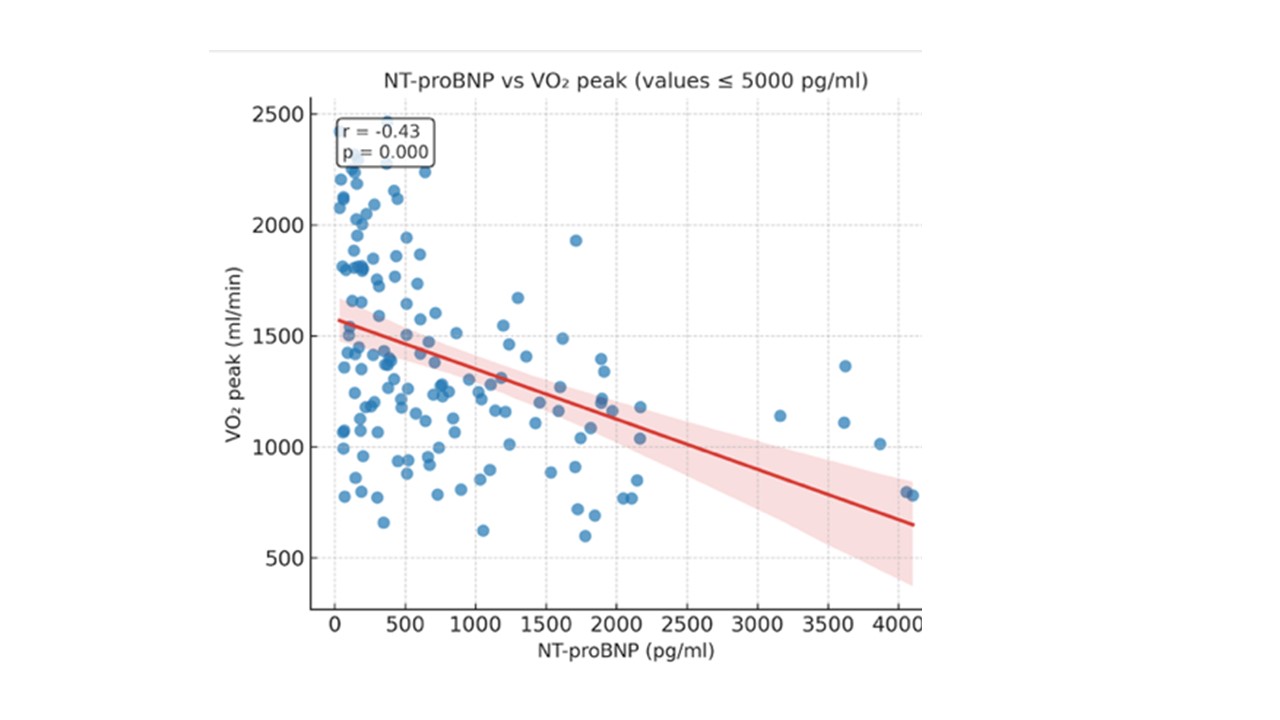
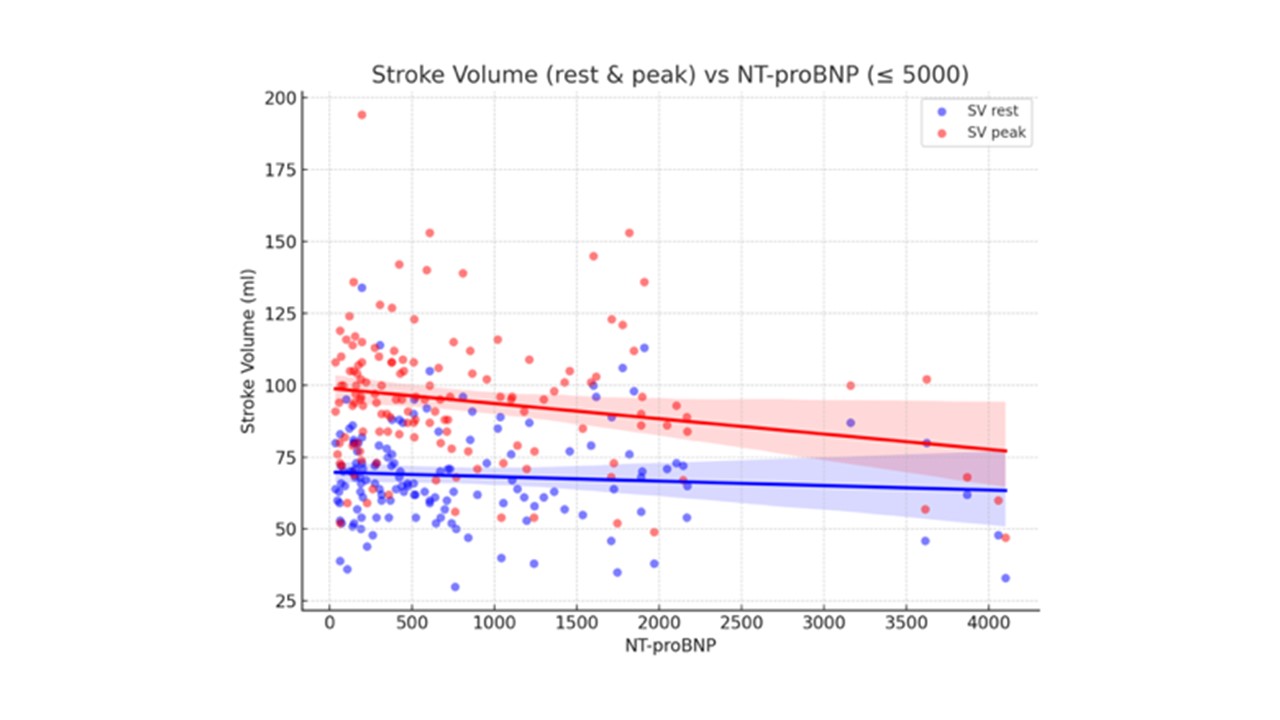
BACKGROUND: N-terminal pro-B-type natriuretic peptide (NT-proBNP) is a well-established biomarker in heart failure (HF), reflecting ventricular filling pressures and neurohormonal activation. Although it is widely used for risk stratification, its relationship with dynamic parameters derived from cardiopulmonary exercise testing (CPET) and with contractile reserve has not been fully clarified. METHODS: 174 patients (66.4±11.3 y/o; LVEF 40.5±9.3%) with HFrEF and HFimpEF undergoing CPET with non-invasive cardiac output monitoring (Physioflow), baseline echocardiography, and laboratory testing. In addition to standard ventilatory parameters, left ventricular ejection fraction (LVEF), heart rate response (ΔHR), and stroke volume increment (ΔSV) were assessed. Correlations between NT-proBNP and functional variables were assessed using Pearson’s coefficient. RESULTS : Higher NT-proBNP levels were significantly associated with impaired hemodynamic reserve. NT-proBNP correlated inversely with ΔSV (r = –0.21; p = 0.01) and with ΔHR (r = –0.40; p < 0.001), indicating reduced contractile and chronotropic reserve. Impaired hemodynamic reserve translated into a significantly reduced overall performance: peak oxygen uptake (pVO₂) was inversely related to NT-proBNP (r = –0.37, p < 0.001). In addition, higher NT-proBNP levels were associated with greater ventilatory inefficiency, expressed by VE/VCO₂ slope (r = +0.39; p < 0.001). By contrast, LVEF at rest showed only a weak and non-significant correlation with NT-proBNP (r ≈ –0.15). CONCLUSION : NT-proBNP is strongly associated with impaired chronotropic and contractile reserve, reduced aerobic capacity, and ventilatory inefficiency. Interestingly, our data suggest the rest LVEF is not related to NTproBNP suggesting a reduced prognostic power compared to functional variables. These findings suggest that the combined use of CPET and NT-proBNP enables more accurate risk stratification in patients with HF, providing a comprehensive approach that unites biochemical and physiological data.