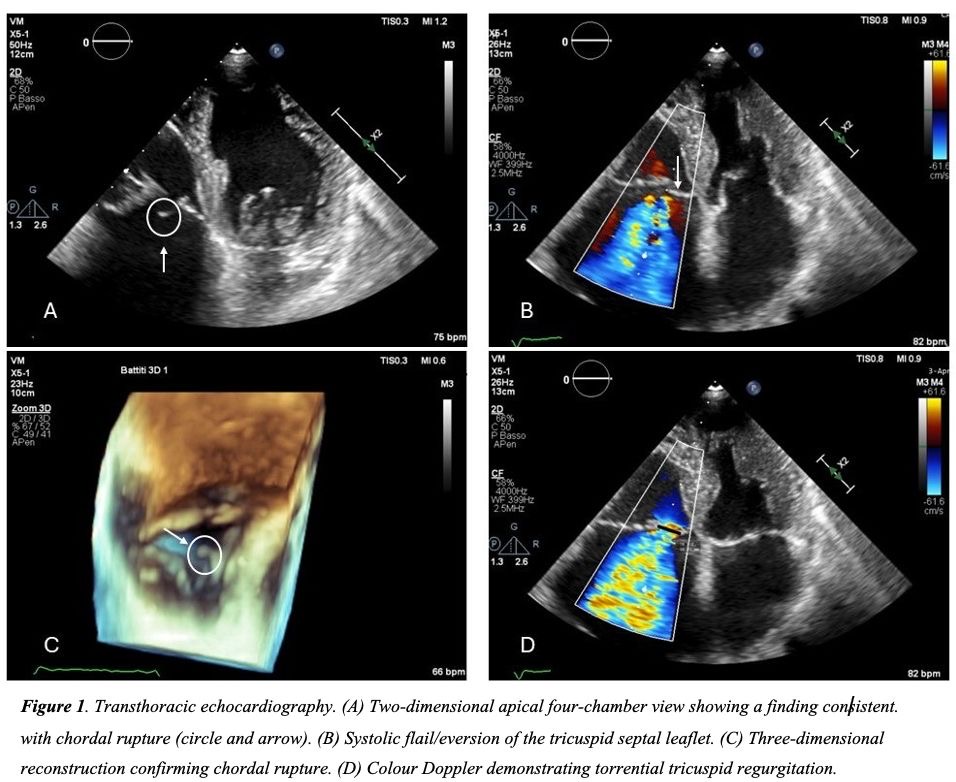
Background: Severe tricuspid regurgitation is increasingly recognised as an independent driver of right-sided heart failure. Primary (organic) mechanisms are uncommon, and isolated chordal rupture leading to a flail leaflet is exceptional. Case: An 81-year-old patient was admitted for pacemaker generator replacement and presented with peripheral oedema, painful hepatomegaly and ascites. Transthoracic echocardiography showed marked right-sided chamber dilatation, right ventricular volume overload with diastolic D-shaped left ventricle, and torrential tricuspid regurgitation, without significant left-sided valve disease or ventricular dysfunction. Targeted assessment excluded an interatrial shunt. Dedicated valve views and three-dimensional imaging demonstrated a flail septal leaflet due to isolated chordal rupture, with no echocardiographic signs of active endocarditis. Discussion: Defining the mechanism of tricuspid regurgitation is crucial to guide timing and selection of intervention. Although surgery is recommended for symptomatic severe primary tricuspid regurgitation when right ventricular function and end-organ status are still preserved, advanced age and comorbidity often confer prohibitive risk. Contemporary transcatheter options, including edge-to-edge repair and emerging tricuspid valve replacement systems, may represent a valuable alternative in selected patients. Conclusion: Isolated chordal rupture of the tricuspid valve, though rare, can cause massive regurgitation and advanced right heart failure. Comprehensive echocardiographic mechanistic assessment is essential to identify candidates for surgical or transcatheter treatment.