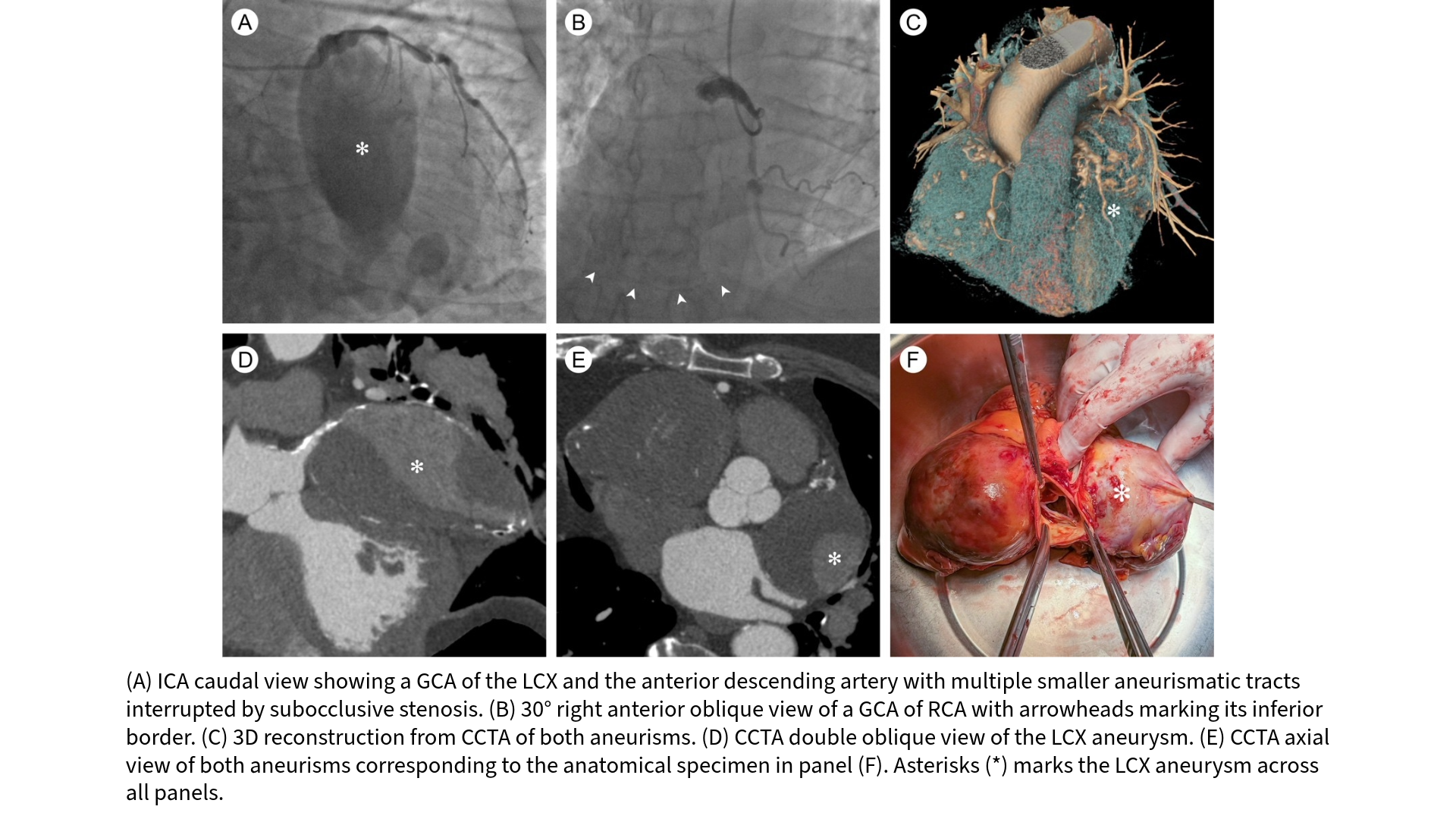
Background Coronary artery aneurysms (CAA) are uncommon (0.3–5% in angiographic series). Giant forms—defined as dilations >8 mm or >4× the normal adjacent diameter—are exceptional and lack standardized management. In adults with complex anatomy, therapeutic options (medical, percutaneous, or surgical) may be limited. To date, no cases of heart transplant as primary treatment for giant CAAs in adult patients have been reported. Case report We describe a 62-year-old man with chronic ischemic cardiomyopathy presenting with angina and dyspnea on minimal exertion. Coronary angiography and computed tomography angiography revealed giant aneurysms of the right coronary artery (77×71 mm) and circumflex artery (59×61 mm), both with extensive thrombosis and compressive effects on adjacent structures. The left anterior descending artery was chronically occluded. The absence of distal graftable vessels made coronary artery bypass grafting unfeasible, and the massive aneurysm size precluded percutaneous intervention. Following a multidisciplinary evaluation, the patient underwent orthotopic heart transplantation in June 2024. The postoperative course was complicated by transient renal failure requiring temporary dialysis, but the patient was discharged after five weeks with preserved graft function. At follow-up, endomyocardial biopsies excluded rejection, echocardiography confirmed preserved biventricular function, and exercise tolerance significantly improved. Discussion Giant CAAs involving multiple vessels with extensive thrombosis represent a rare and challenging condition. Literature mainly includes isolated reports describing surgical resection or bypass when suitable distal targets are available, or percutaneous exclusion using covered stents in selected anatomies. These strategies are not feasible with very large aneurysms, absence of graftable branches, and compressive effects. Pediatric experience includes transplantation for ischemic cardiomyopathy due to Kawasaki disease, but evidence in adults is virtually absent. This case suggests that heart transplantation may be a viable therapeutic option in extreme scenarios. Conclusions When conventional revascularization is impossible, heart transplantation may represent an effective strategy for adults with non-operable giant CAAs. This case underscores the role of multidisciplinary assessment, the importance of multimodality imaging, and the need to expand the scarce evidence on this rare condition.