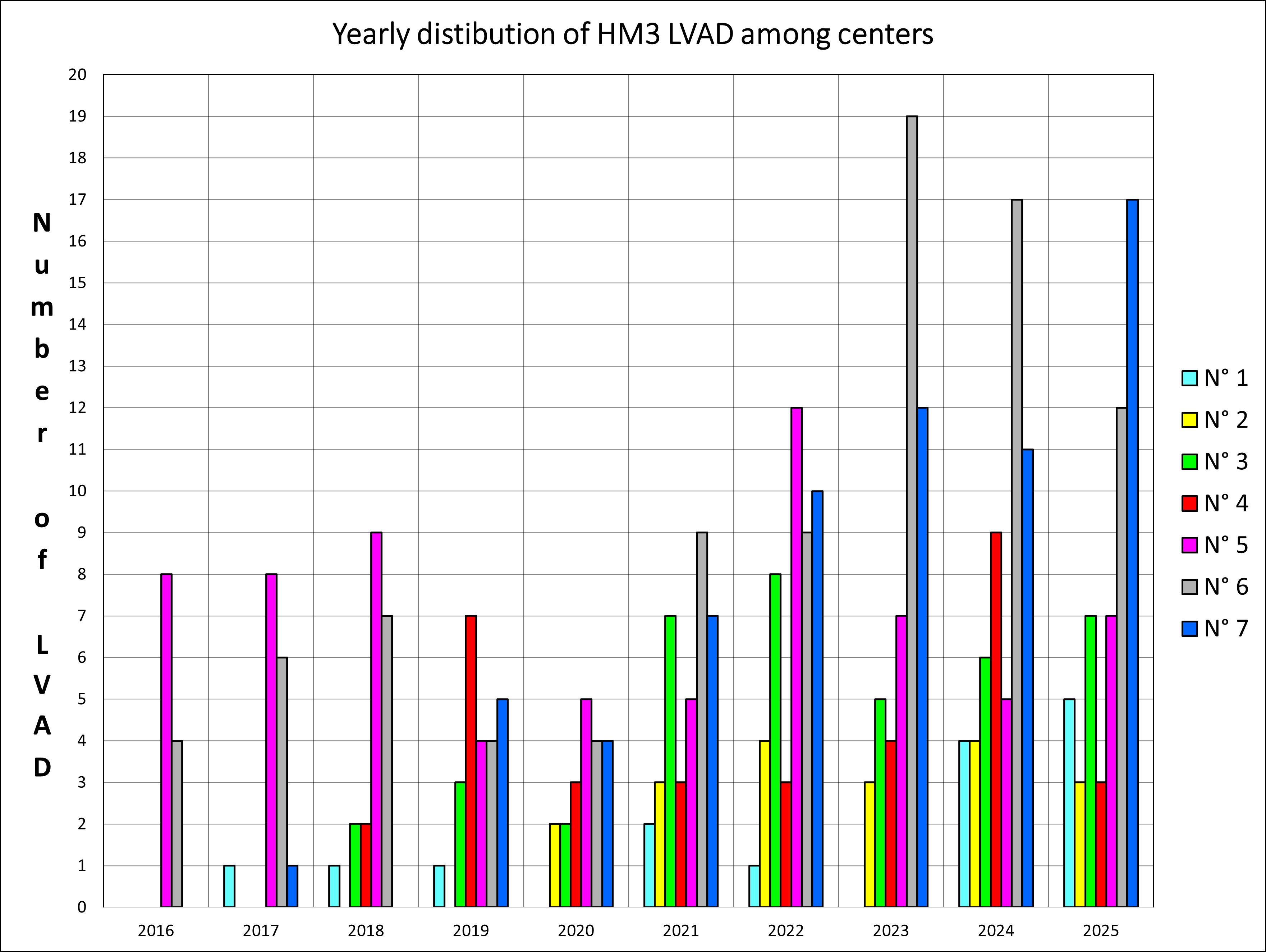
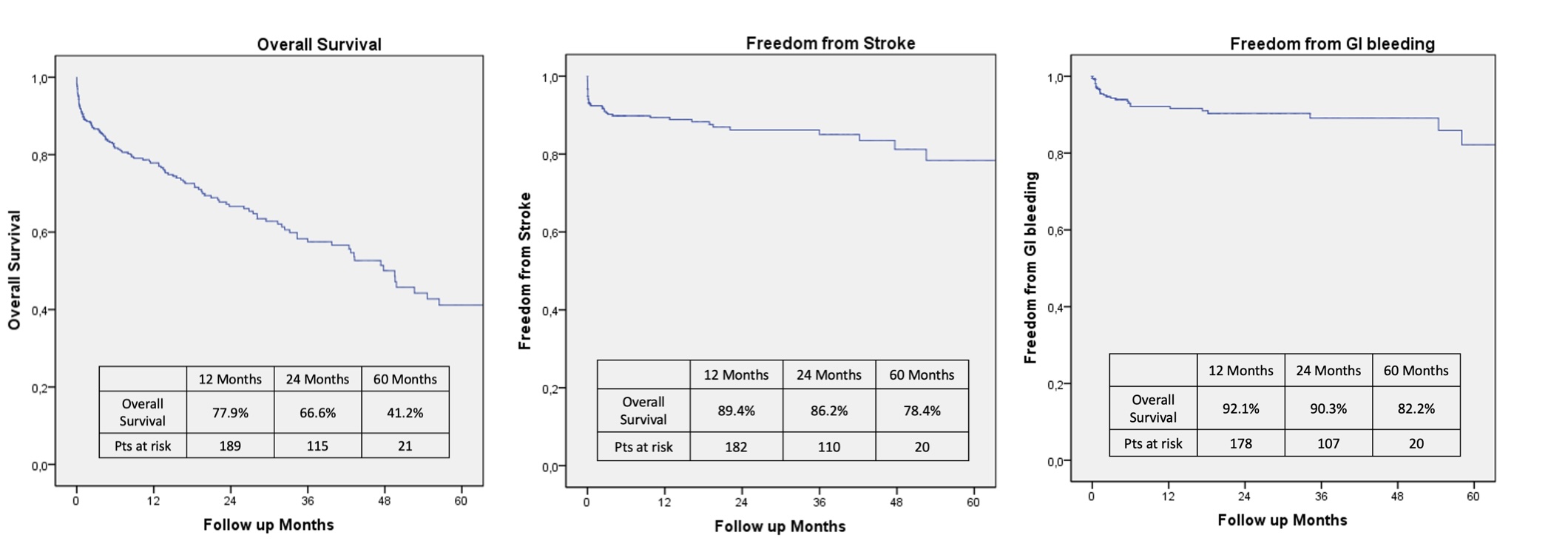
BACKGROUD: Research and expert consensus indicate that durable mechanical circulatory support ( d MCS) with Left Ventricular Assist Device (LVAD) therapy is significantly underestimated and underutilized in Italy compared to other European countries and North America. Our retrospective multicenter experience aims to describe the current state of art in HM3 LVAD activity, reporting real world and contemporary outcomes in complex cohoorts of patients treated by centers with both Heart Transplantation (HTX) and MCS facilities. METHODS: Seven italian centers reported their experience with HM3 LVAD implantation from 2016 to 2025. Out of 674 patients receiving a dMCS, 336 (49.9%) were HM3 (297 males, 39 females, mean age 59.2y). Three centers performed more then 60 implantations while 4 less/equal than 40. Yearly distribution is shown in fig. 1. Ischemic CMP was present in 173 pts vs. 136 with an idiopathic disease. Ninety-two pts (27.4%) were in INTERMACS Class I-II; of these, all had IABP, 20 were under VA-ECMO and 14 with mAFP Impella. 27 patients had a previous sternotomy. HM3 was implanted as BTT in 134 patients, BTC in 71 pts and DT in 131. Mean LV EF was 21.1%. 105 patients had severe pulmonary hypertension. RESULTS: Full sternotomy was perfomed in 330 cases. In 33 patients implantation occurred on arrested heart. Associated procedures were performed in 71 cases (21.1%), with 19 left appendage closure and 17 aortic valve replacements. 27 pts required a temporary RVAD; of these, 10 died (37%). Mean ICU stay was 17.6 days. Eighty-four patients needed CVVH. There were 65 rethoracotomy for bleeding. In -hospital mortality was 15.2%. Twelve, 24 and 60 months survival was 77.9, 66.6 and 41.2%. At FU, 54 pts underwent HTX. One-hundredheightyseven pts were re-admitted; 127 had a driveline infection while pump thrombosis was observed in 4 patients (4.2%). Freedom from Stroke and gastro-intestinal bleeding at 5 years were respectively 78.4% and 82.2% (fig. 2). CONCLUSIONS: Absolute numbers of HM3 LVAD implantation are still low in Italy with increasing trends in the last years. Despite a very compromised population, our multicenter experience shows excellent outcomes with low rates of major complications and a previously unimaginable medium-longterm survival. Due to the great reliability of th is unique available device , we advocate an expansion of knowledge about LVAD to i mplement nation a l r eferral and the number of implantations with the aim to bridge the gap.