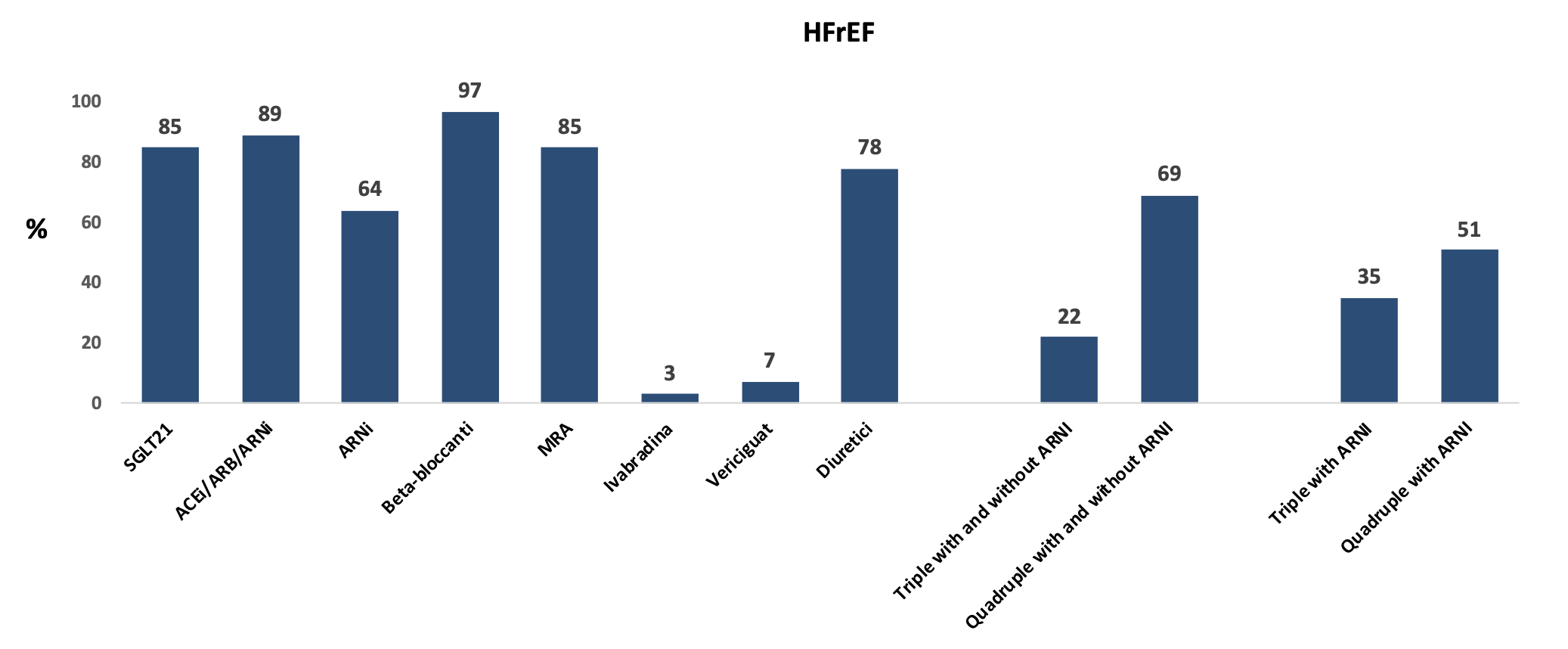
Background & Study Aim: The PONTE SC/SCA registry was designed to evaluate the outcomes of a structured outpatient follow-up program integrating hospital and community care for patients with heart failure (HF) or those recently hospitalized for acute coronary syndrome (ACS). The aim of the present study was to analyze one of the main process indicators of the registry in HF patients, namely prescribed pharmacological therapy, with particular focus on the use of angiotensin-converting enzyme inhibitors (ACEi), angiotensin receptor blockers (ARB), angiotensin receptor–neprilysin inhibitors (ARNI), beta-blockers, mineralocorticoid receptor antagonists (MRA), and sodium–glucose co-transporter 2 inhibitors (SGLT2i) in patients with heart failure with reduced ejection fraction (HFrEF). Methods and Results. Between January 2024 and September 2025, 1,203 patients were enrolled, including 496 with HFrEF. As shown in the figure, following enrollment, ACEi/ARB/ARNI were prescribed in 89% of cases (ARNI in 64%), beta-blockers in 97%, MRA in 85%, and SGLT2i in 85% of patients. Quadruple therapy with and without ARNI was prescribed in 69% and 51% of cases, respectively. Conclusions. The PONTE SC/SCA registry demonstrates effective optimization of medical therapy in patients with HFrEF. Achievement of this key process indicator reflects the high quality of care provided by the regional network of heart failure outpatient clinics in the Apulia region and confirms the value of the registry as a tool for analyzing and optimizing diagnostic and therapeutic pathways in heart failure patients.