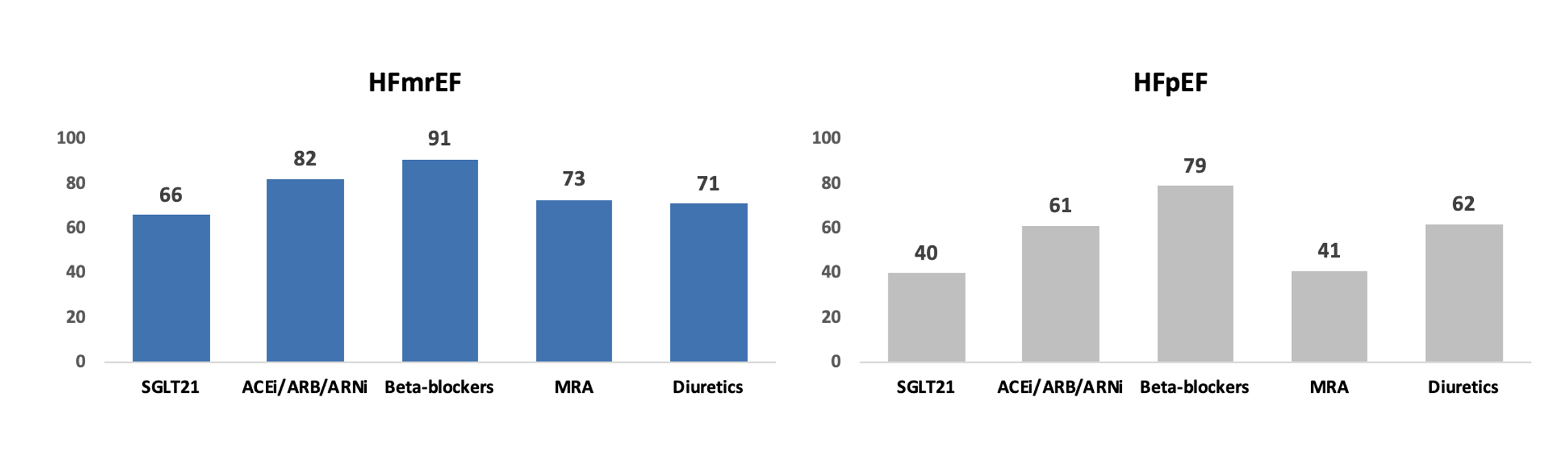
Background & Study Aim. In recent years, significant progress has been made not only in the treatment of heart failure with reduced ejection fraction (HFrEF) but also in patients with mildly reduced (HFmrEF) and preserved ejection fraction (HFpEF). This study aimed to evaluate the management of HFmrEF and HFpEF patients within the PONTE SC/SCA registry. Methods and Results. Between January 2024 and September 2025, 1,203 patients were enrolled, including 189 with HFmrEF and 302 with HFpEF. Prescribed pharmacological therapy was analyzed, focusing on angiotensin-converting enzyme inhibitors (ACEi), angiotensin receptor blockers (ARB), angiotensin receptor–neprilysin inhibitors (ARNI), beta-blockers, mineralocorticoid receptor antagonists (MRA), and sodium–glucose co-transporter 2 inhibitors (SGLT2i). As shown in the figure, ACEi/ARB/ARNI, beta-blockers, and MRA were prescribed in a high proportion of cases, whereas SGLT2i use was more limited, particularly among HFpEF patients. Conclusions. The PONTE SC/SCA registry demonstrates partial optimization of therapy in HFmrEF and HFpEF patients, especially regarding SGLT2i use. These findings provide valuable insights for further improving diagnostic and therapeutic pathways in heart failure and highlight the importance of a regional registry as a tool for monitoring and optimizing patient care.