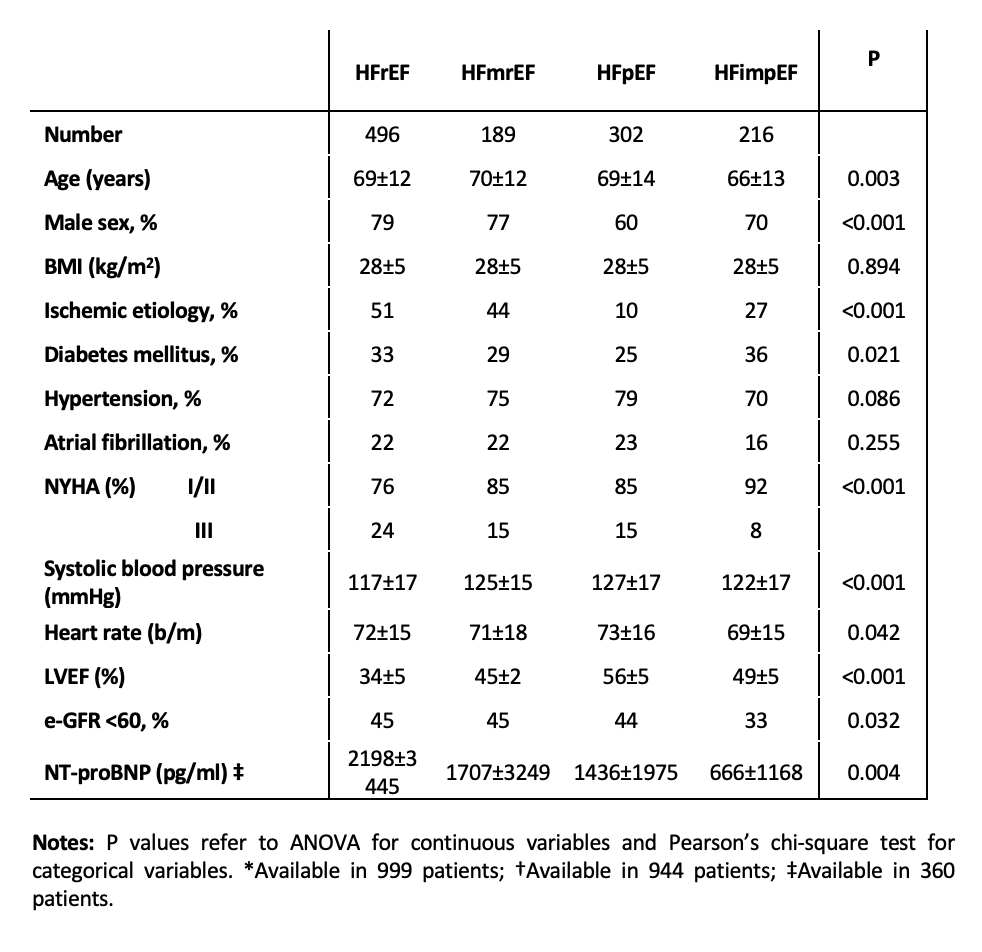
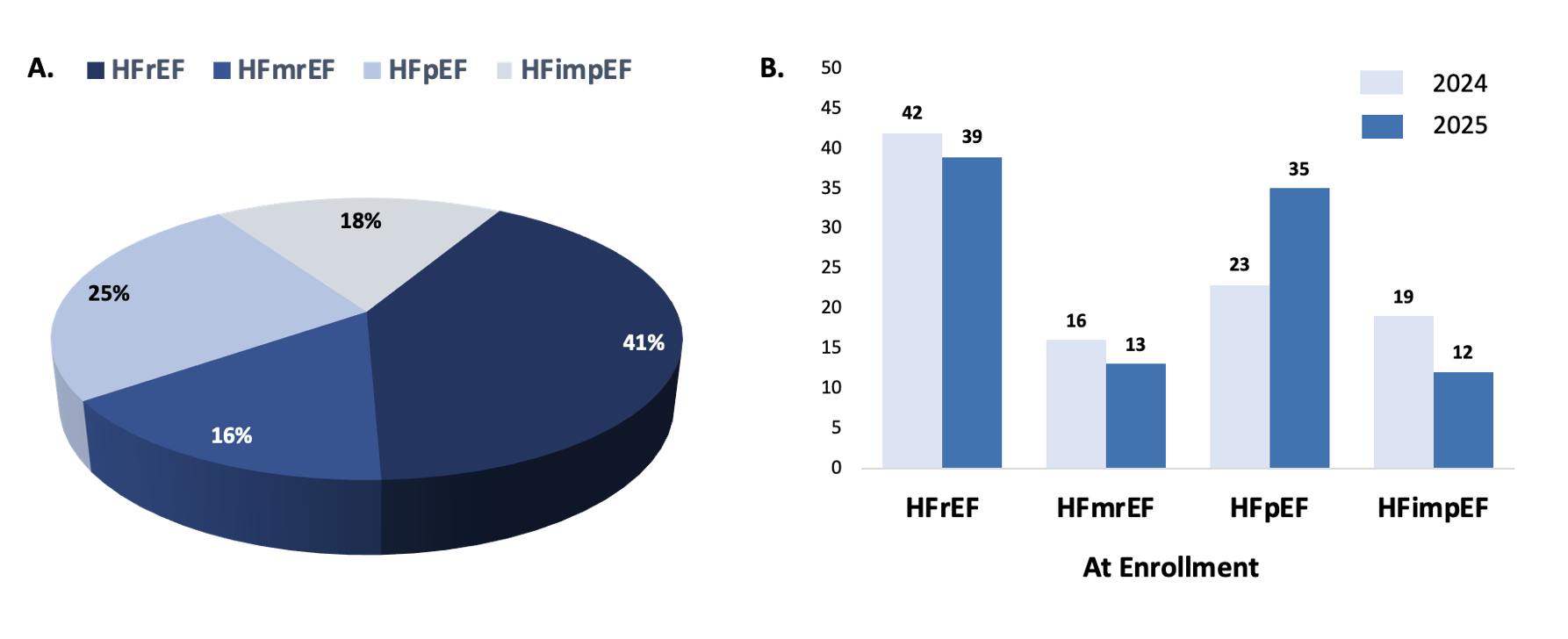
Background & Study Aim. The observational PONTE SC/SCA registry was designed to evaluate the effectiveness of integrated hospital-to-community care pathways for patients with heart failure (HF) or those recently hospitalized for acute coronary syndrome (ACS). This study aimed to describe the baseline characteristics of patients with HF enrolled in the registry. Methods and Results. Between January 2024 and September 2025, 1,203 patients were enrolled, including 496 (41%) with heart failure with reduced ejection fraction (HFrEF), 189 (16%) with mildly reduced ejection fraction (HFmrEF), 302 (25%) with preserved ejection fraction (HFpEF), and 216 (18%) with improved ejection fraction (HFimpEF) (Fig. A). From 2024 to 2025, an increasing trend in HFpEF diagnoses was observed, rising from 23% to 35%, likely reflecting improved diagnostic accuracy (Fig. B). As shown in the table, HFrEF patients were more frequently diabetic, had greater functional limitation, and lower systolic blood pressure. HFpEF patients were more often female, reduced estimated glomerular filtration rate (e-GFR), and a lower prevalence of ischemic heart disease. HFimpEF patients were younger, with less functional limitation, lower heart rate, better renal function, and lower NT-proBNP levels. Conclusions. The PONTE SC/SCA registry demonstrates a predominance of care for patients with HFrEF and HFimpEF among the participating outpatient clinics. Analysis of these data and the clinical characteristics of enrolled patients provides valuable insights for further optimization of patient management and diagnostic-therapeutic pathways in heart failure.