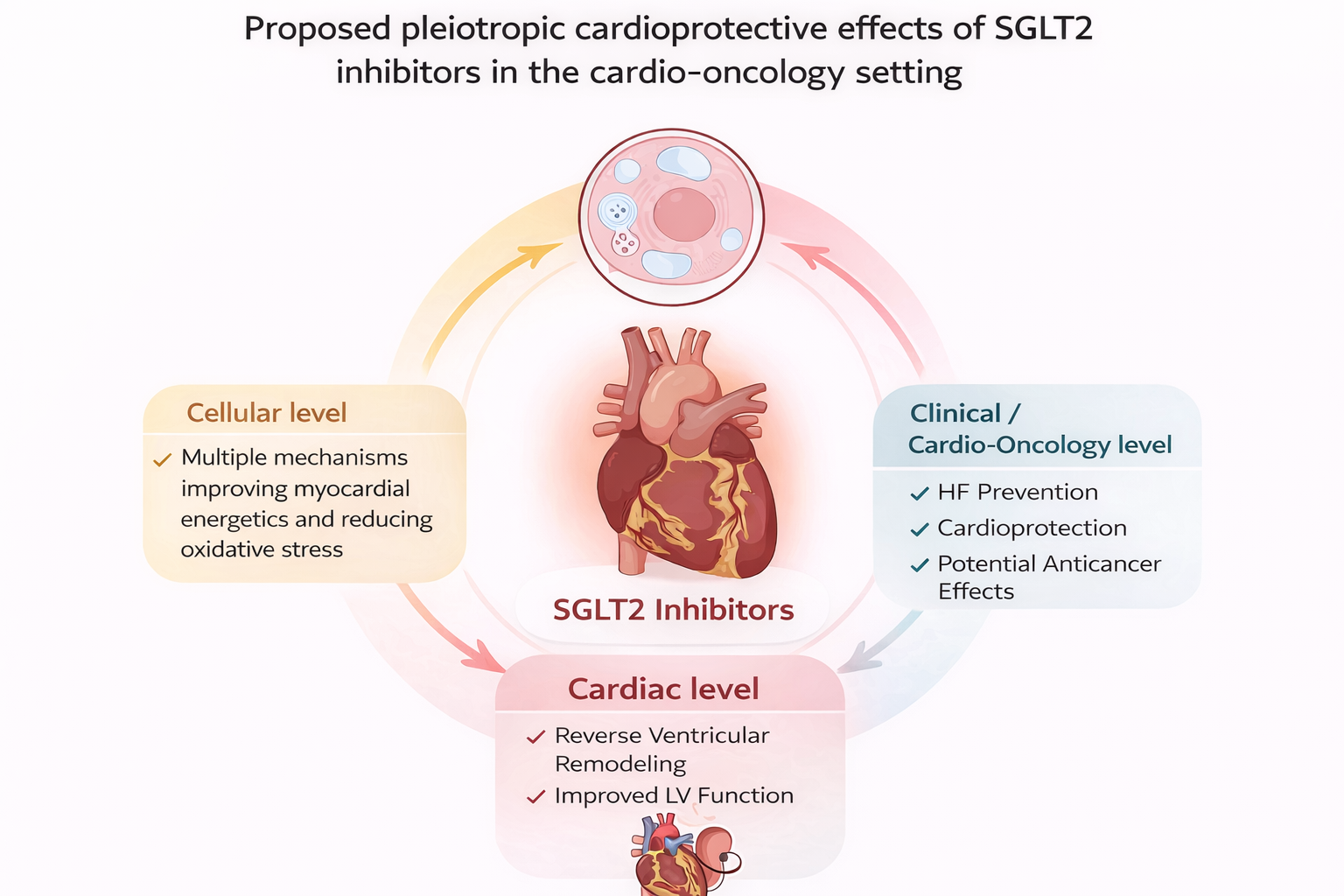
Cardiotoxicity is a frequent and clinically relevant complication of cancer therapies and may result in heart failure, even years after oncological treatment. Anthracycline-containing regimens and chest radiotherapy are well-known contributors to cancer therapy–related cardiac dysfunction. Early recognition and optimization of heart failure therapy are essential to improve outcomes. Emerging evidence suggests a potential cardioprotective role of sodium–glucose cotransporter 2 (SGLT2) inhibitors in cardio-oncology. Case Summary We report the case of a 53-year-old male with a history of diffuse large B-cell lymphoma treated with R-CHOP regimen (last in December 2018), followed by chest radiotherapy (RT), who was admitted to the emergency department 5 years later for acute heart failure with secondary respiratory failure. Transthoracic echocardiography revealed severe left ventricular systolic dysfunction. The patient was subsequently enrolled in a cardiology outpatient program, where secondary causes of heart failure were investigated, and guideline-directed medical therapy was progressively optimized, including the introduction of an SGLT2 inhibitor. During follow-up, a marked clinical improvement was observed, with resolution of symptoms and progressive recovery of left ventricular systolic function from severely reduced values to near-normal levels. By August 2024, the left ventricular ejection fraction reached 50%. Discussion This case describes left ventricular dysfunction likely related to cancer therapy–associated cardiotoxicity in a patient treated with an anthracycline-based chemotherapy regimen and RT, followed by a meaningful recovery of systolic function after optimization of heart failure therapy. Beyond their established role in heart failure management, SGLT2 inhibitors are increasingly investigated in cardio-oncology due to pleiotropic cardioprotective effects demonstrated in experimental models of anthracycline-induced cardiotoxicity. In this case, the progressive recovery of left ventricular systolic function following optimization of heart failure therapy, including the introduction of an SGLT2 inhibitor, is consistent with the emerging role of these agents as a potential adjunctive strategy in the management of cancer therapy–related cardiac dysfunction. Although causality cannot be established from a single observation, this clinical course supports further investigation in the cardio-oncology setting.