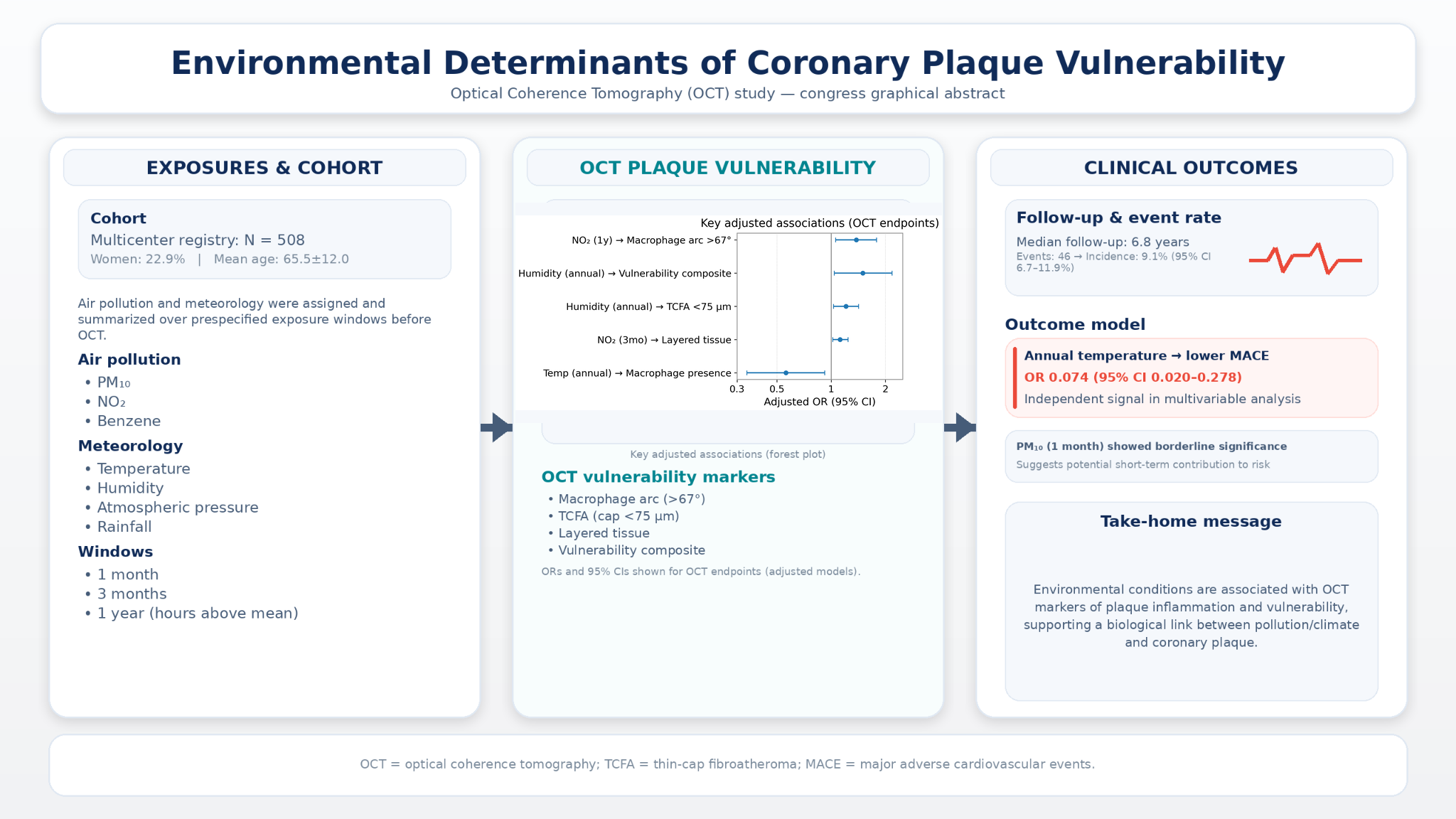
Background : Environmental exposures may trigger acute coronary events, but links with in vivo plaque microstructure remain unclear. We examined associations between air pollution/meteorological variables and optical coherence tomography (OCT) plaque vulnerability, and explored long-term outcomes. Methods : We retrospectively analyzed a registry of 508 patients undergoing coronary OCT (mean age 65.5±12.0 years; 22.9% women). Exposures to PM10, NO₂, benzene, and meteorological variables (temperature, humidity, pressure, rainfall) were summarized over prespecified windows preceding the index procedure. OCT was analyzed in a core laboratory. Regression models tested associations with OCT features, including a four-criterion vulnerability composite. Clinical outcomes were evaluated during follow-up. Results : Across OCT analyses (up to N=505), higher long-term NO₂ exposure (hours above mean over 1 year) was associated with a large macrophage arc (>67°) (adjusted OR 1.38, 95% CI 1.06–1.79). Lower annual temperature was associated with macrophage presence (OR 0.56, 95% CI 0.34–0.92). Higher annual humidity was associated with the vulnerability composite (OR 1.50, 95% CI 1.04–2.18) and with TCFA (<75 μm) (OR 1.21, 95% CI 1.03–1.42). NO₂ over 3 months was associated with layered tissue (adjusted OR 1.12, 95% CI 1.02–1.24). Over a median follow-up of 6.8 years, 46 events occurred (incidence 9.1%, 95% CI 6.7–11.9%). In multivariable outcome models, annual temperature remained inversely associated with MACE (OR 0.074, 95% CI 0.020–0.278), whereas PM10 over 1 month showed borderline significance. Conclusions :Environmental exposures, including traffic-related air pollution and climate-related variables, were associated with in vivo OCT signatures of plaque inflammation and vulnerability. The observed relationships with macrophage arc, TCFA, layered tissue, and the vulnerability composite suggest that chronic ambient conditions may influence plaque biology beyond traditional risk factors. Furthermore, long-term temperature exposure was independently associated with incident MACE during follow-up, highlighting the potential prognostic relevance of environmental profiling. These findings support integrating environmental data into cardiovascular risk assessment and motivate prospective studies to confirm causality and identify modifiable exposure windows.