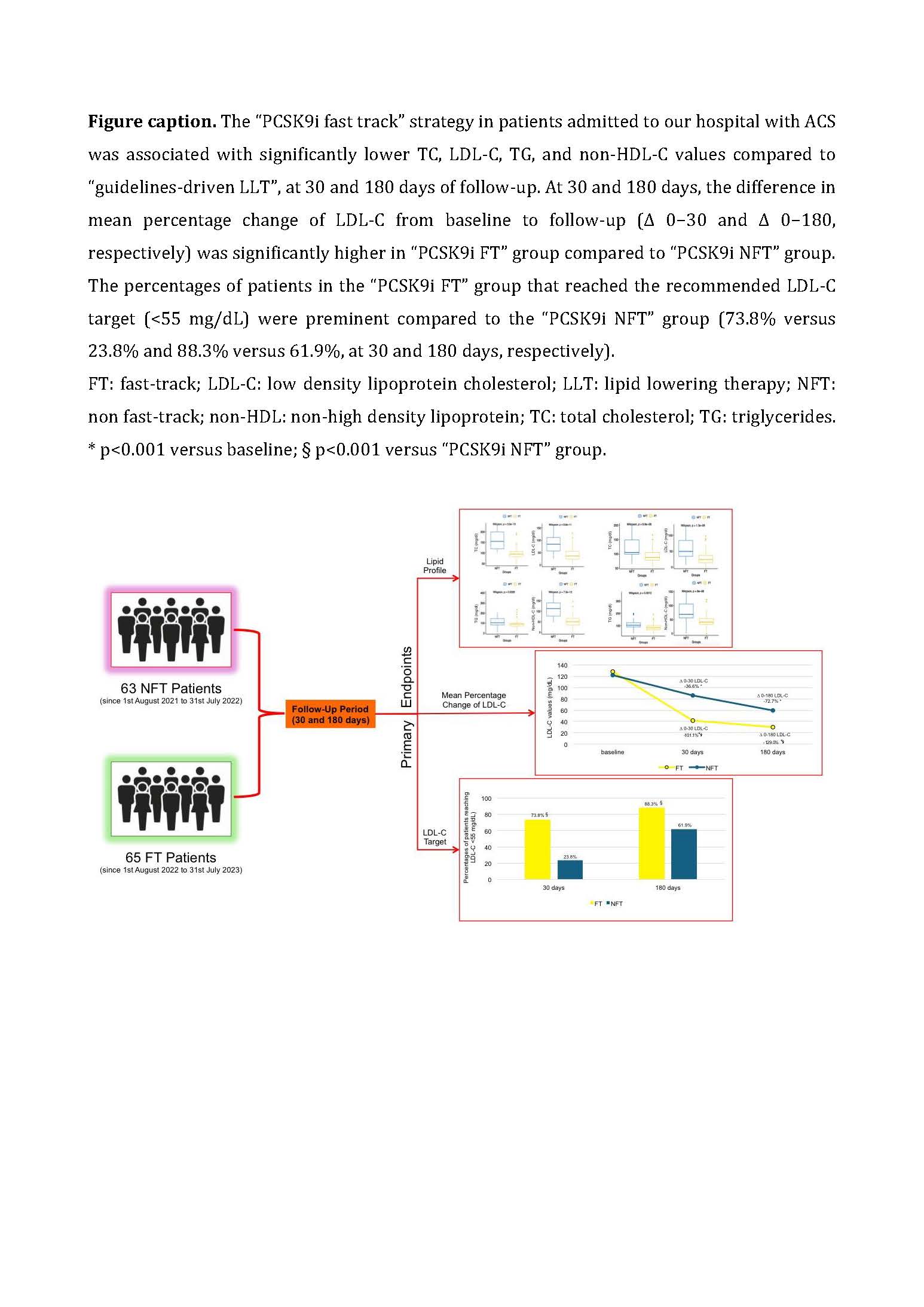
Background The “fast track” addition (within 48 hours) of proprotein convertase subtilisin/kexin type 9 inhibitors (PCSK9i) to the oral optimized lipid lowering therapy (LLT) during hospitalization for acute coronary syndrome (ACS) has been shown to rapidly achieve the low-density lipoprotein cholesterol (LDL-C) therapeutic targets. However, so far, its efficacy in real-world settings remains understudied. Methods We retrospectively analyzed 128 ACS patients treated at our center, comparing “PCSK9i fast track” use within 48 hours to standard “stepwise” LLT. Lipid levels and incidence of major adverse cardiovascular events (MACEs) were evaluated at 30 and 180 days. Results The “PCSK9i fast track” group achieved significantly lower LDL-C levels at 30 days (41.5 ± 27.5 vs. 85.6 ± 35.9 mg/dL, p < 0.001) and 180 days (29.6 ± 21.0 vs. 59.0 ± 32.4 mg/dL, p < 0.001). Recommended LDL-C targets (<55 mg/dL) were met by 88.3% of “PCSK9i fast track” group at 180 days, compared to 61.9% of controls (p < 0.001). No significant differences in MACEs were observed between groups. No adverse effects from PCSK9i use were noted. Conclusions The “PCSK9i fast track” strategy was safe and effective in achieving LDL-C targets more rapidly than conventional approaches in real-world ACS patients.