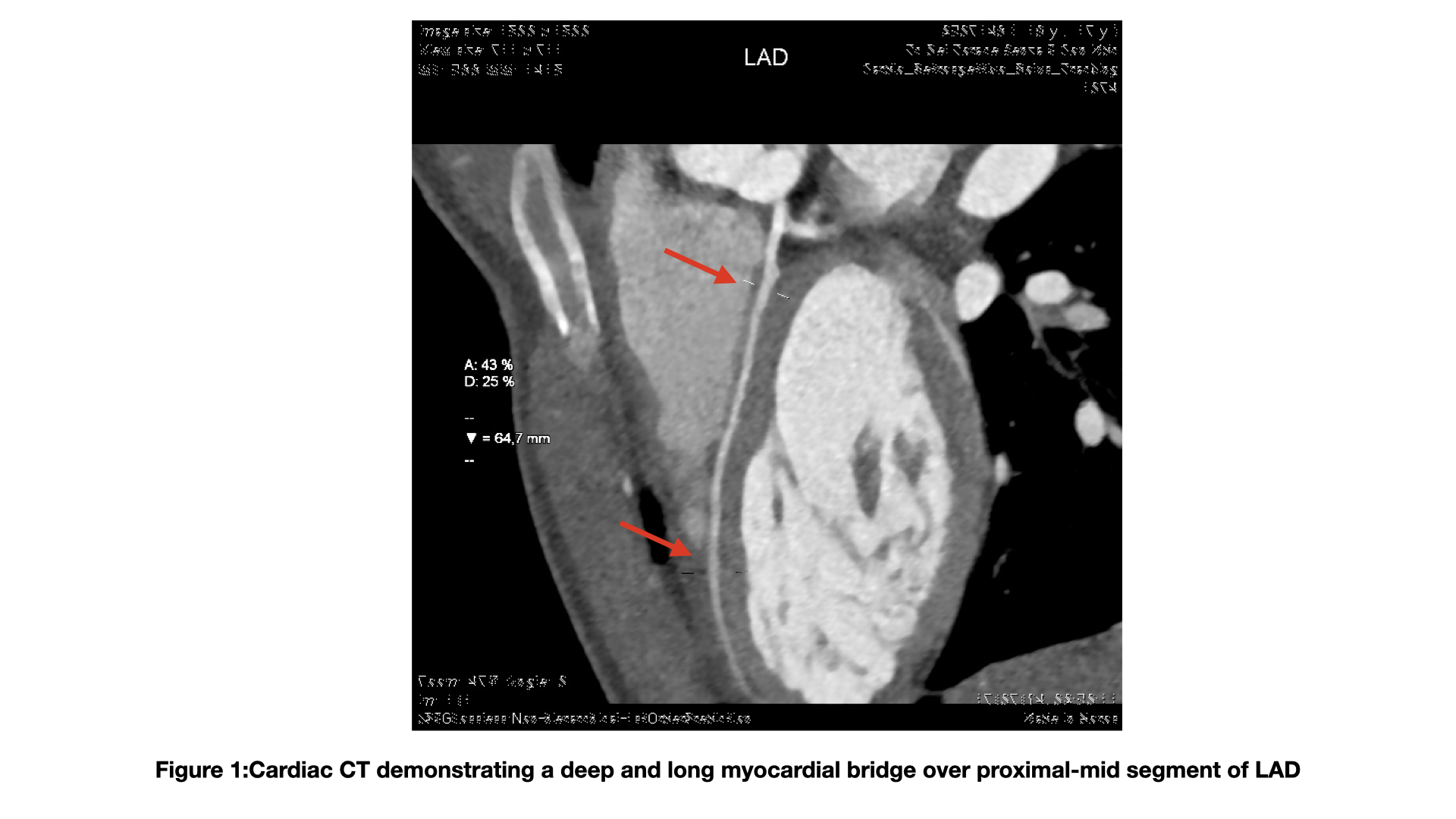
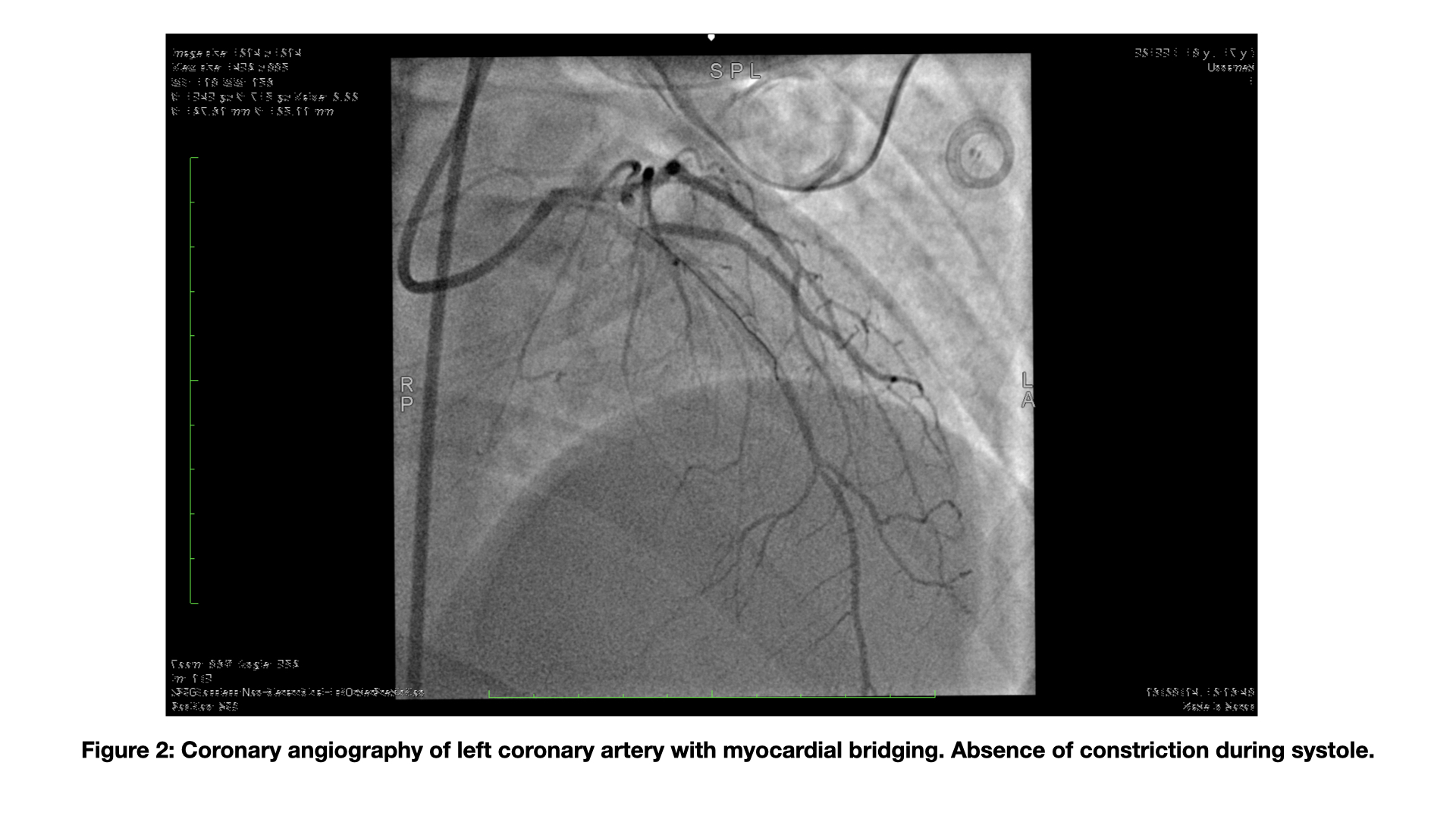
Background: Myocardial bridge (MB) is a tunneled segment of an epicardial coronary artery, running deep and for varying lengths in the context of the myocardial muscle. The clinical picture of MB ranges from the asymptomatic presentation to an acute coronary syndrome and sudden cardiac death. Case report : We present the case of a 18-year-old patient underwent pulmonary commissurotomy, cleft mitral valve closure and surgical correction of atrial septal defect when he was infant. During the recent follow-up, he experienced frequent ventricular extrasystoles organized into runs of non-sustained ventricular tachycardia during the exercise. Echocardiography demonstrated a normal biventricular function without severe residual valvular sequelae. No cardiomyopathy or late enhancement were detected by cardiac magnetic resonance evaluation. The patient was initially treated with beta-blocker and subsequently with amiodarone due to the persistence of arrhythmic burden during exercise. The diagnostic assessment was completed by coronary CT angiography, which revealed a long intramyocardial course of the left anterior descending artery, with length of 65 mm and maximum depth of about 3 mm. No significant luminal narrowing was observed during either systolic or diastolic phases; however, a filiform appearance of the vessel was noted in its distal segment. Following this radiological finding, the patient underwent functional evaluation with stress and rest myocardial scintigraphy, which demonstrated mild inducible ischemia involving the basal and parabasilar segments of the inferior and inferoseptal walls. According to the high anatomic risk features, we decide to assess the hemodynamic impact of MB with functional intracoronary evaluation. No systolic luminal narrowing was detected within the bridge segment like as no additional epicardial coronary abnormalities by coronary angiography (Fig.2).The invasive physiological assessment of MB was performed with RFR and FFR that were 0.93 and 0.9, respectively. The value of FFR remained unchanged after dobutamine intravenous infusion ( 20 μg/kg/min). Conclusion: This case highlights the use of FFR and RFR in assessing the functional impact of a MB. In this case,the patient was candidated to medical strategy increasing the beta-blocker and reducing the dose of amidoarone. Additionally, we have chosen precautionally to implant a loop recorder for monitoring the arrhythmic events; to date no repetitive events were detected.