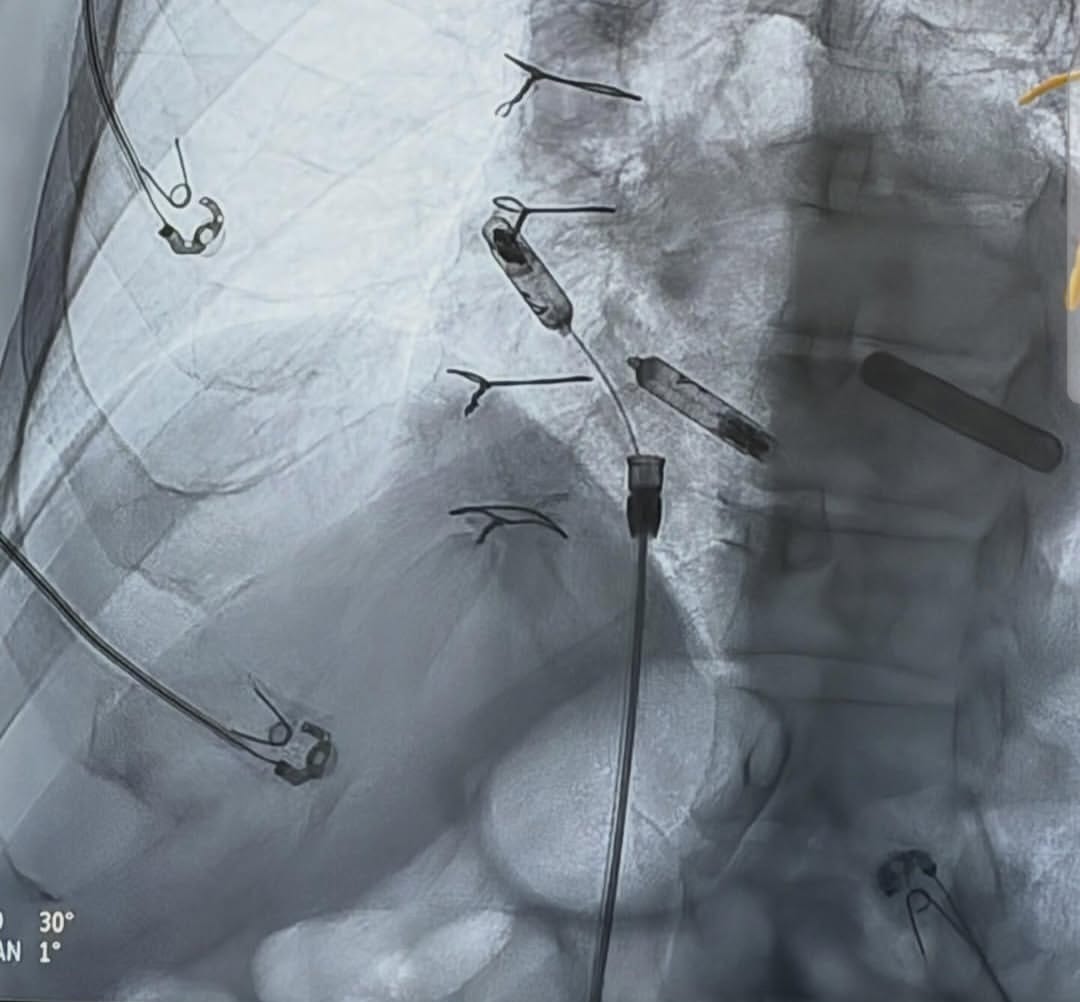
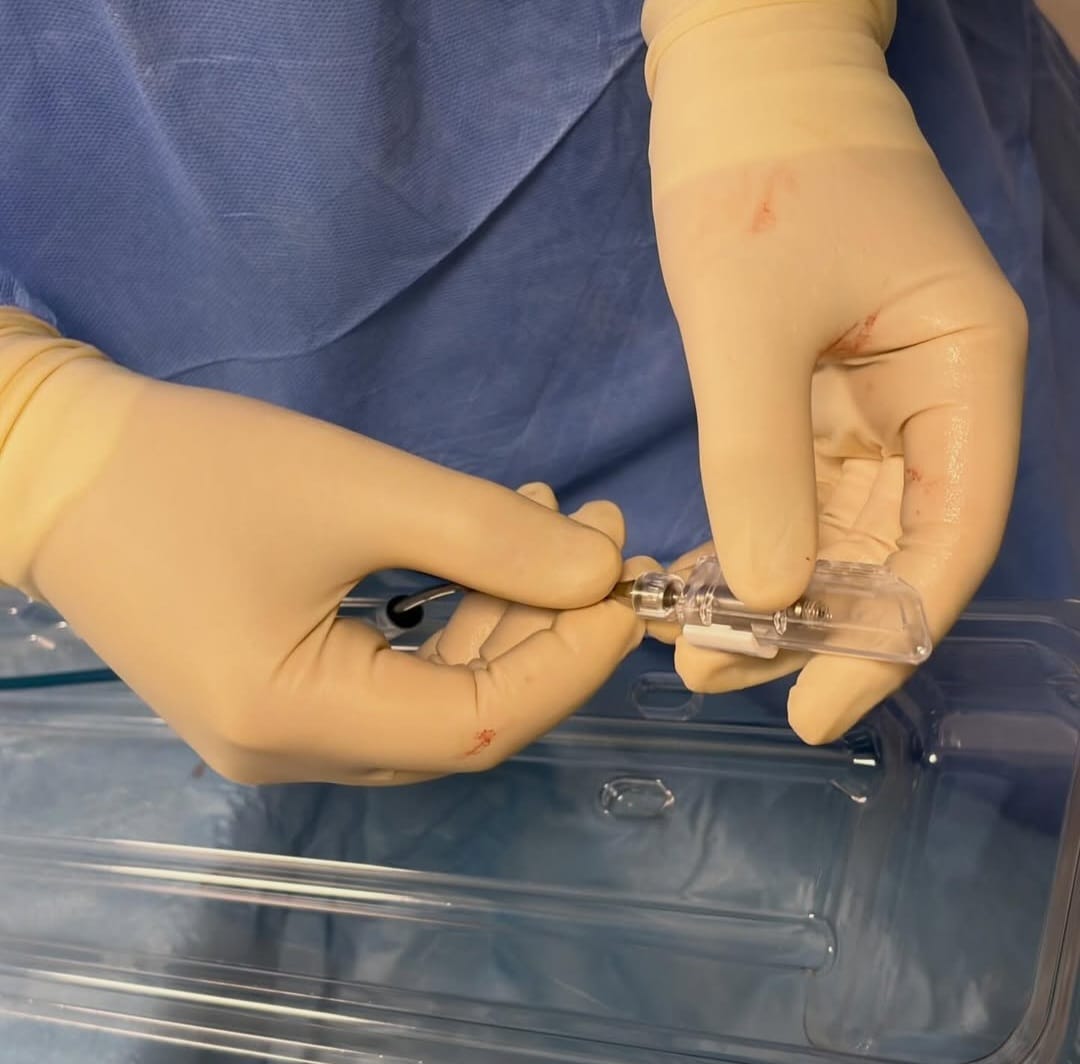
In recent years, electrostimulation has undergone a significant transformation, shifting from bulky devices to increasingly compact, safe, and efficient solutions.The pacemaker we are all familiar with is an implantable device measuring about 4–5 cm, used to treat bradyarrhythmias by delivering controlled electrical impulses to the heart to correct a slowed heart rate. This device requires the implantation of a generator in a subcutaneous pocket, which is connected to the heart through one or more leads. However, the presence of the subcutaneous pocket, leads, and connecting elements can lead to complications such as infections, thrombosis, lead dislodgement, and mechanical wear over time. To overcome these issues, the leadless pacemaker was developed, an innovative solution that completely removes the use of leads and the subcutaneous pocket. This device is implanted directly into the ventricle or atrium through a percutaneous transfemoral approach; it is extremely compact (approximately 2.5 to 3.8 cm) and is anchored directly to the myocardium. The minimally invasive approach dramatically reduces complications related to leads and improves patient comfort by eliminating visible scars, swelling, and post-operative functional limitations. This allows for a faster return to daily activities and promotes greater patient acceptance and adherence to therapy. Clinical studies have also demonstrated high procedural success rates, with proven safety and electrical reliability in the medium and long term, making leadless devices a promising perspective for the future of cardiac pacing therapy.