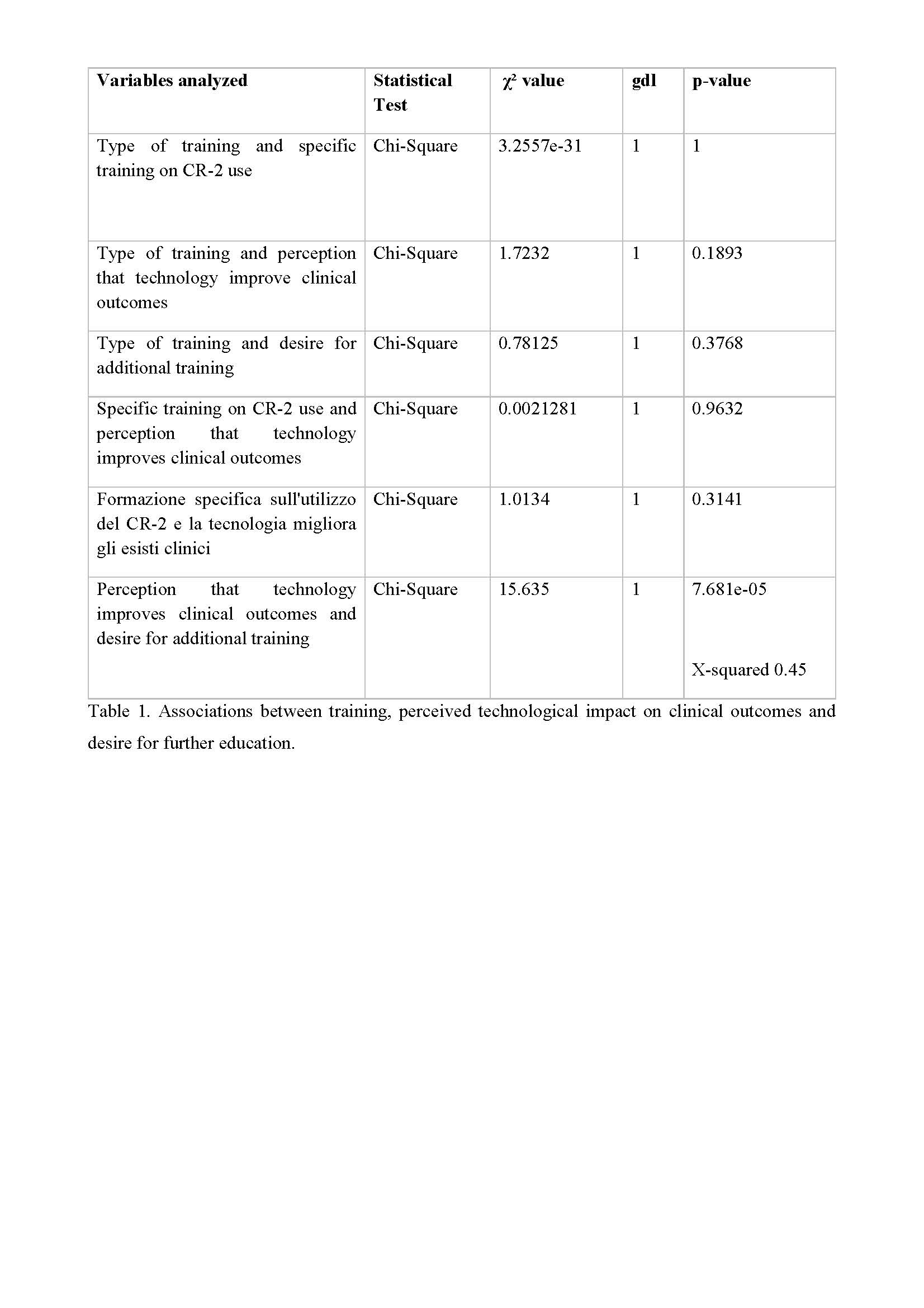
ABSTRACT NURSING AED E IA INTRODUCTION : The spread of semi-automatic defibrillators (AEDs) with Wi-Fi connectivity represents a significant innovation in the field of public health and emergency medical services, enabling constant monitoring of the devices and more efficient management of their maintenance. The aim of this study is to evaluate how the integration of Wi-Fi connectivity in defibrillators can improve monitoring, management, and timeliness of interventions, while ensuring safety and efficiency compared to traditional devices. MATERIALS AND METHODS : The experimental study was conducted by administering a structured questionnaire to a sample of 75 nurses from the Emergency Department of the “C. & G. Mazzoni” and “Madonna del Soccorso” of the Local Health Authority (AST) of Ascoli Piceno from July 28, 2025, to August 21, 2025. RESULTS : The results show that the sample is mainly composed of female subjects with an average age between twenty-five and thirty years. The majority of participants have more than ten years of work experience and theoretical-practical training. It should also be noted that the majority of subjects have obtained a three-year degree. The analysis highlighted a statistically significant link between the perception of a positive impact of technology on clinical outcomes and the desire to further their skills through additional training. ANALYSIS : Pearson’s test was used for the inferential analysis of associations between categorical variables. In cases where variables had only two modes, Yates' continuity correction was applied. The level of statistical significance was set at p < 0.05. All analyses were performed using Microsoft Excel and RStudio (version 4.5.1) software. DISCUSSION : The study highlighted a generally positive perception among nursing staff regarding the implementation of Wi-Fi-connected defibrillators, despite some difficulties related to device management. While considering the limitations related to the sample size, the self-reported nature of the responses, and the cross-sectional design of the study, the results provide useful insights into the perceptions of operators regarding connected defibrillators and guide future research. Therefore, Wi-Fi-connected defibrillators represent a concrete opportunity for innovation in the emergency field and are valuable tools for optimizing interventions, ensuring constant and cross-cutting training and organizational planning across all care settings.