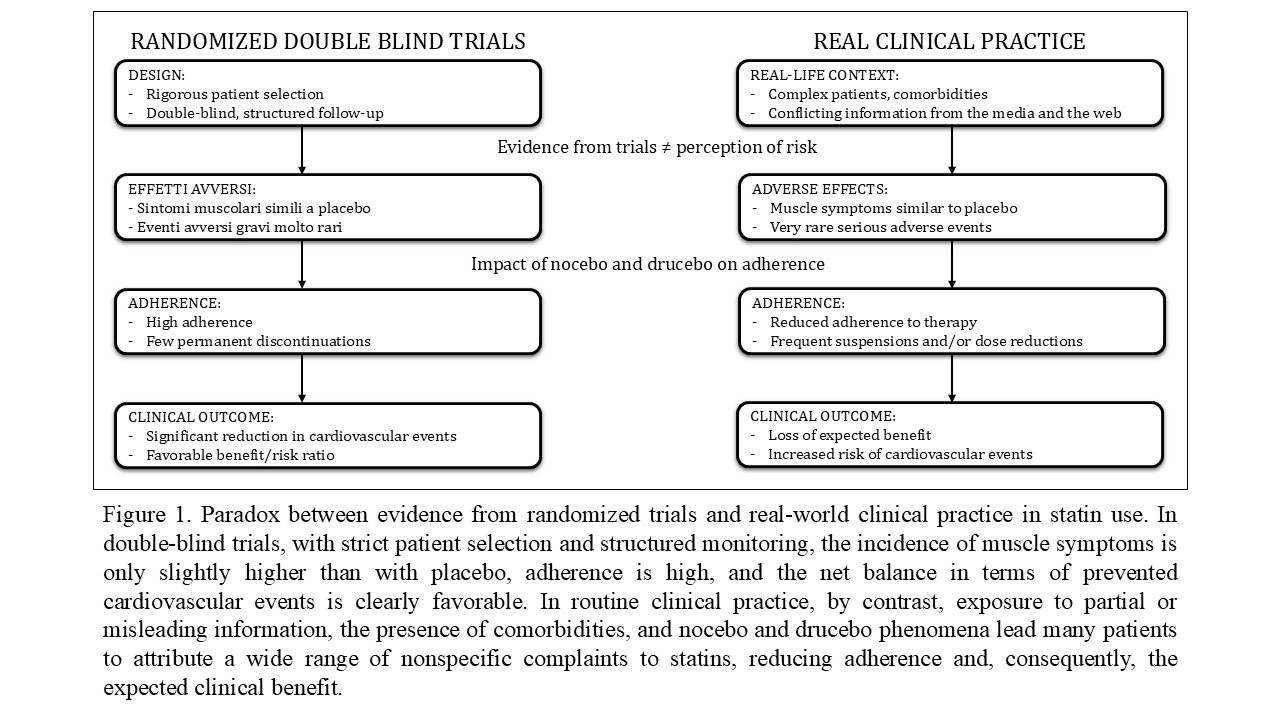
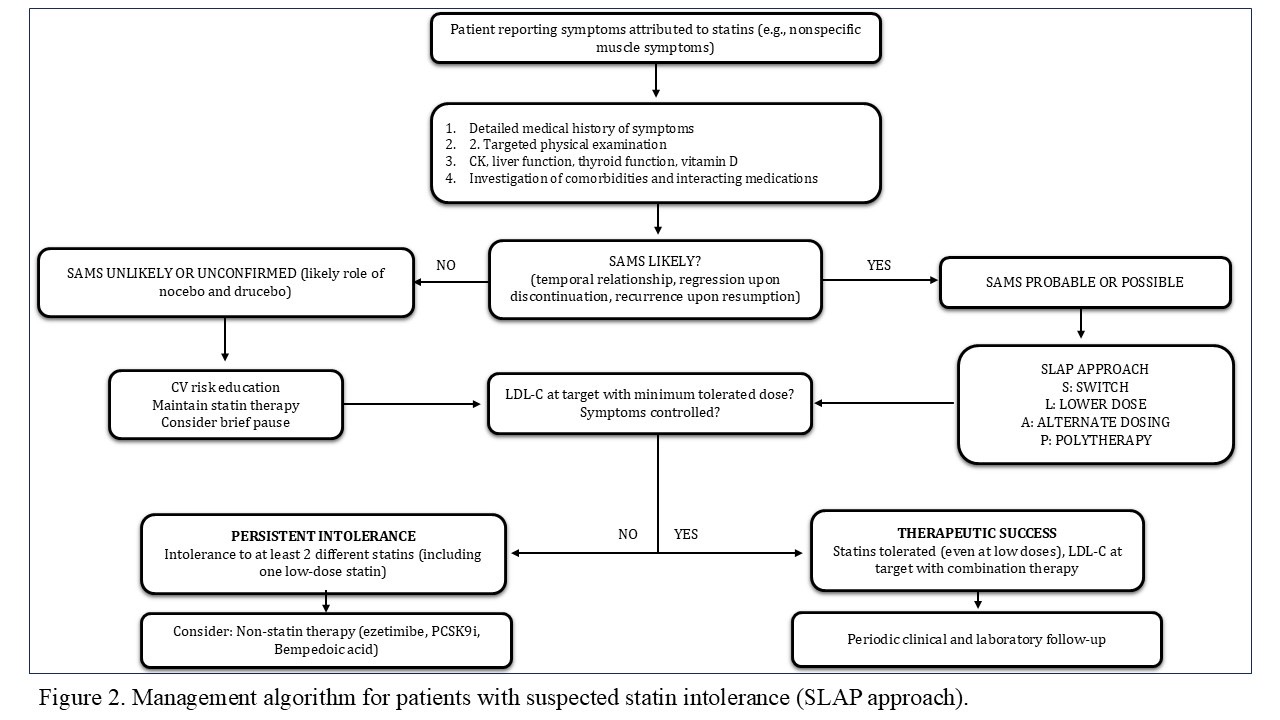
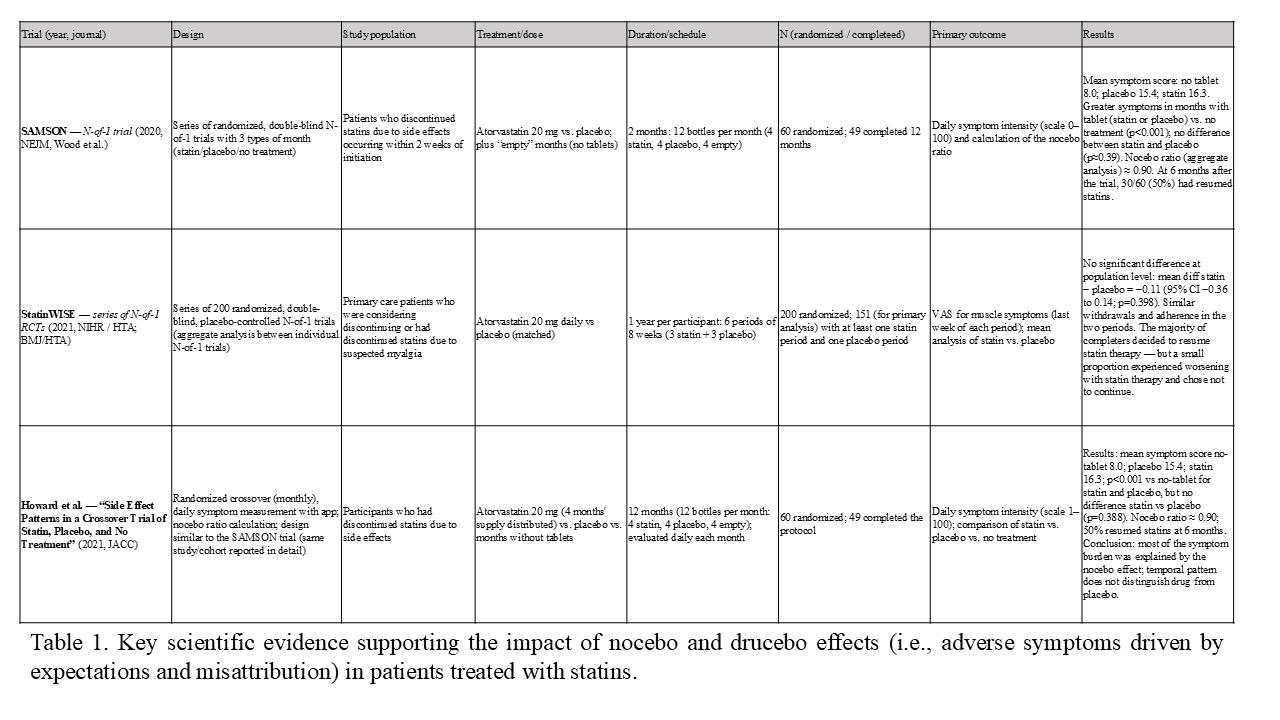
Background: Statins are a cornerstone of LDL-cholesterol lowering, but perceived intolerance—especially muscle complaints—remains a leading cause of discontinuation and loss of cardiovascular protection. Aim: To review evidence that contextual mechanisms (nocebo/drucebo) account for a substantial share of symptoms attributed to statins, and to translate this evidence into pragmatic clinical steps. Methods: Narrative review of double-blind randomised trials and meta-analyses on statin adverse events, integrated with n-of-1 and crossover studies that compared statin, placebo and/or no-tablet periods in patients with previous statin cessation. Key consensus recommendations on statin intolerance were also considered. Results: In large, blinded trials, the absolute excess of muscle symptoms with statins versus placebo is minimal, and serious muscle toxicity is uncommon. Conversely, n-of-1/crossover studies (e.g., SAMSON, StatinWISE) report comparable symptom intensity during statin and placebo exposure, with markedly lower scores during no-tablet periods, supporting a predominant role for expectations and attribution. Sharing individual blinded symptom trajectories increased patients’ confidence and willingness to restart treatment. Clinical implications include ruling out alternative causes (e.g., thyroid dysfunction, vitamin D deficiency, drug–drug interactions), using structured dechallenge/rechallenge, and adopting stepwise options such as switching statin, lowering dose, intermittent dosing and combination therapy with non-statin agents to maintain LDL-C targets. Conclusions: A large proportion of real-world statin side effects is explained by nocebo/drucebo rather than pharmacological toxicity or side effects. Early recognition, careful communication and flexible treatment strategies may improve adherence and help preserve the cardiovascular benefit of statin therapy.