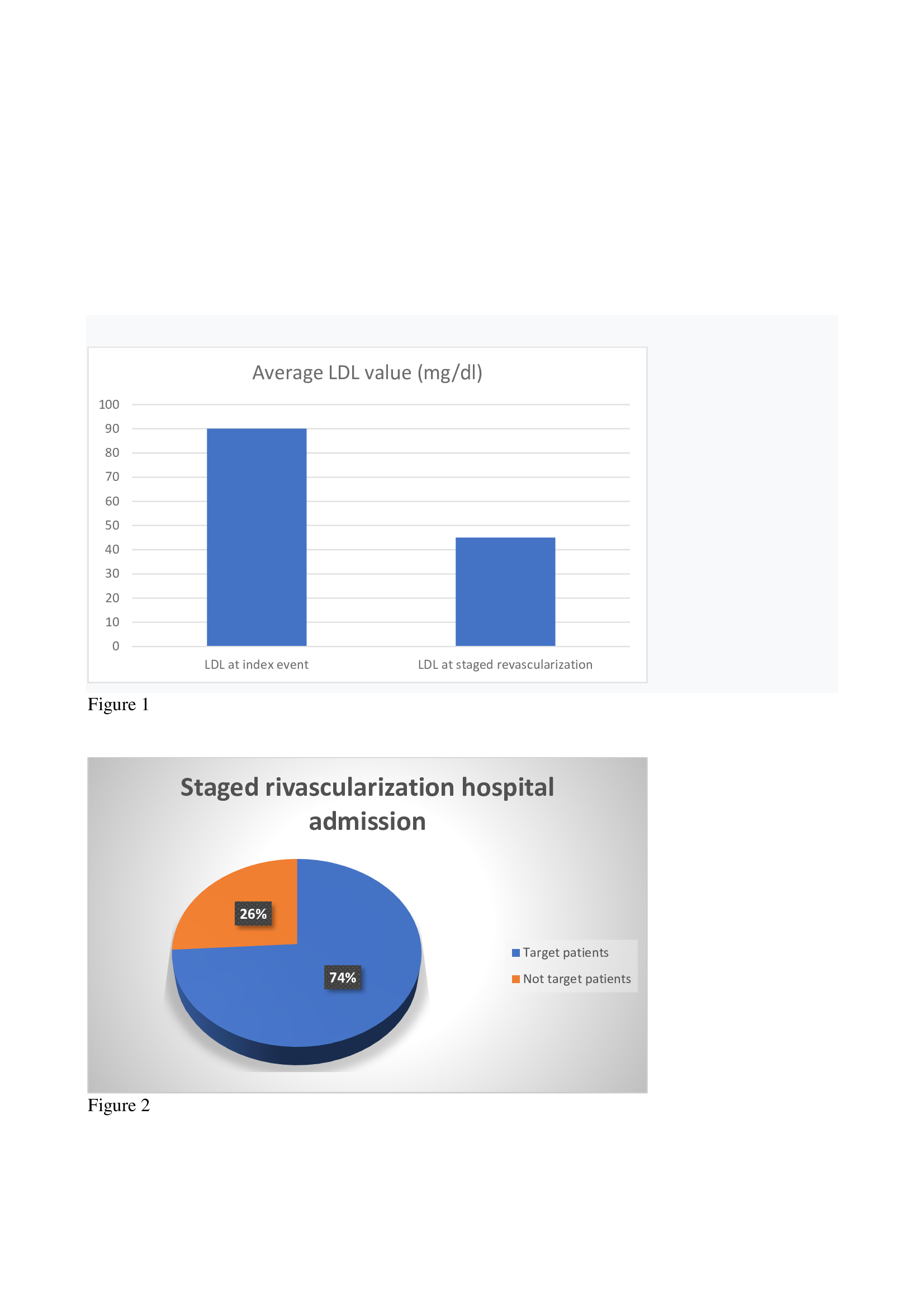
Background and aims Despite LDL cholesterol (LDL-C) is a well-established modifiable risk factor in patients in secondary cardiovascular prevention, only 30% of them reach the LDL target <55 mg/dl. In our hospital, a protocol of intensive lipid-lowering therapy (LLT) is applied in patients with coronary artery disease (CAD). The aim of our analysis is to evaluate the efficacy of this approach in patients re-admitted for staged revascularization. Methods We evaluated 208 patients (162 male and 46 female) admitted to our ward between October 2021 and November 2025, diagnosed with CAD (acute coronary syndrome and chronic coronary heart disease), undergoing staged revascularization (within 2-6 months of the index event). Demographic features, LDL values and LLT (at admission and during previous index event) were collected. Results Patients mean age was 69 years old. At the index event, 96 patients of 208 (46%) were receiving LLT: 2 patients statins+ ezetimibe+ PCSK9i, 54 patients stantins + ezetimibe, 34 patients only statins, 5 patients only ezetimibe, 1 patient only PCSK9i. LDL average was 90 mg/dl. At discharge 203 patients (97%) were on statin therapy. Of the remaining 5 patients, 2 were on ezetimibe alone, 1 on pcsk9i and 2 on ezetimibe + bempedoic acid. Triple LLT (statins+ ezetimibe+ PCSK9i) was prescribed in 36 patients (18%). Statin therapy was boosted in 32 patients. Of note, at admission for staged revascularization, LDL average was 45 mg/dl and LDL target had been reached by 154 patients (74%). LDL average of patients on target and not was 31 mg/dl e 82 mg/dl, respectively. Therapy has been further enhanced: bempedoic acid was added on therapy in 9 patients and PCSK9i in 7 patients. Conclusion These data highlight the need of optimizing LLT intensively already during hospitalization in CAD patients, in order to increase the number of patients reaching the LDL target.