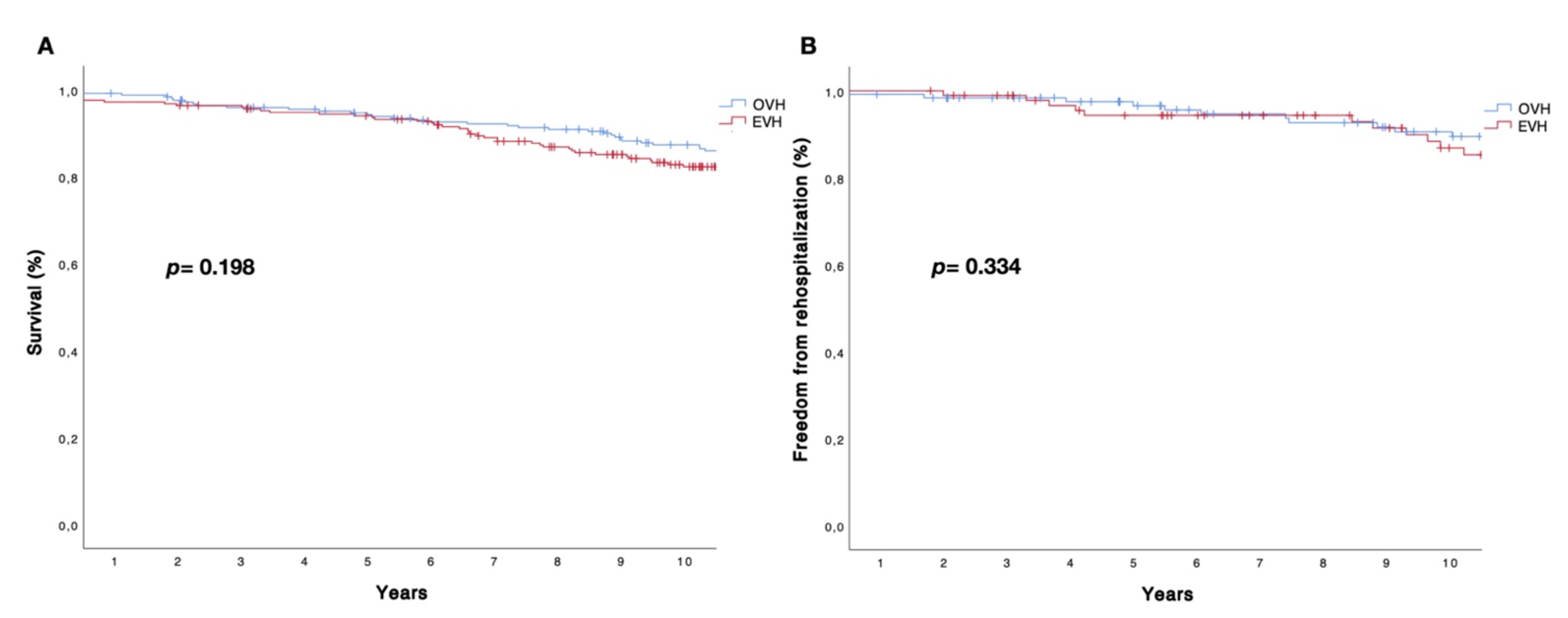
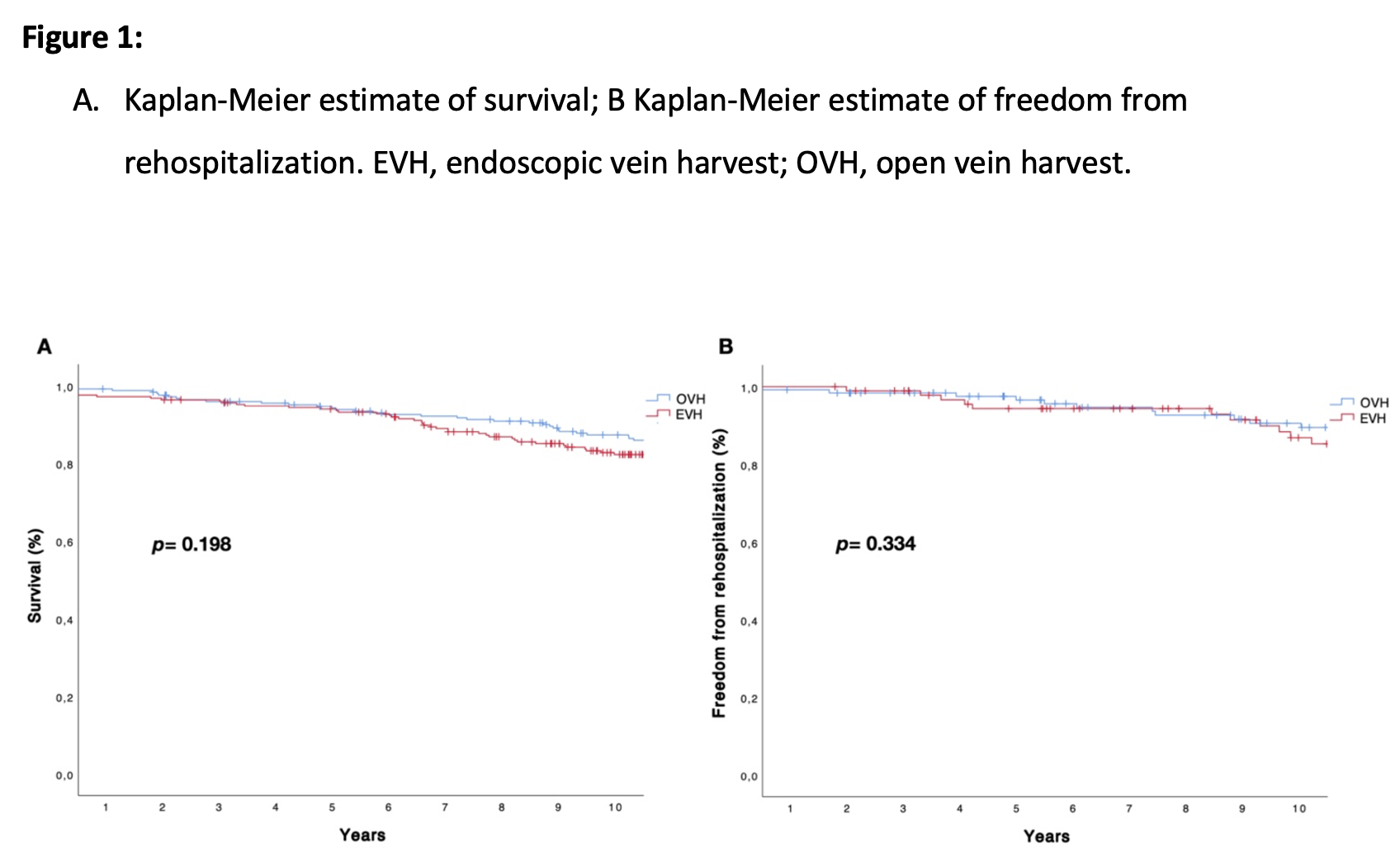
Objective The endoscopic saphenous vein harvest (EVH) has been shown to reduce post-operative pain, risk of infection and ameliorate patients’ recovery compared to conventional open harvest technique (OVH). However, long-term graft patency remains unclear. The aim of this study was to evaluate long-term clinical outcomes and venous graft patency of patients undergoing EVH vs OVH. Methods We retrospectively analyzed 1189 consecutive patients (OVH: 931 patients; EVH: 258 patients) who underwent isolated coronary artery by-pass graft surgery (CABG) between 2008 and 2010. All EVHs were performed by expert harvesters (>100 EVHs with <5% conversions to OVH). Patients were propensity-score matched in a 1:1 ratio. Follow-up was 97.8% completed and the median follow-up was 12.1 years (interquartile range 9.7-13.3 years). Vein graft patency was evaluated with the use of a 384-slice computed tomography in 71 asymptomatic patients (ongoing follow up study). Results In the unmatched population, the EVH patients were elderly (EVH: 70.2±7.8 years; OVH: 68.5±0.1 years, p =0.004) with a higher incidence of pre-operative peripheral vascular disease ( p <0.05) and diabetes ( p =0.017). After matching, 255 well balanced pairs were identified. On Kaplan-Meier analysis, 1 – 5 and 10 years survival (98.8%, 93.9%, and 86.9% respectively in the OVH group and 96.8%, 93.6%, and 82.3% respectively in the EVH group; Log-rank p =0.198) and freedom from re-hospitalization (98.4%, 96.6%, and 89.5% respectively in the OVH group and 98.9%, 94.3%, and 85.3% respectively in the EVH group, Log-rank p =0.334) were similar ( Figure-1: A. Kaplan-Meier estimate of survival; B Kaplan-Meier estimate of freedom from rehospitalization). In 71 asymptomatic patients, coronary CT scan revealed a total vein graft occlusion in 15.5% of the cases (11/71 patients: 3/22 OVH; 8/49 EVH, p=1.000), and a partial occlusion of the terminal end-to-side anastomosis of sequential bypass grafts in 5.6% of the cases (4/71 patients: 0/22 OVH; 4/49 EVH, p=0.30 Conclusions In our experience, going behind its short-term benefits, EVH has translated in very encouraging long-term clinical and (preliminary) coronary-CT results compared with OVH. Further larger clinical trials are needed to validate our preliminary observations.