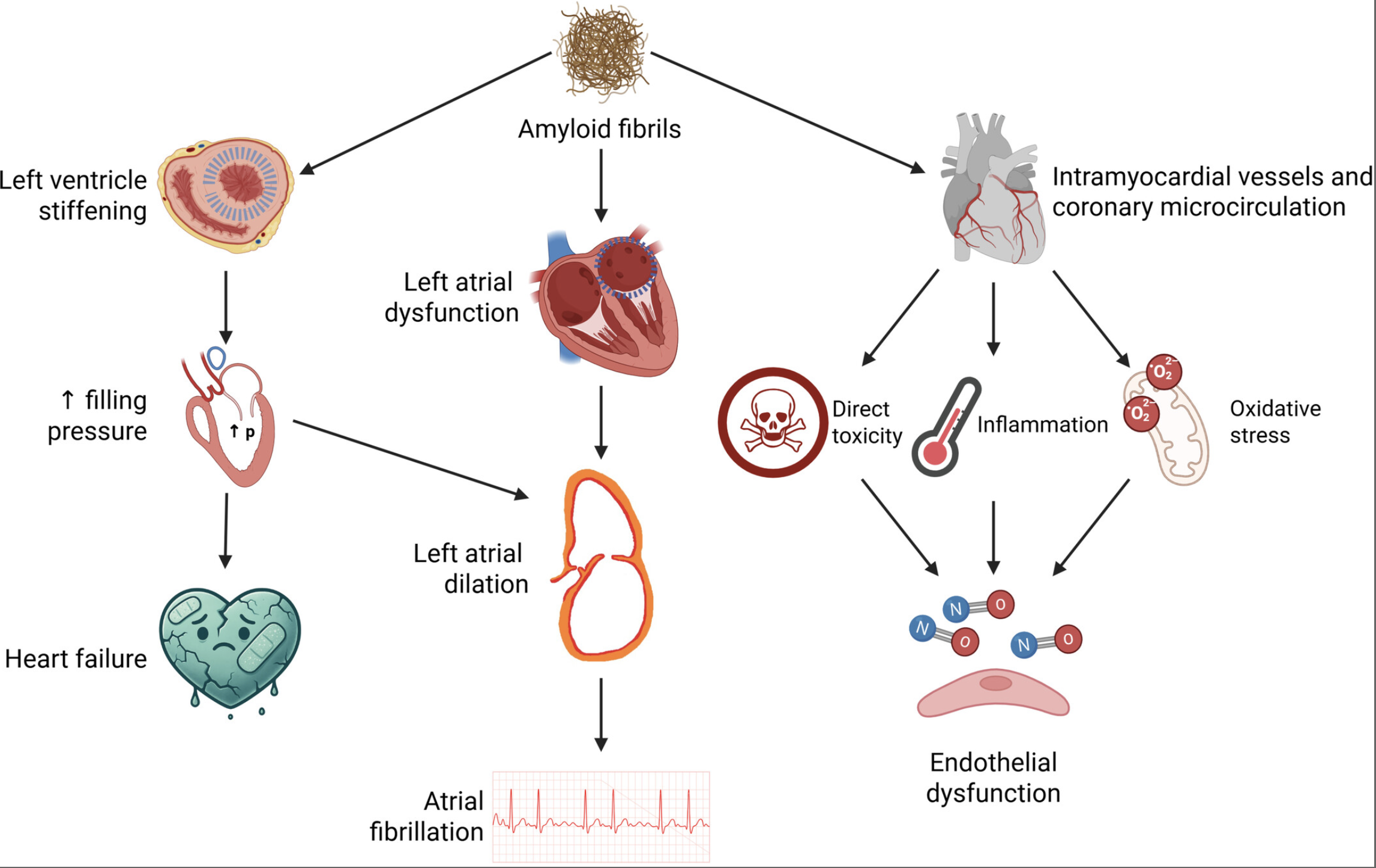
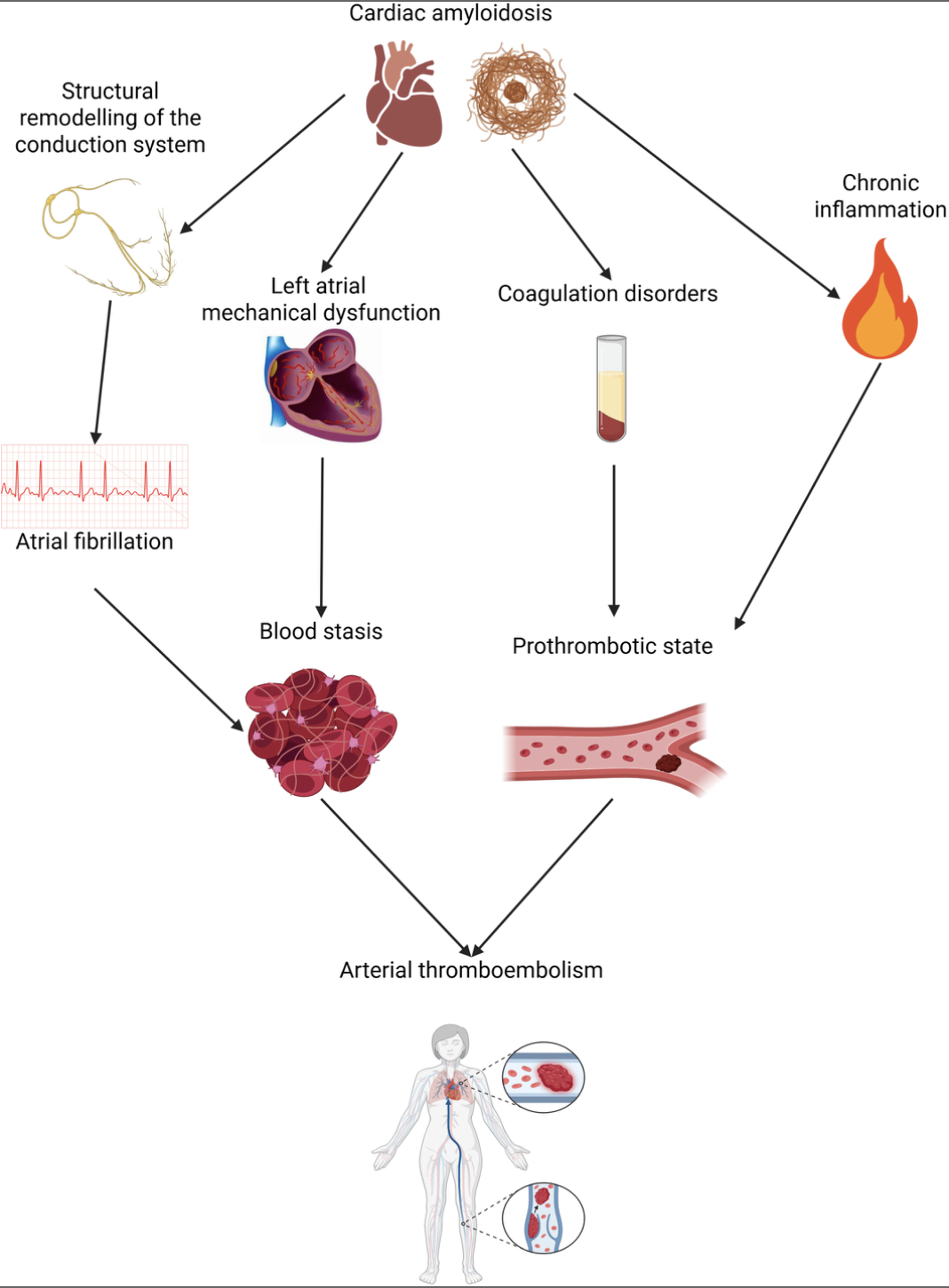
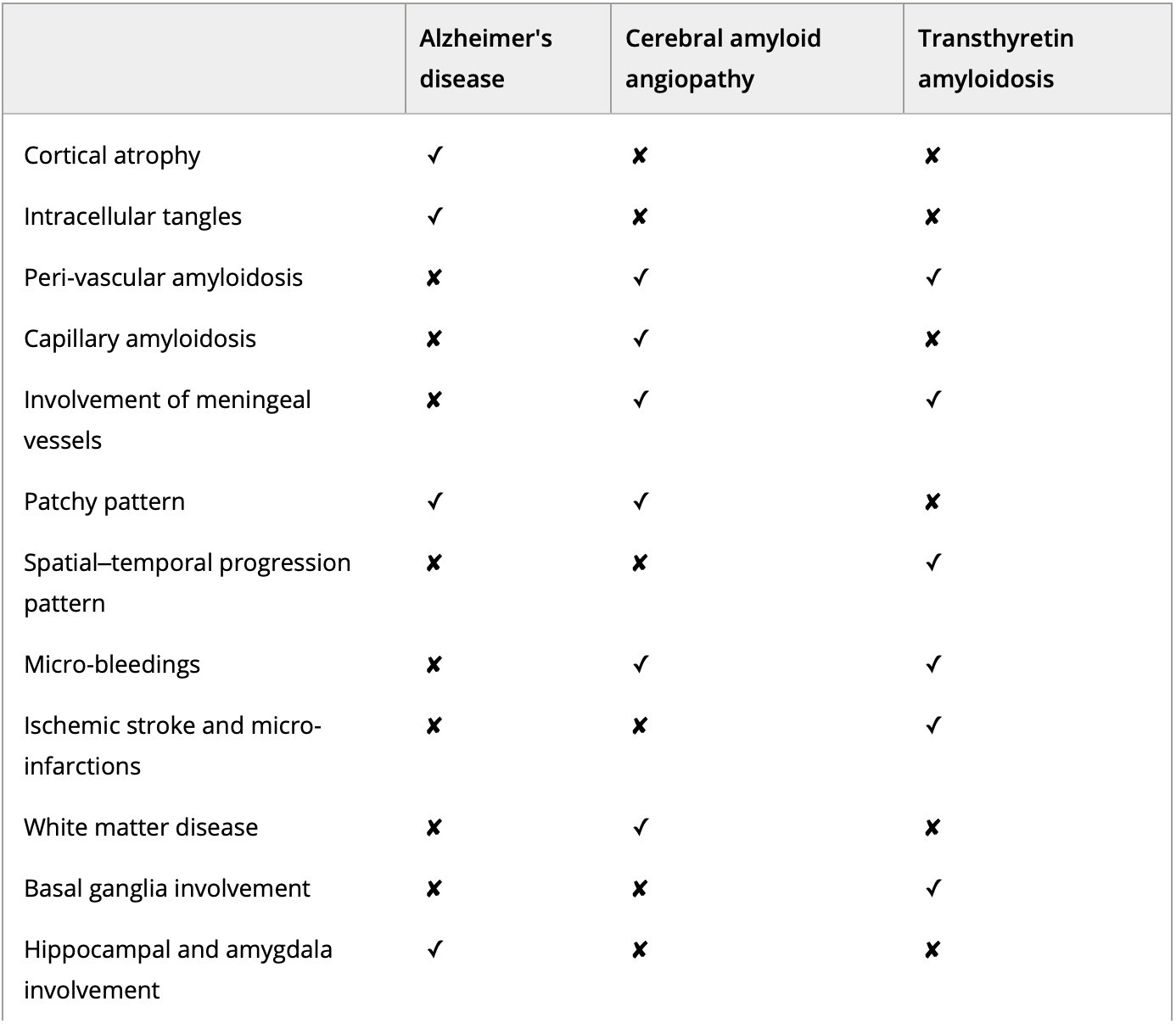
Background: Amyloidosis is characterised by the extracellular accumulation of misfolded proteins forming amorphous aggregates called amyloid. Cardiac amyloidosis results from myocardial involvement in systemic amyloidosis, leading to impaired heart function. Besides myocardial involvement, cardiac amyloidosis may also directly and indirectly affect the central nervous system. Methods: This narrative review summarises current evidence about on central nervous system involvement in cardiac amyloidosis and the pathophysiological mechanisms linking heart and brain in the context of this systemic disease. Results: Although the pathophysiological relationship between cardiac amyloidosis and cognitive decline remains poorly understood, central nervous system involvement likely results from the complex interplay of direct amyloid deposition, cerebrovascular changes, and cardiac dysfunction. Conclusion: The growing awareness of cognitive impairment in patients with cardiac amyloidosis highlights the need for further research and supports a multidisciplinary approach in the assessment and management of affected individuals.