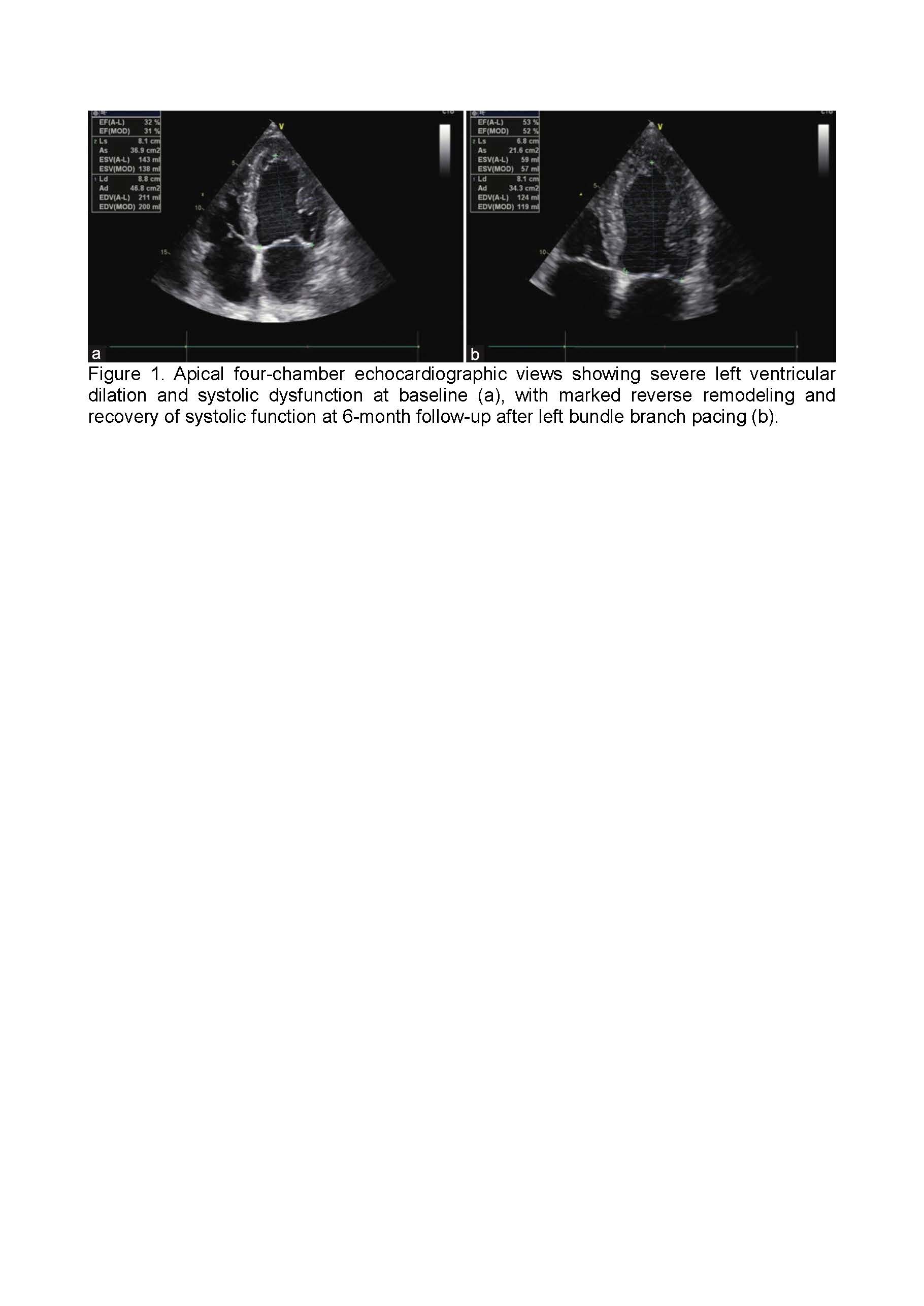
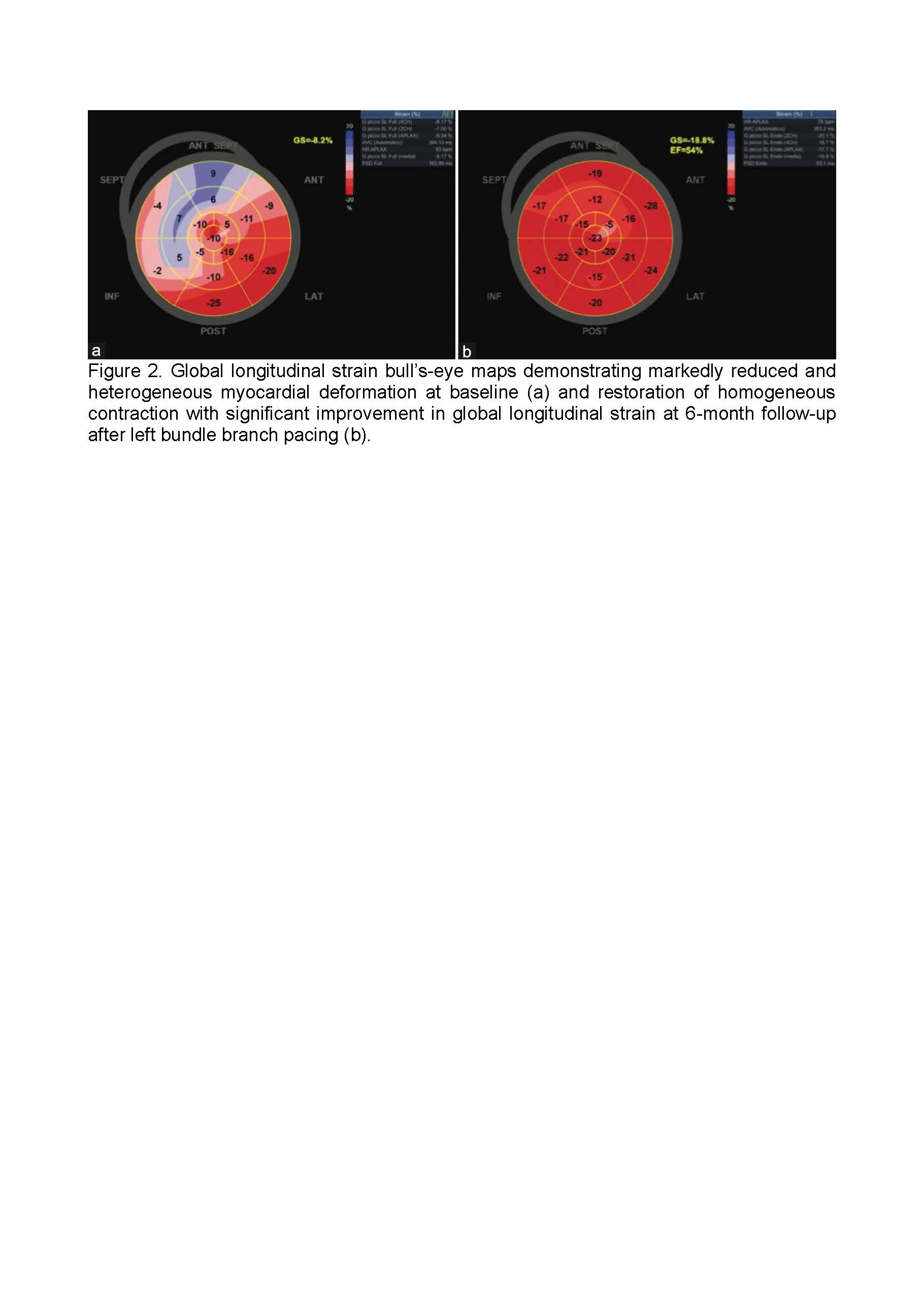
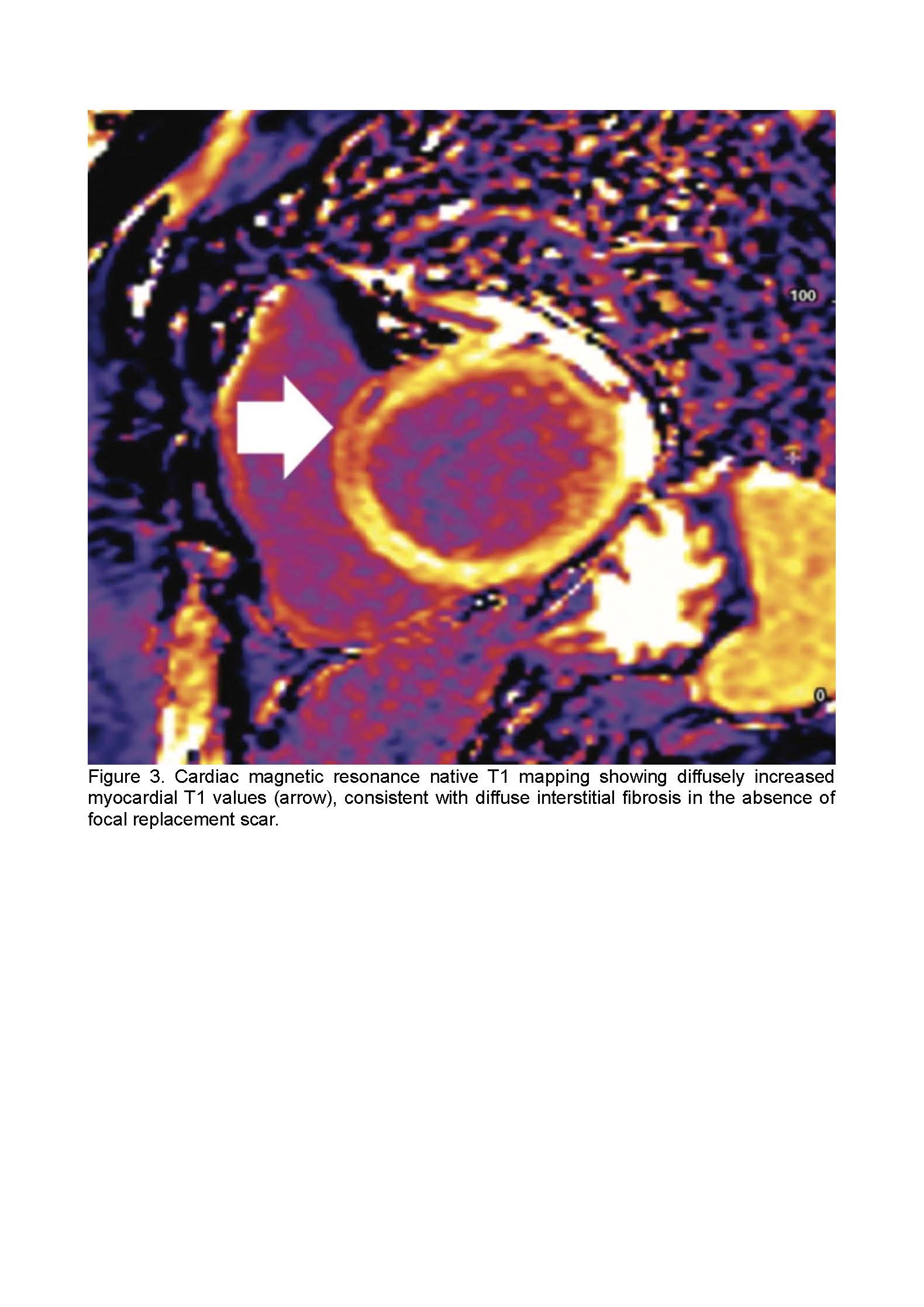
Background: Left bundle branch block (LBBB) is a major determinant of electrical and mechanical dyssynchrony in heart failure with reduced ejection fraction (HFrEF), contributing to adverse ventricular remodeling and poor prognosis. Although cardiac resynchronization therapy improves outcomes, a substantial proportion of patients show limited response. Left bundle branch pacing (LBBP) has emerged as a physiological alternative by directly engaging the His–Purkinje conduction system. Case presentation We report the case of a 62-year-old woman with nonischemic dilated cardiomyopathy, severely reduced left ventricular ejection fraction (30%), and complete LBBB (QRS duration 162 ms), who remained symptomatic despite maximally tolerated guideline-directed medical therapy. Advanced echocardiography demonstrated marked mechanical dyssynchrony, severely impaired global longitudinal strain, and functional mitral regurgitation. Cardiac magnetic resonance excluded ischemic scar and revealed diffuse interstitial fibrosis. LBBP was successfully performed, achieving QRS narrowing to 118 ms with stable electrical parameters. At 6-month follow-up, the patient showed marked clinical improvement (NYHA class I–II) and significant reverse remodeling, with left ventricular ejection fraction increasing to 54%, global longitudinal strain improving from −8.2% to −18.8%, reduced mechanical dispersion, and regression of functional mitral regurgitation. Conclusions: This case highlights the potential of left bundle branch pacing as an effective physiological resynchronization strategy in patients with HFrEF and LBBB, even in the presence of diffuse myocardial fibrosis. Multimodality imaging plays a pivotal role in patient selection and in objectively documenting functional recovery. LBBP may represent a valuable alternative to conventional resynchronization strategies in carefully selected patients.