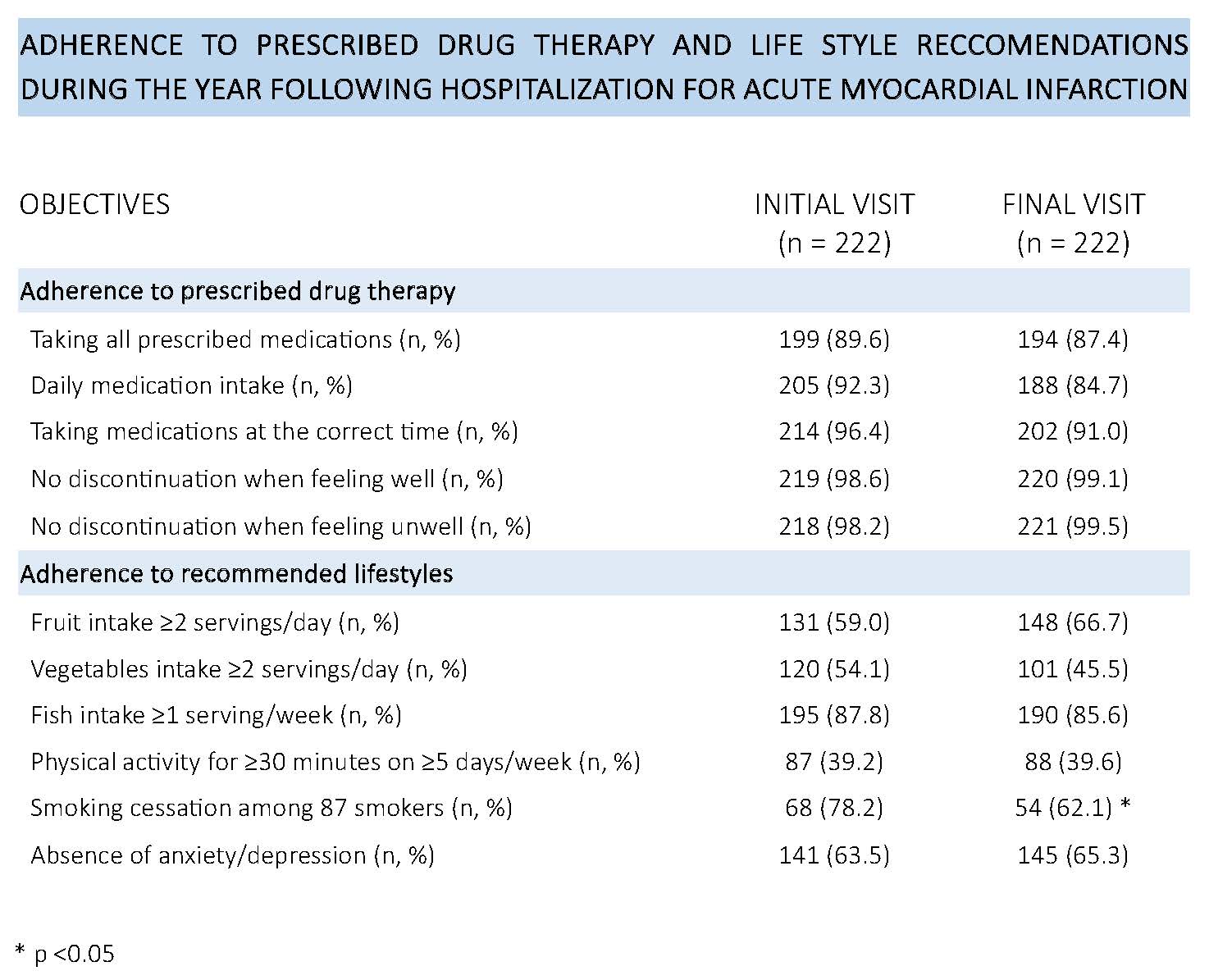
Background The year following hospitalization for Acute Myocardial Infarction (AMI) represents a vulnerable phase, characterized by substantial mortality and rehospitalization rates, favoured by treatment discontinuation and suboptimal adherence to lifestyle recommendations. The DIM ACC Project (“ Dim issioni Acc ompagnate”, i.e. Accompanied Discharge) was initiated on May 1st, 2023 to implement a structured post-discharge follow-up for patients admitted with AMI to the Intensive Cardiac Care Unit (ICCU) and the Cardiology ward of Pio XI Hospital in Desio. Aim To assess adherence to pharmacological therapies and lifestyle recommendations during the first year after discharge. Methods DIMACC is a prospective quality improvement study conducted in routine clinical practice. Patients followed a predefined program of physician–nurse outpatient visits and diagnostic assessments over a 12-month period. Information on adherence to medical therapy and lifestyle behaviours was collected by nursing staff during scheduled follow-up visits. Differences between baseline and final evaluations were analysed using the chi-square test, with statistical significance set at p < 0.05. Results From May 1, 2023, to April 30, 2024, 396 patients were admitted for AMI to our ICCU and Cardiology ward. Of these, 351 were discharged home or to a cardiovascular rehabilitation centre, and 263 were included in the project. Among these patients, 11 did not attend the first follow-up visit, 4 died before the final visit, 30 were lost to follow-up, and 222 completed the 12-month follow-up. The percentage of the latter patients reporting good adherence to pharmacological therapies and recommended lifestyle measures at the initial and final visits is shown in Table 1. At the beginning of follow-up, adherence to pharmacological therapies was very high, in contrast to adherence to recommended lifestyle measures, which was generally lower. No statistically significant changes were observed during follow-up for any of the variables considered, except for a significant increase in patients who resumed smoking. Conclusion In patients hospitalized for AMI, a structured post-discharge follow-up pathway is effective in sustaining adherence to pharmacological treatments but appears insufficient to significantly improve lifestyle behaviours. Dedicated interventions aimed at promoting healthy diet, regular physical activity, smoking cessation, and psychological well-being are warranted.