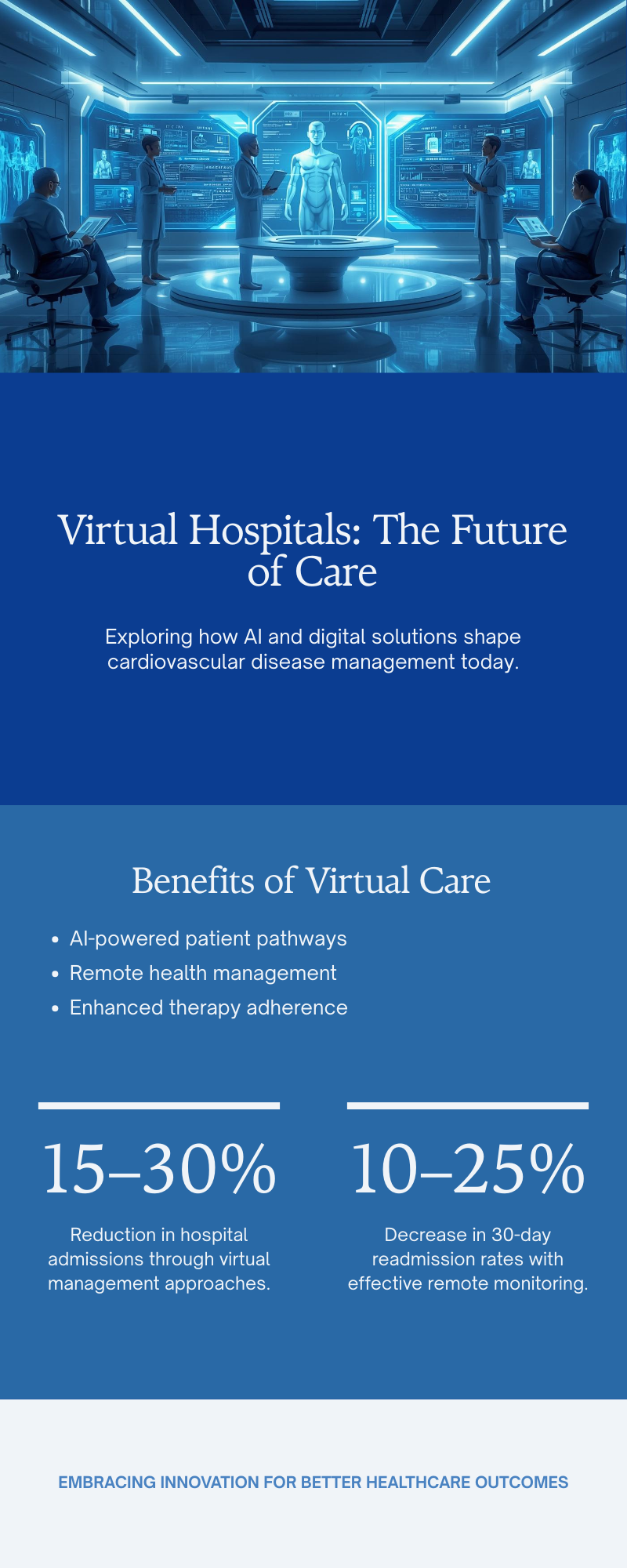
The virtual hospital is an emerging care delivery model designed to address the increasing clinical complexity and economic burden of cardiovascular diseases. By integrating artificial intelligence (AI), digital proximity care, and hospital-supervised remote management, this paradigm extends cardiovascular care beyond the physical hospital while maintaining clinical oversight. In this model, patients are enrolled into structured digital care pathways supported by humanoid medical avatars that facilitate standardized anamnesis, symptom surveillance, therapy adherence monitoring, and scheduled follow-up interactions. Longitudinal data derived from patient-reported outcomes and remote physiological monitoring are processed by AI algorithms to support dynamic risk stratification and clinical prioritization. Alerts are generated based on predefined thresholds, enabling timely clinician intervention and escalation of care when appropriate. Preliminary real-world implementations of virtual hospital pathways in cardiology have been associated with favorable clinical and organizational outcomes. Reported benefits include reductions in unplanned hospital admissions ranging from approximately 15–30%, decreases in 30-day readmission rates of 10–25%, and reductions in non-urgent emergency department visits of up to 20–35% among stable cardiovascular patients. Improvements in adherence to guideline-directed medical therapy and follow-up compliance have been observed in the range of 10–20%, particularly in chronic care settings. Key performance indicators (KPIs) relevant to this model include improved outpatient visit appropriateness, reduced time to clinical decision-making, and enhanced continuity of care. Operational efficiency gains may include a reduction in clinician time per patient of approximately 15–25% and increased capacity to manage larger patient cohorts without proportional workforce expansion. From an economic perspective, the virtual hospital model shows potential for meaningful cost containment. Estimated direct cost savings related to reduced hospitalizations and optimized outpatient management range between 10–20% per patient-year, with additional indirect benefits linked to improved resource allocation. The virtual hospital represents a scalable and outcome-oriented evolution of cardiology care, aligning clinical quality improvement with health system efficiency and value-based healthcare principles.