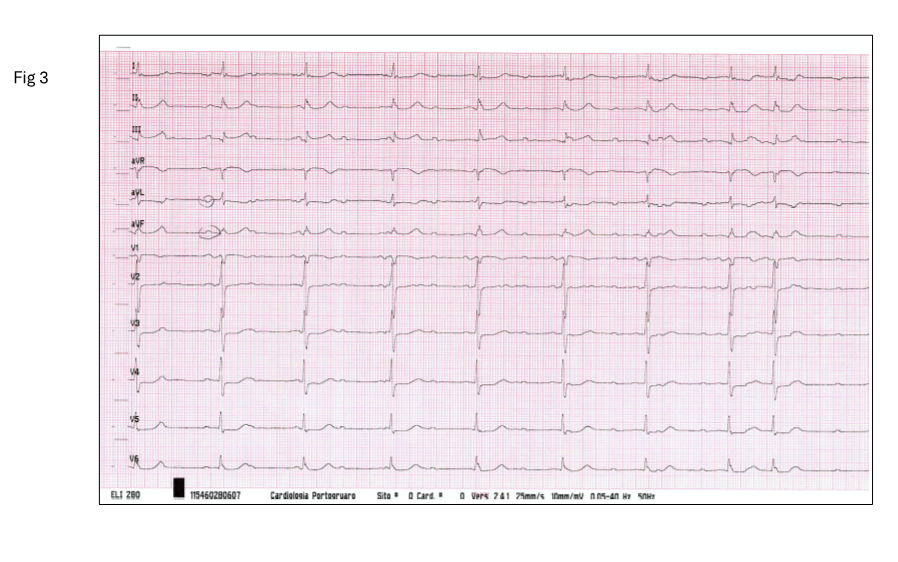
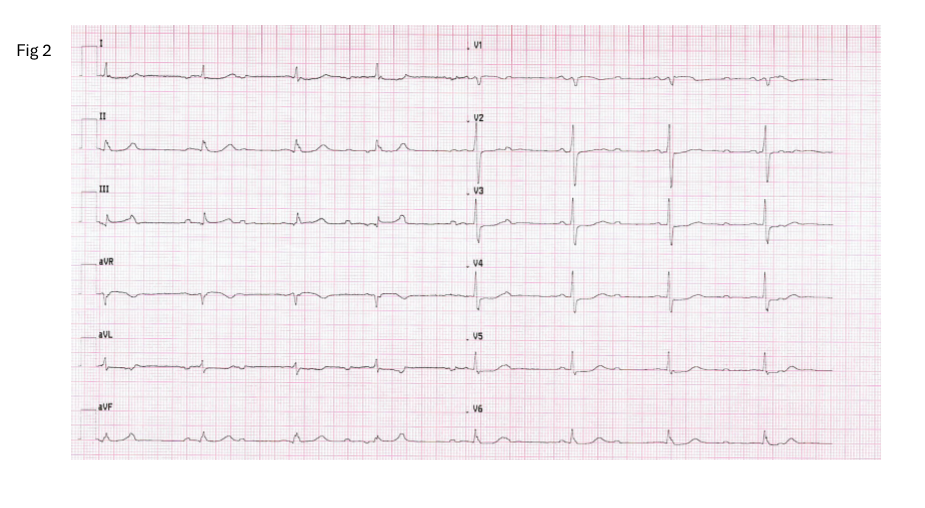
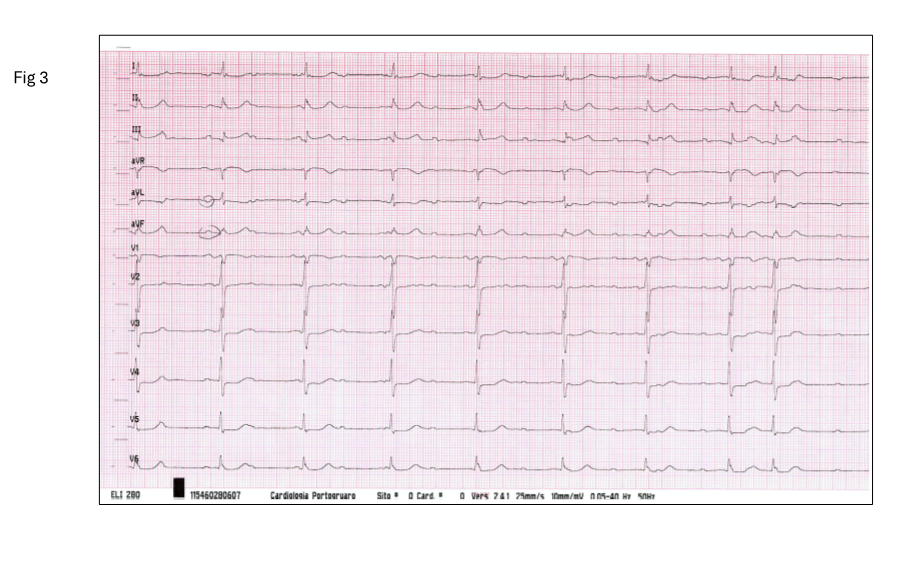
CASE PRESENTATION Male, 65 years old T2DM Iperlipidemia In 2009 undergone aortic valve replacement with a mechanical valve (+ CABG with LIMA on left anterior descending artery) for severe aortic valve stenosis. At discharge sinus rhythm; EF 60%. Follow up: 2017 EF 40%. In the 2022 atrial fibrillation occurred; at Echo: severe atrial enlargement (59 mm x 59 mm). Scheduled for a single attempt of elective electrical cardioversion (amiodarone started). Immediately after cardioversion the first repetitive ECG show a double atrial activity as shown in the figure 1 and 2 DISCUSSION 1) The ECG shows: Sinus rhythm with a P wave morphology suggesting probably a para-sinusal origin A second atrial activity is present with a stable cycle length and dissociation from the basal sinus rhythm The polarity and morphology of the P waves of the second atrial dissociated rhythm suggest a left atrial origin (negative in D1 aVL). The hypothesis proposed is that an interatrial dissociation is present and might be probably due to Bachmann bundle conduction block, beside the effect of amiodarone. It can be also discussed that a Bachmann jatrogenic block might be due the surgical sewing around the right atrial cannulation for extracorporeal circulation for cardioplegia, which may impair the interatrial connection via Bachmann bundle. Moreover, in some cases a retrograde cardioplegia (coronary sinus balloon cannulation) is needed; it may also impair the interatrial connection via coronary sinus. Unfortunately, the surgical report of the patient is not available. CONCLUSION The case shows a sinus rhythm with a second atrial activity with a stable slow cycle length and consequently inter-atrial dissociation.