Associazione Nazionale Medici Cardiologi Ospedalieri

CONGRESS ABSTRACT

CONGRESS ABSTRACT

HYPERTROPHYC CARDIOMYOPATHY IN FONTAN PATIENT RELATED TO LATE MID-VENTRICULAR OUTFLOW OBSTRUCTION

Basile Raffaella Chiara Naples (Naples) – Pediatric Cardiology, University Of Campania ‘Luigi Vanvitelli’, Former Second University Of Naples Monaldi Hospital-Aorn Ospedali Dei Colli,Naples, Italia | Marzullo Raffaella Naples (Naples) – Pediatric Cardiology, University Of Campania ‘Luigi Vanvitelli’, Former Second University Of Naples Monaldi Hospital-Aorn Ospedali Dei Colli,Naples, Italia | Scognamiglio Giancarlo Naples (Naples) – Achd Unit, Monaldi’S Hospital, -Aorn Ospedali Dei Colli,Naples,Italia | Fusco Flavia Naples (Naples) – Achd Unit, Monaldi’S Hospital, -Aorn Ospedali Dei Colli,Naples,Italia | Giordano Mario Naples (Naples) – Pediatric Cardiology, University Of Campania ‘Luigi Vanvitelli’, Former Second University Of Naples Monaldi Hospital-Aorn Ospedali Dei Colli,Naples, Italia | Ancona Roberta Naples (Naples) – Pediatric Cardiology, University Of Campania ‘Luigi Vanvitelli’, Former Second University Of Naples Monaldi Hospital-Aorn Ospedali Dei Colli,Naples, Italia | Del Gaizo Fortuna Naples (Naples) – Pediatric Cardiology, University Of Campania ‘Luigi Vanvitelli’, Former Second University Of Naples Monaldi Hospital-Aorn Ospedali Dei Colli,Naples, Italia | Fratta Fiorella Naples (Naples) – Pediatric Cardiology, University Of Campania ‘Luigi Vanvitelli’, Former Second University Of Naples Monaldi Hospital-Aorn Ospedali Dei Colli,Naples, Italia | Grimaldi Nicola Naples (Naples) – Achd Unit, Monaldi’S Hospital, -Aorn Ospedali Dei Colli,Naples,Italia | Limongelli Giuseppe Naples (Naples) – Inherited And Rare Cardiovascular Disease Unit, Department Of Translational Medical Sciences, University Of Campania “Luigi Vanvitelli”, Naples, Italia. | Sarubbi Berardo Naples (Naples) – Achd Unit, Monaldi’S Hospital, -Aorn Ospedali Dei Colli,Naples,Italia | Russo Maria Giovanna Naples (Naples) – Pediatric Cardiology, University Of Campania ‘Luigi Vanvitelli’, Former Second University Of Naples Monaldi Hospital-Aorn Ospedali Dei Colli,Naples, Italia

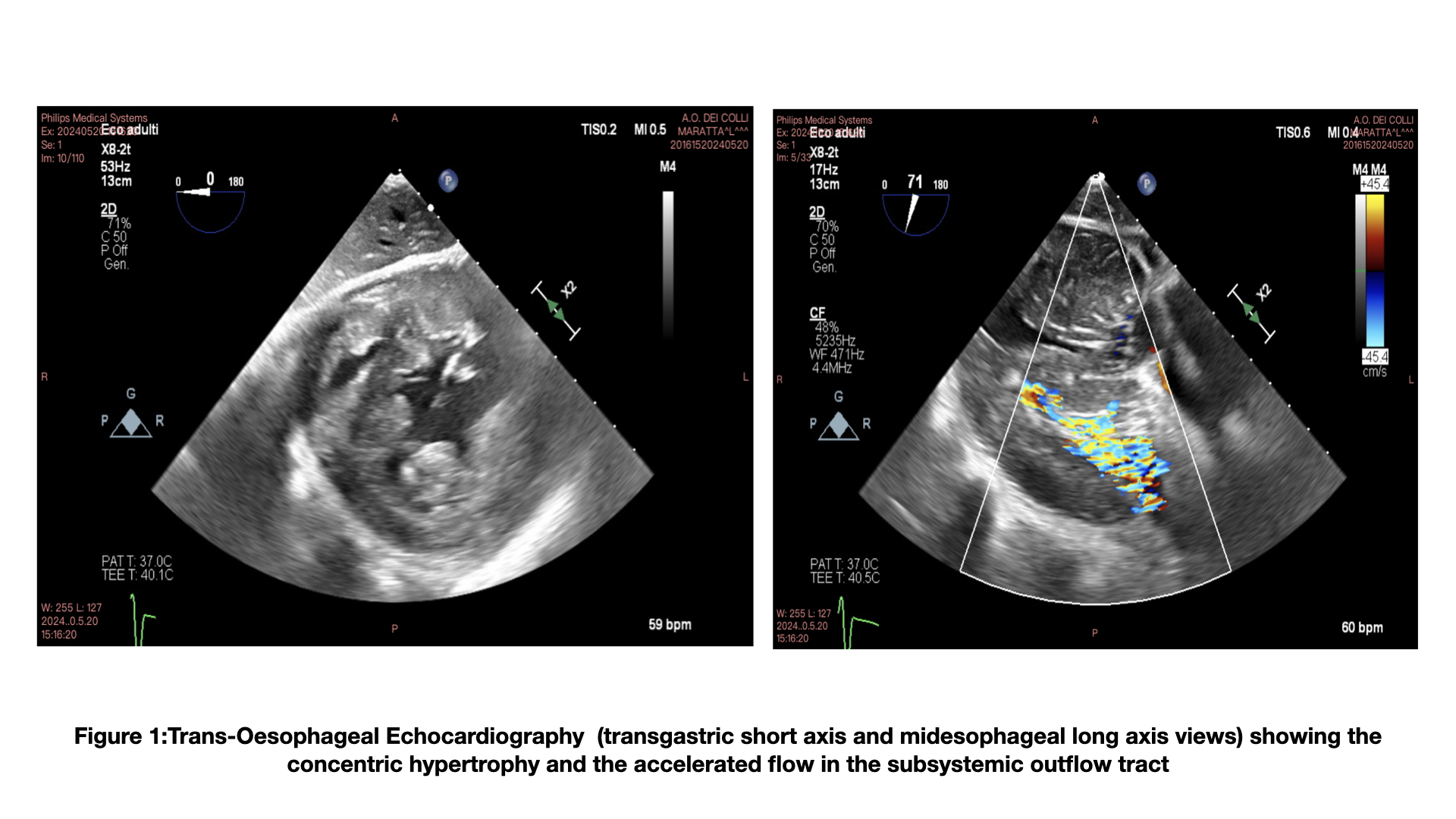
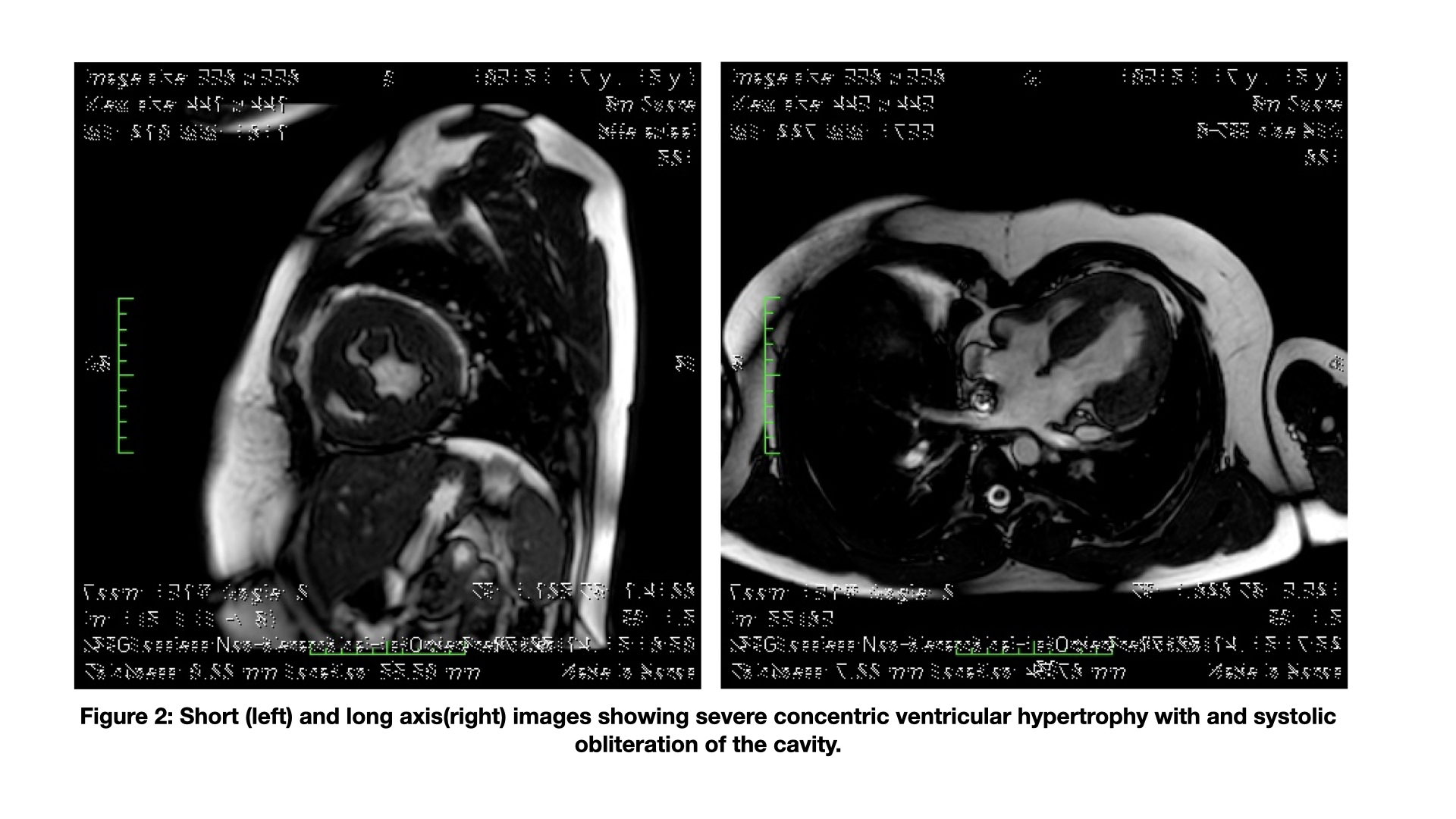
Background: Systemic ventricular outflow obstruction in patients with functionally univentricular heart underwent Fontan procedure promotes myocardial hypertrophy, and this has been shown to be an unequivocal risk factor for poor outcomes. Methods: A 17-year-old man with congenitally corrected transposition of the great arteries, pulmonary valve atresia and multiple ventricular septal defects and background of modified Fontan operation was regularly followed-up in our center. In 2021, the echocardiogram reveled a dynamic obstruction due to prominent muscle ridge of ventricle septum with a peak gradient of 30 mmHg. Thus, he was referred to CMR which showed unobstructed surgical Fontan connections and normal univentricular size and function. Over the next 4 years, the gradient gradually increased across the systemic ventricular outflow tract (range 60-80 mmHg) and the single ventricle developed a severe concentric hypertrophy with a mild dysfunction and a restrictive filling pattern. These data were confirmed by the transesophageal echocardiogram (Fig1) and the newest CMR(Fig2). The patient was referred to genetic screening for cardiomyopathies and none pathogenetic mutations were detected. Further investigation revelead that the patient had reduced exercise tolerance (VO2 peak 11.1 ml/kg/min). Beta-blocker and SGLT2 inhibitor treatment were introduced and ICD therapy was indicated for frequent non-sustained ventricular tachycardias. Currently, the cardiac transplantation process evaluation is ongoing. Results: We hypothesized that the hyperthrophic cardiomyopathy was related to systemic ventricular outflow obstruction supported by a prominent muscle ridge of the ventricular septum concurring to narrow the space between the right side-ventriculoinfundibular fold and the infundibular septum. Conclusions: Systemic ventricular outflow obstruction after the Fontan operation is a progressive lesion. We suggest that patients at risk for progressive ventricular outflow obstruction should be managed aggressively in order to get to the optimal care.