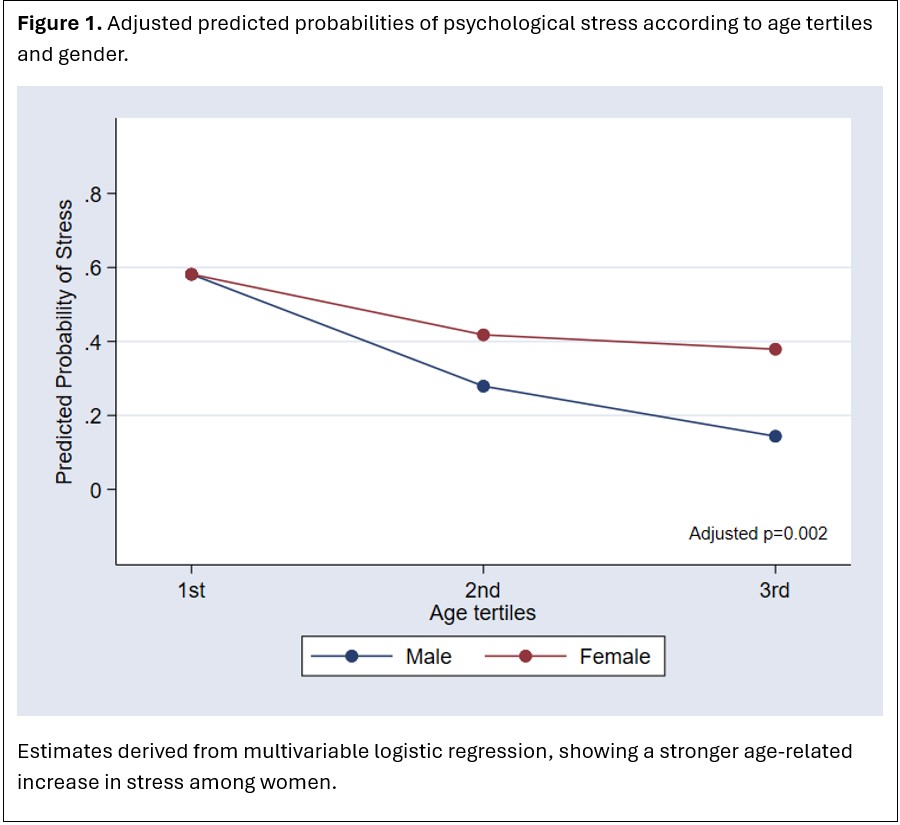
Background: Gender-related differences in cardiovascular risk factors and psychosocial stress may influence long-term outcomes; however, their interaction with age in outpatient cardiology populations remains understudied. Methods: To explore that, we analyzed 649 consecutive cardiac outpatients (362 males, 287 females). Clinical parameters included systolic and diastolic blood pressure, heart rate, diabetes, smoking, and antihypertensive therapy. Psychosocial factors included physical activity, stress, and psychotropic drug use. Multivariable linear and logistic regression models were applied; age-gender interactions for stress were examined via logistic regression and predictive margins, with age categorized into tertiles. Results: Heart rate did not differ significantly between men and women. Men had higher systolic (149±21 vs 144±23 mmHg, p=0.003; adjusted β=3.7, p=0.019) and diastolic blood pressure (83±11 vs 80±11 mmHg, p<0.001; adjusted β=3.1, p<0.001). Smoking (40% vs 22%, p<0.001; OR 2.2, p<001), hypertension (60% vs 48%, p=0.001; OR 1.5, p=0.019), and diabetes (14% vs 7%, p=0.002; OR 2.1, p=0.006) were more prevalent in men. Women reported higher psychological stress (OR 1.8, p<0.001) and psychotropic drug use (OR 2.9, p<0.001). Physical activity was lower among women (OR 0.7, p=0.02) and was inversely associated with stress across genders and age groups. Significant age–gender interaction was observed for stress, with older women showing disproportionately higher stress levels (3rd age tertile: females 38% vs males 14%, p<0.01). Conclusion: These findings highlight clinically relevant age- and gender- specific patterns in cardiovascular and psychosocial profiles among cardiac outpatients. Men present a higher burden of traditional cardiovascular risk factors, whereas women, particularly at older ages, experience greater psychological distress. These findings support the need for age- and gender-tailored strategies in outpatient cardiovascular and psychosocial risk management.