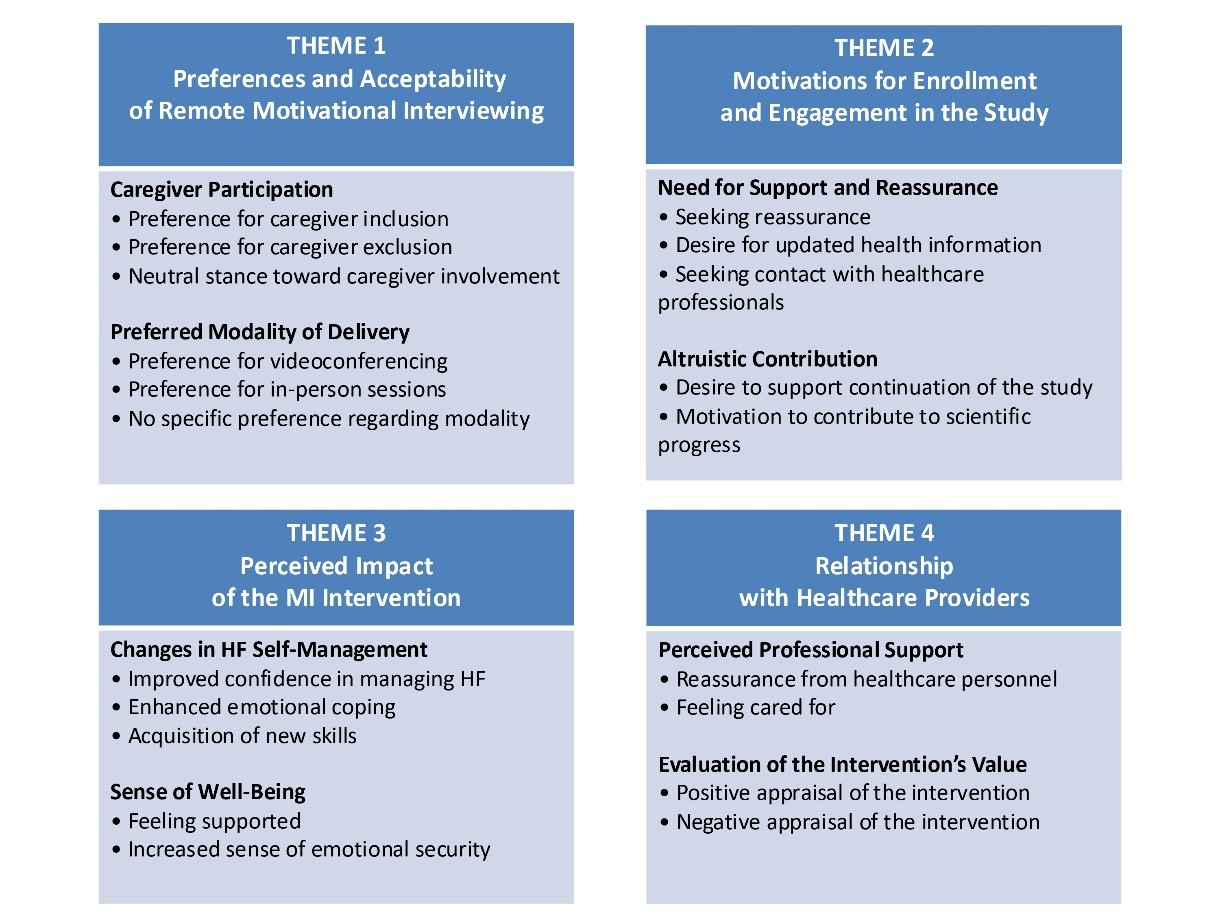
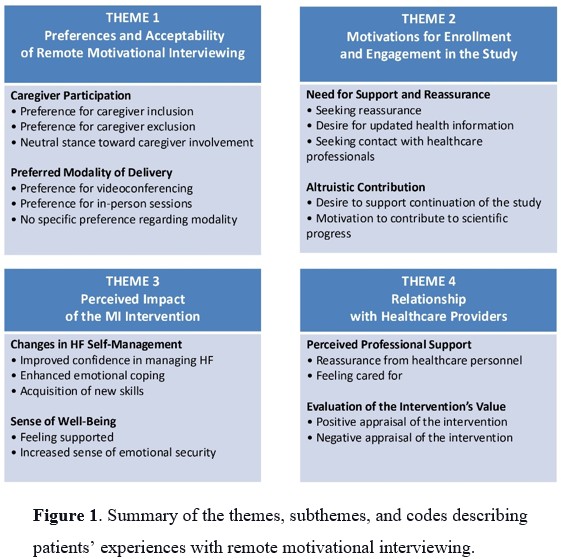
Background Heart failure (HF) is a complex chronic condition requiring effective self-care behaviours to prevent adverse outcomes. Remote motivational interviewing (MI) may represent a sustainable and acceptable intervention to support self-care in individuals with HF, but the literature does not report how this type of intervention is experienced and perceived by patients. Aim To explore the experiences and perceptions of patients with HF who received remote MI within the multicentre ReMOTIVATE-HF randomised controlled trial (RCT). Methods ReMOTIVATE-HF is an ongoing dyadic multicentric RCT comparing remote MI with standard care in enhancing self-care in individuals affected by HF. At the end of participation, patients from three Centres were involved in semi-structured interviews. Data were analysed through an inductive phenomenological approach and thematic analysis. Nineteen codes were organised into nine subthemes and four overarching themes. Results Twenty patients participated in the interview. Four themes emerged from the thematic analysis ( Figure 1 ): (1) Preferences and acceptability of remote MI , including attitudes toward caregiver participation, preferred delivery modality (videoconferencing vs in-person), and session format (group vs individual). Patients expressed varied but clear preferences, with overall acceptance of the remote approach. (2) Motivations for enrolment and engagement , such as the need for reassurance, updated health information, contact with healthcare professionals, and the desire to contribute to research. (3) Perceived impact of the intervention , including improved HF self-management, enhanced emotional coping, acquisition of new skills, and a strengthened sense of support and wellbeing. (4) Relationship with healthcare providers , highlighting reassurance from nurses, feelings of being cared for, and generally positive evaluations of the intervention’s value. Conclusions Patients perceived MI as helpful, accessible, and supportive of self-care behaviours; they experienced caregiver involvement as meaningful, and nurses emerged as key figures in providing reassurance and continuity of care. Findings support the acceptability and potential clinical applicability of remote MI to enhance HF self-care.