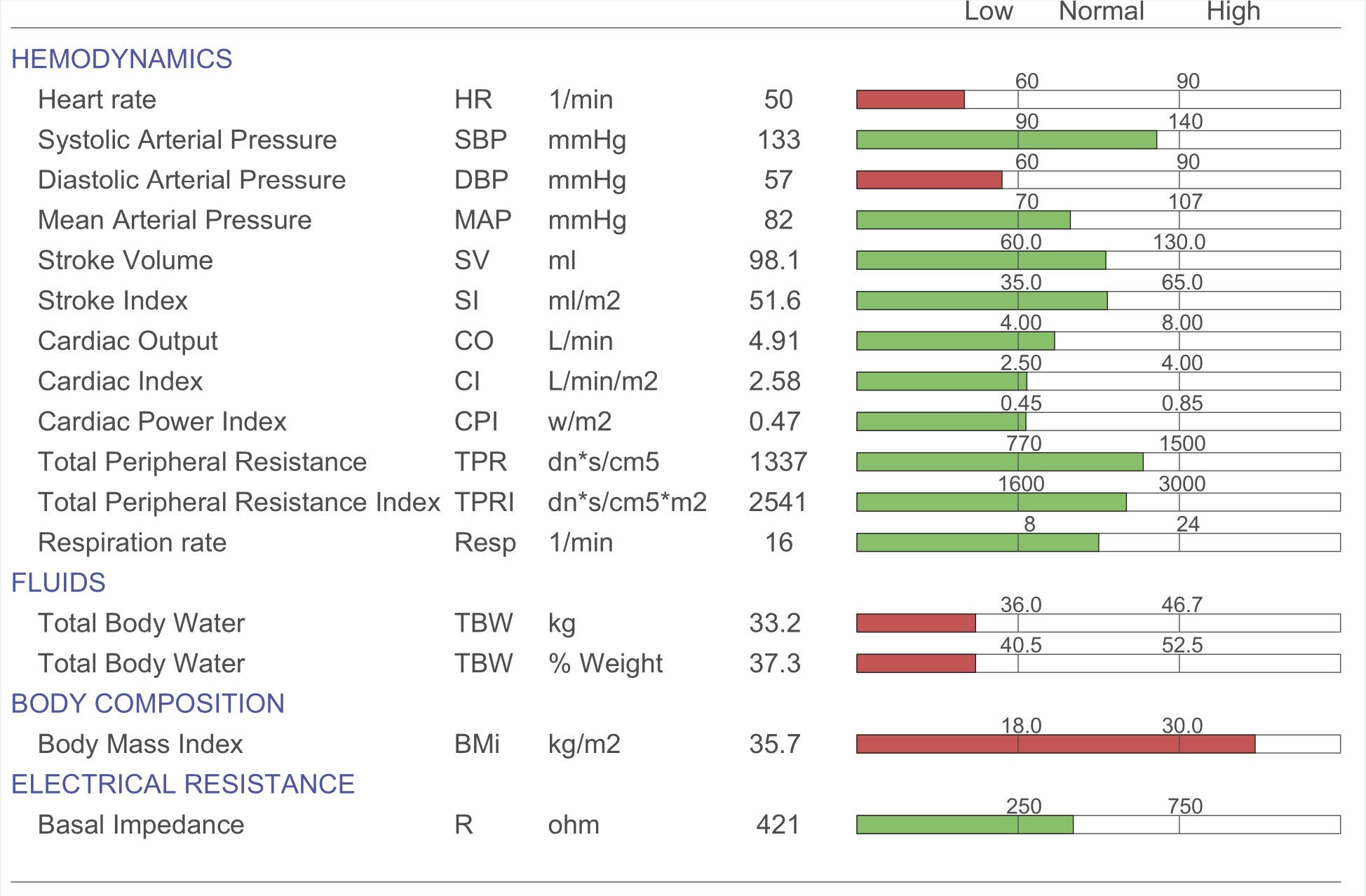
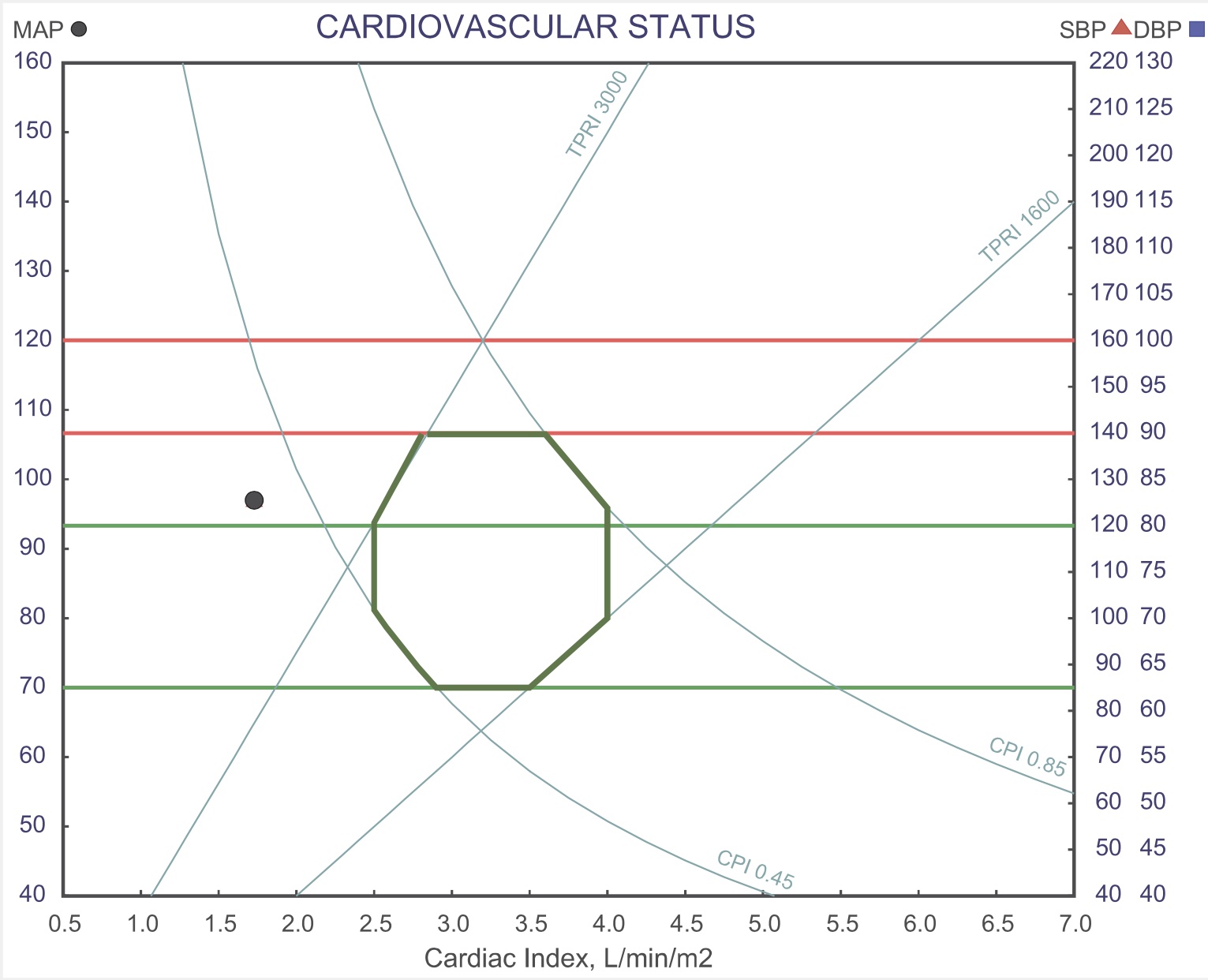
Background: Systemic congestion can be identified as a cause and result of worsening cardiovascular function.Being able to correctly identify the hemodynamic status of the patient can surely address the therapeutic process with early treatment adjustments.However,nowadays the gold standard includes invasive measurements.As an alternative,NiCas represents a valid new non-invasive technology based on regional bioimpedance. Purpose: We aim to assess the usefulness of Nicas in the therapeutic management of patients with Heart Failure. Methods: We conducted our analysis on 60 patients with Chronic Heart Failure(CHF) who came to our Day Hospital.The average dosis of “home” diuretics was 195 mg of Furosemide p.o. daily. All patients underwent several measurements of cardiac parameters using Nicas,upon admission,after i.v. diuretics and shortly before discharge.Measurements recorded by NiCas were stroke volume,stroke index,cardiac output,cardiac index,total body water,total peripheral resistance, cardiac power index and granov-goor index.Based on the data obtained, integrating it with blood chemistry tests, we adjusted the diuretic therapy, personalizing it for each patient. Results: The analysis of data obtained from non-invasive measurements allowed therapeutic decisions to be modified with significant adjustments that could not have been made based on clinical evaluation alone.More in detail,an 83-year-old obese male patient with ischemic HFpEF, diabetes,chronic kidney disease and permanent atrial fibrillation was admitted to our day hospital for mild dyspnoea and lower limb edema.While clinical assessment suggested that diuretics should be administered,Nicas showed low levels of total body water compared to a high body mass index.Therefore, focusing exclusively on clinical assessment, diuretics would have had a negative effect on patient and symptoms could be explained by obesity and possible lymphatic insufficiency. Morover,NiCas proved to be useful in detecting significant amounts of fluids in a 75-year-old patient with HFrEF and no apparent need of diuretics, allowing for proper therapeutic adjustment. Conclusions: The NiCas is a new non-invasive system which has been demonstrated to be useful in the therapeutic management of patients with CHF.By using this technology,it is possible not only to customise patient's treatment but also to detect subclinical conditions,preventing all worsening and hospitalisations,the latter associated with a worse prognosis.