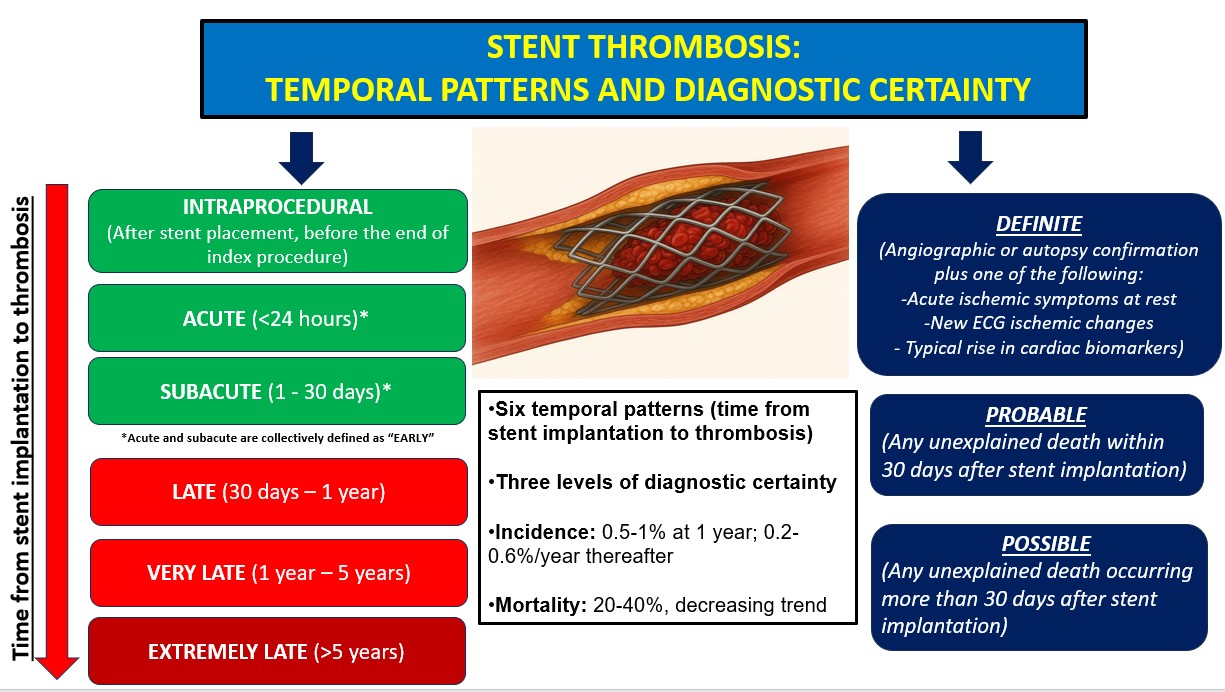
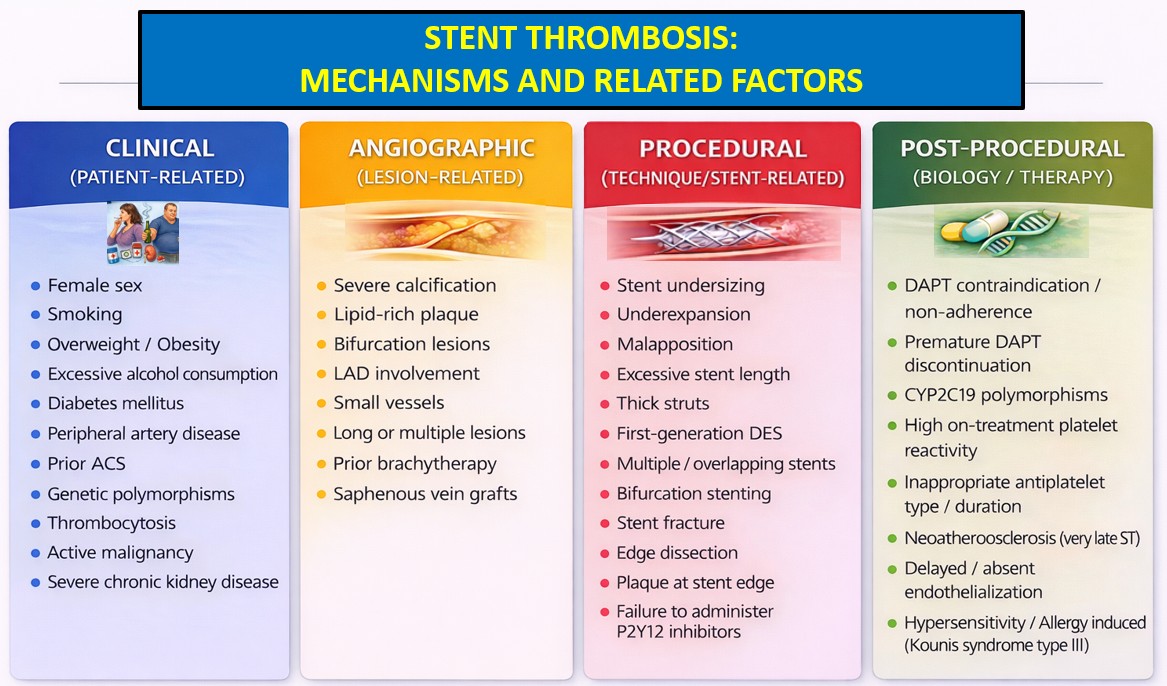
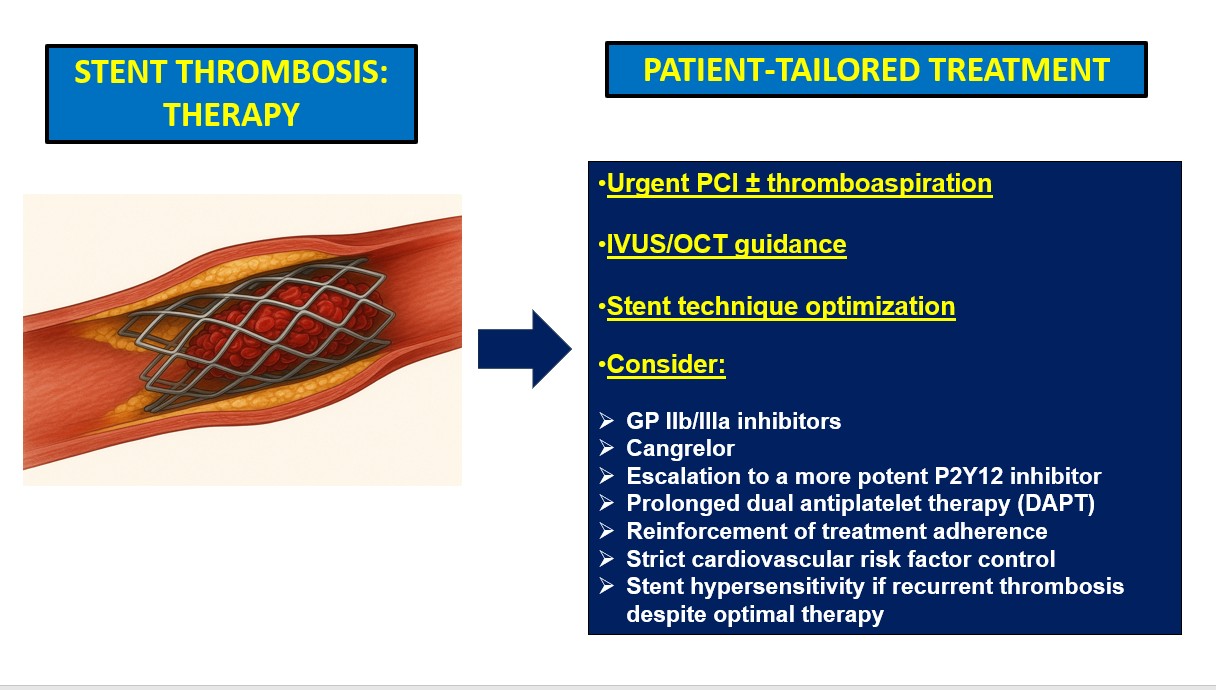
Stent thrombosis (ST) remains one of the most feared complications of percutaneous coronary intervention (PCI). Although its incidence has markedly declined with new-generation drug-eluting stents (DES), ST still commonly presents as sudden cardiac death or ST-elevation myocardial infarction and is associated with high morbidity, mortality, and risk of recurrence. The progressive shift from early to very late ST, driven by complex biological, device-related, pharmacological, and procedural factors, has renewed interest in its mechanisms and prevention. This narrative review summarizes contemporary evidence on the epidemiology, temporal classification, pathophysiological mechanisms, diagnostic approaches, and management of ST in the modern PCI era. A narrative literature review was conducted using PubMed, Embase, and major cardiology guidelines up to November 2025, including data from randomized trials, large registries, intracoronary imaging studies, and key DES development research, without formal systematic methodology. Current-generation DES have reduced ST incidence to approximately 0.5–1% during the first year and 0.2–0.6% annually thereafter, with very late events accounting for the majority of cases. ST is multifactorial and involves patient-related comorbidities, complex coronary anatomy, high thrombotic burden, suboptimal stent expansion or malapposition, premature interruption of dual antiplatelet therapy (DAPT), delayed endothelialization, neoatherosclerosis, and hypersensitivity reactions. Intravascular imaging, particularly optical coherence tomography and intravascular ultrasound, plays a central role in identifying procedural mechanisms, optimizing stent implantation, and clarifying causes of both early and late events. Acute management remains challenging because large thrombus burden and microvascular obstruction reduce procedural success compared with PCI for de novo lesions. High-pressure post-dilatation, selective thrombus aspiration, potent P2Y12 inhibitors, glycoprotein IIb/IIIa inhibitors in selected cases, and individualized antithrombotic strategies represent key therapeutic options. Despite major advances, ST remains a rare but devastating event. Prevention, through meticulous imaging-guided PCI, personalized DAPT strategies, aggressive risk-factor control and careful stent selection, remains the most effective approach in contemporary practice.