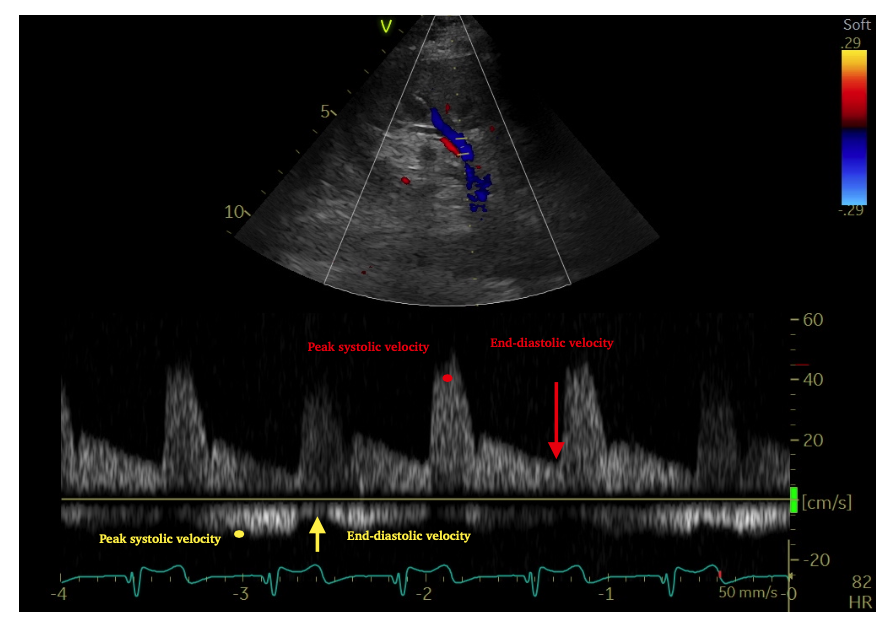
Background: Renal congestion caused by increased central venous pressure has been one of the main pathophysiologic findings in the Fontan associated kidney dysfunction.Despite widespread availability of screening tools for renal function, data regarding the kidney diseases in Fontan patients are very limited.We aim to characterize new approaches to evaluate renal congestion using Doppler ultrasonography in Fontan population evaluating the clinical relevance of the Renal Resistance index (RRI) compared to conventional surrogates for chronic kidney diseases, adverse clinical events and/or other surrogates of Fontan Failure Methods: RRI was assessed using Doppler ultrasonography in 22 patients who had previously undergone Fontan palliation.Clinical parameters, echocardiography, and biochemistry were recorded. Standard renal function assessment was obtained by the measurement of creatinine serum levels and the estimation of the glomerular filtration rate (GFR) using bedside Schwartz” equation in children (< 18 years) and the Modification of Diet in Renal Disease (MDRD) equation in adults. The IVC diameters were indexed to the body surface area (iIVC). Results: Median age was 16 +5 years and 72% were female patients. All patients had previously undergone the Fontan procedure at a median age of 5 years (range 1-11 years). The median GFR was 120,8 mL/min/1.73m 2. Patients with RRI > 75 showed a higher rate of clinical adverse events after Fontan palliation (75%) compared to those with RRI < 75 (16%) (p=0.0178). However, there were no significant relations between the RRI and the finding of the iIVC diameter > 1 cm/m2 Conclusions: The renal doppler ultrasonography may be a useful tool to monitor Fontan pathophysiology. Specifically, high RRI may predict the risk of Fontan failure in these patients. Continued investigation of the e"ects of chronically venous congestion on kidneys and other factors associated with renal dysfunction in patients with Fontan circulation is warranted. Fig1: Evaluation of RRI using Spectral Doppler ultrasound.The upward Doppler signal indicated the intrarenal arterial flow, and the downward Doppler signal indicated the venous flow.