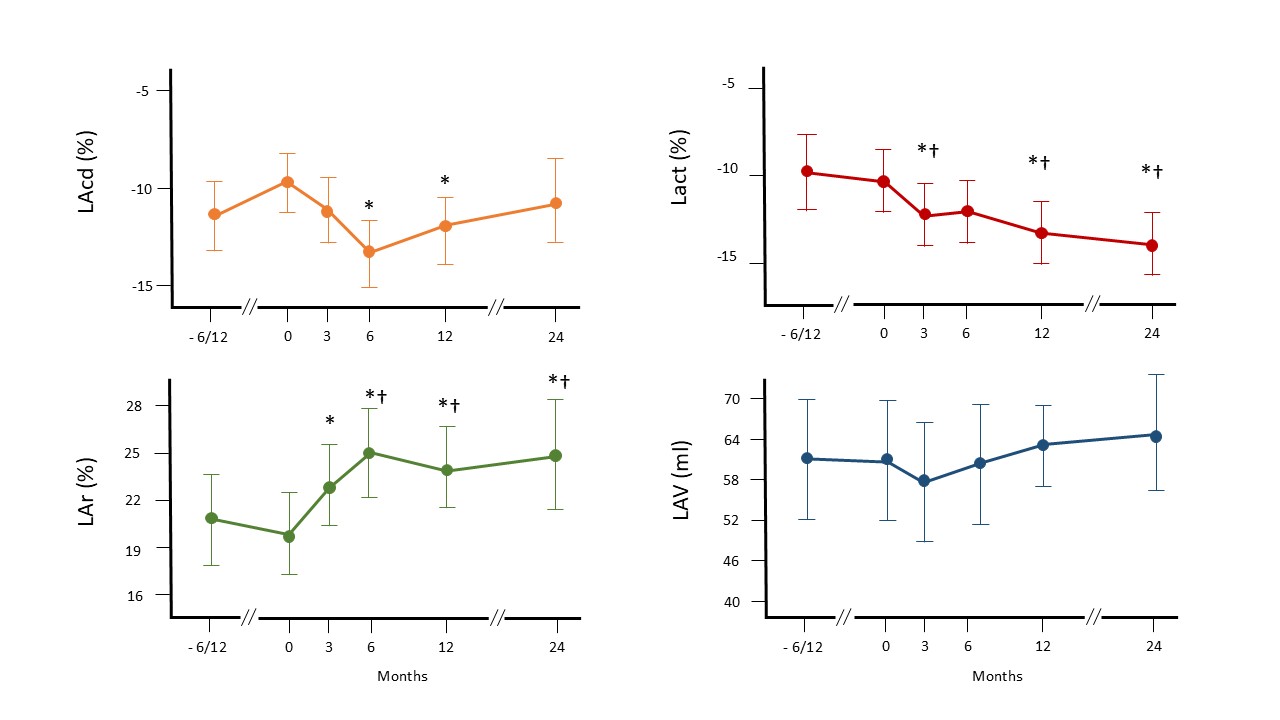
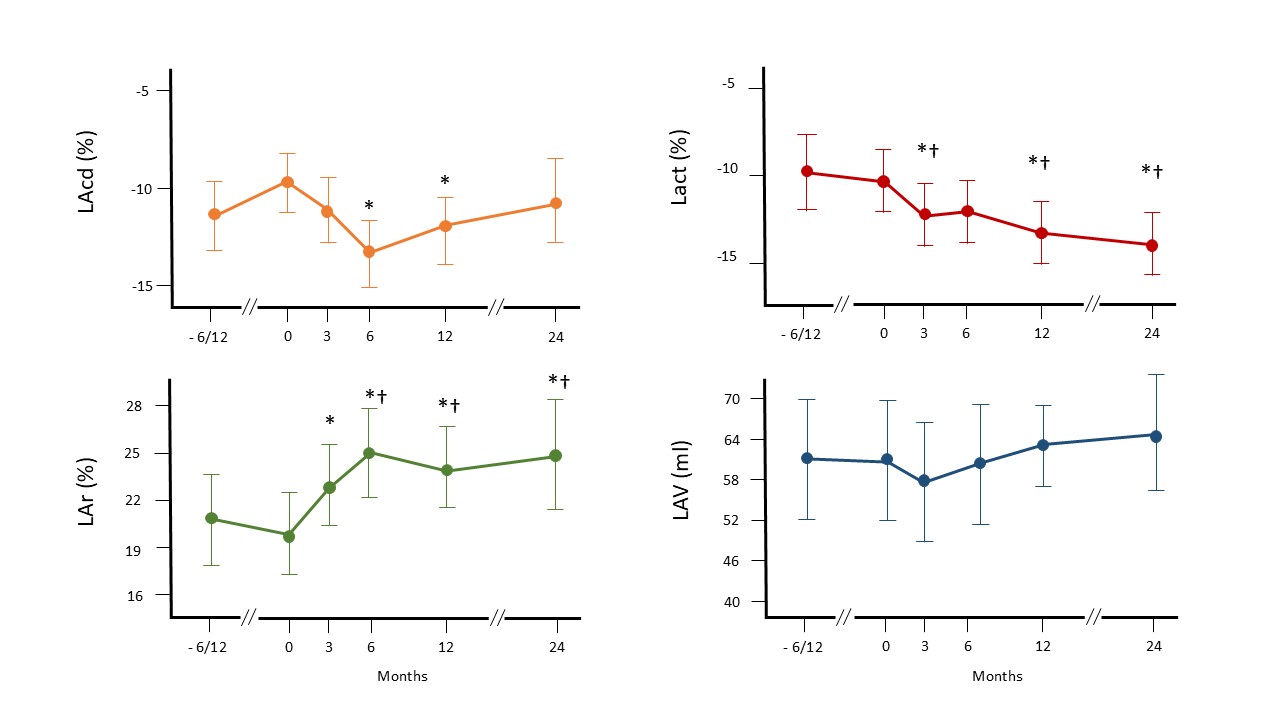
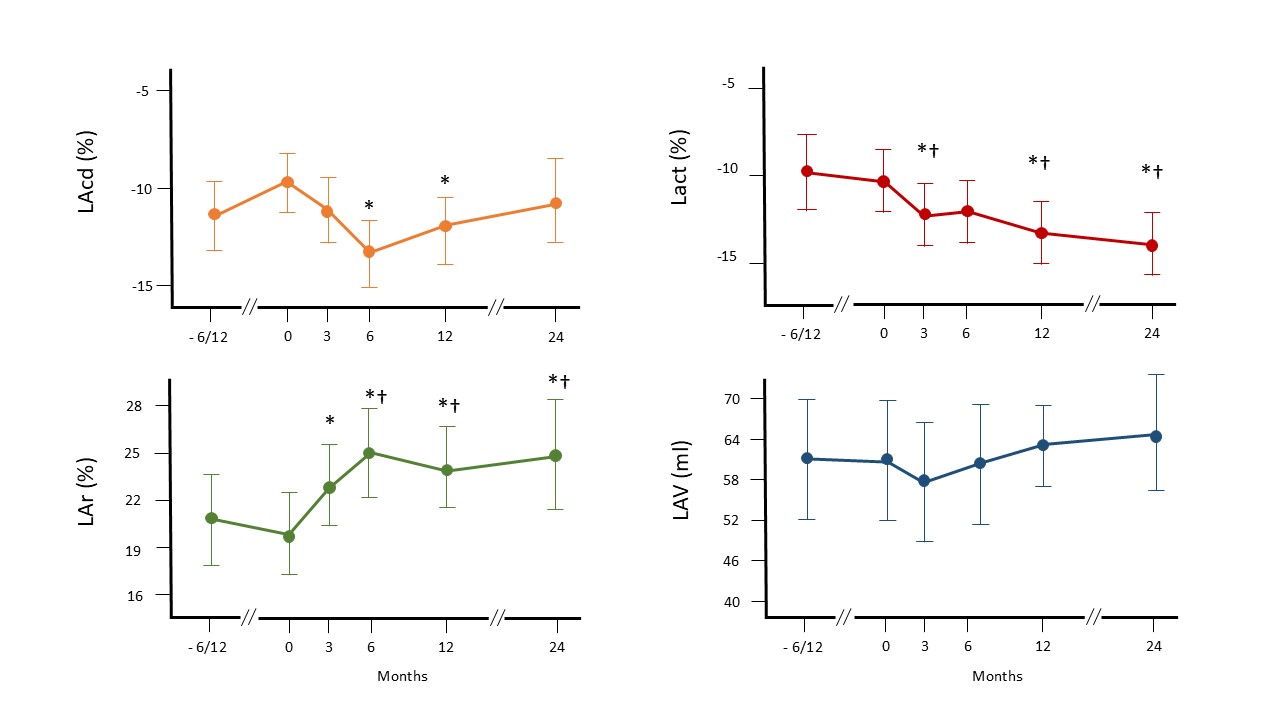
Background: Type 2 sodium-glucose cotransporter inhibitors (SGLT2i) have shown clinical benefits in patients affected by chronic heart failure (CHF), but the mechanisms underlying their beneficial effects are still debated. Over the last years, SGLT2i showed its ability to improve left and right ventricular function, whereas its impact on atrial function remains less defined. Objective: The aim of this study was to evaluate the effects of SGLT2i on echocardiographic parameters of left atrial function in outpatients affected by CHF with reduced ejection fraction (HFrEF). Methods: At baseline, all patients underwent a medical visit, an ECG and an echocardiographic examination. The evaluations were repeated at 3, 6, 12, and 24 months after the introduction of SGLT2i. In a subgroup of patients, an echocardiographic evaluation was performed 6-12 months before SGLT2i introduction. Left atrial function was assessed by two-dimensional speckle tracking analysis by calculating left atrial reservoir (LAr), conduit (LAcd) and contraction (LAct). Left atrial volume was also calculated. Changes in the repeated measures were evaluated by linear mixed models. A p<0.05 was considered significant. Results: Sixty HFrEF patients (83% males, age 61 ± 13, mean LVEF 31 ± 7%, NYHA class II in 75% and III in 25%) were enrolled. All were in conventional medical therapy (sacubitril/valsartan or ACE inhibitors or angiotensin II receptor blockers in 100%, beta-blockers in 100%, mineralcorticoid receptor antagonists in 87%, loop diuretics in 62%). As shown in the figure, LAr increased from 3 months onwards, with sustained benefit up to 24 months. LAcd improved significantly at 3 and 12 months (p<0.05), while LAct showed a progressive and persistent improvement from month 3 to month 24. Left atrial volume (LAV) remained unchanged throughout the follow-up.