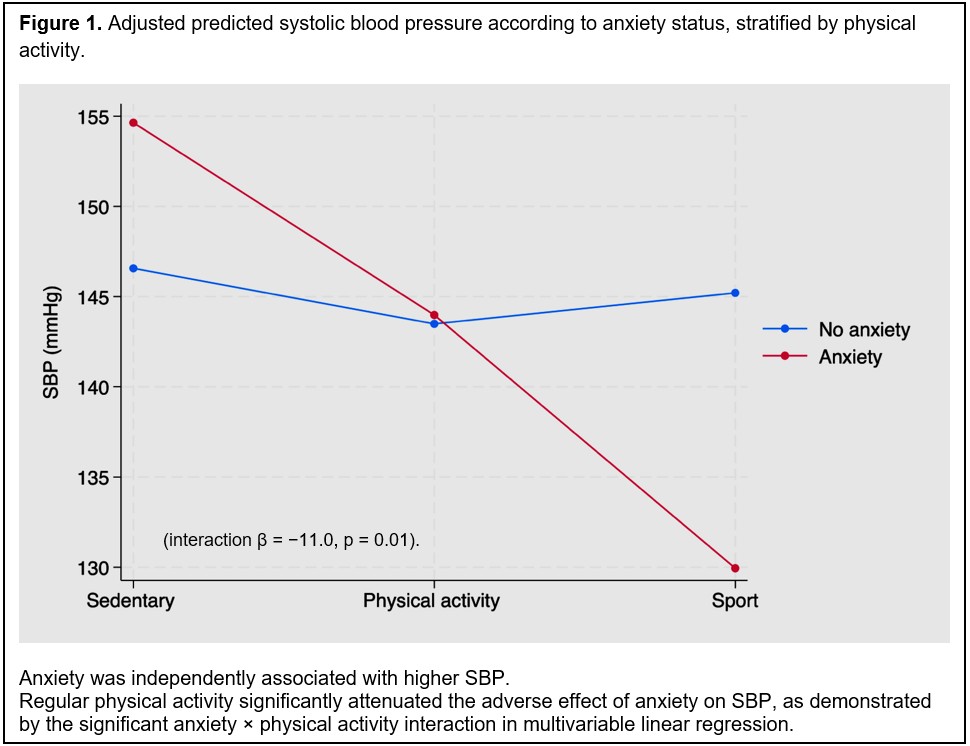
Introduction : Regular physical activity is known to reduce cardiovascular (CV) risk, but its potential role in modulating the impact of anxiety on CV parameters remains underexplored. Aim : To investigate the role of anxiety and physical activity on CV parameters. Methods : In this cross-sectional study, 203 consecutive patients presenting to a cardiac outpatient clinic were recruited and categorized into three groups based on their physical activity levels, as assessed according to WHO guidelines. Participants reporting no physical activity were classified as sedentary. Those performing less than 150 minutes of moderate-intensity aerobic activity or less than 75 minutes of vigorous-intensity activity per week were considered practicing physical activity, whereas participants meeting or exceeding these thresholds were classified as sportive ones. Anxiety was assessed using a doctor-administered psycho-emotional questionnaire. Resting systolic (SBP), diastolic (DBP) blood pressure, and rest heart rate (RHR) were evaluated twice, 5 minutes apart, and compared between groups. Data were analyzed using univariable and fully adjusted (by age, sex, BMI, smoke, coffee, alcohol, nocturia, BMI, visceral fat, diabetes, hypercholesterolemia) linear regression models. In the present abstract only fully-adjusted results are shown. Results : Mean age was 62.7 ± 12.5 years; 53% were male; 81 (40%) were hypertensives. Mean BP was 144±21/84±10 mmHg and RHR 67±12 bpm. Sedentary participants: 54 (26%), physical activity ones: 109 (54%), sportive ones: 40 (20%). Presence of anxiety was reported in 68 patients (34%), more frequently in females (χ²=10.5, p=0.001) with no differences across activity groups. At univariable and fully adjusted model, physical activity/sport was found to be associated with lower SBP (β=-3.8±1.9, p=0.04) and anxiety with higher RHR (β=4.5±2.0, p=0.02). When a formal interaction between anxiety and physical activity was set, anxiety was found to be associated with higher SBP (β=10.1±4.8, p=0.03) while physical activity reduced the impact of anxiety on SBP (interaction β=-11.0±4.4, p=0.01). No significant interactions were found for DBP or HR. Results kept very similar at the second measurements. Conclusions : In the present study physical activity was found to be associated to lower SBP values, chiefly in the patients with anxiety. Physical activity might be recommended to improve cardiovascular function, particularly in those with psychological anxiety.