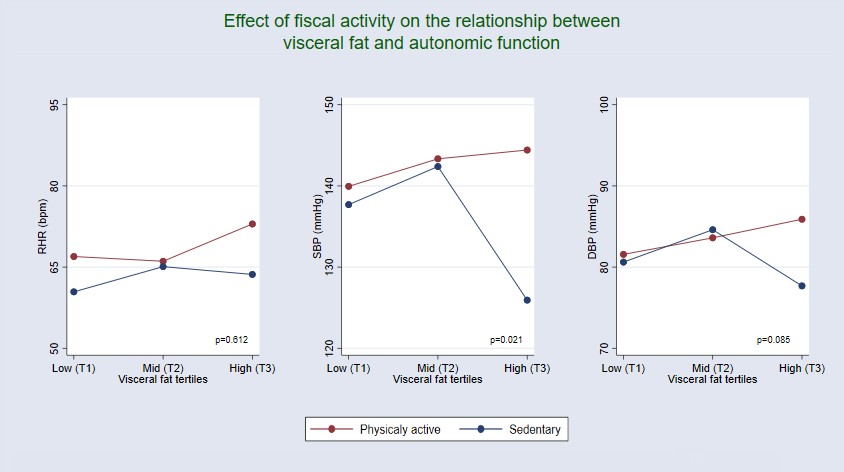
Background: Excess visceral fat is metabolically active and linked to chronic inflammation, insulin resistance, and autonomic dysregulation, which may elevate resting heart rate (RHR) and blood pressure (BP). Lifestyle factors, such as physical activity, could influence these autonomic effects in cardiac patients. Objective: To examine the association between visceral fat and markers of sympathetic activation in cardiac outpatients, and to evaluate whether physical activity modifies these relationships. Methods: In this single-visit, cross-sectional study, 203 consecutive cardiology outpatients were assessed. Visceral fat was measured using the OMRON BF511 device. SBP, DBP, and RHR were recorded twice in the clinostat position and averaged. Demographic, clinical, pharmacologic, and lifestyle data—including physical activity—were collected. Multivariable linear regression analyzed associations of visceral fat (continuous and tertiles) with RHR, SBP, and DBP, adjusting for age, sex, comorbidities, and medications. Interaction terms tested effect modification by physical activity. Results: Mean age was 62.7 ± 12.5 years; 53% were male. Patients in the highest visceral fat tertile showed significantly higher RHR (p = 0.022), SBP (p < 0.001), and DBP (p < 0.001). After adjustment, visceral fat remained independently associated with RHR (β = 0.71 bpm per SD; 95% CI 0.26–1.16; p = 0.002and DBP (β = 0.47 mmHg per SD; p=0.012). Sport activity showed a significant negative interaction with visceral fat on SBP (β = –1.99 mmHg, p = 0.021) and a trend toward attenuating the effect on DBP (β = –0.81 mmHg, p = 0.085), indicating that exercise mitigates the hemodynamic impact of visceral adiposity. Conclusion: Visceral adiposity contributes to higher RHR and DBP in cardiac outpatients. Regular physical activity attenuates its effect on systolic, and potentially diastolic, blood pressure. These findings highlight the protective role of regular exercise in reducing the cardiometabolic risks linked to visceral adiposity.