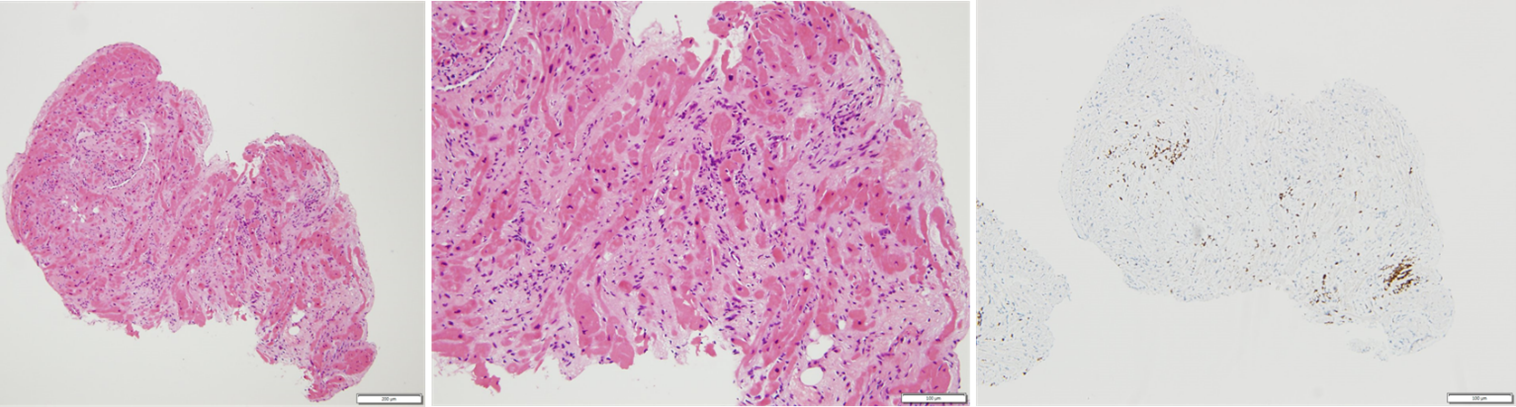
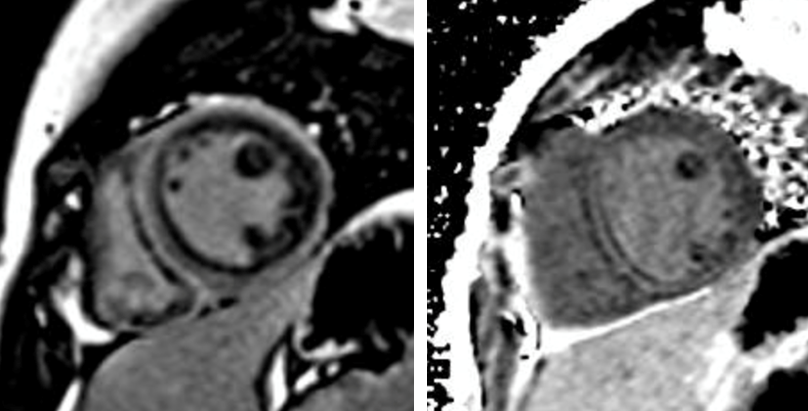
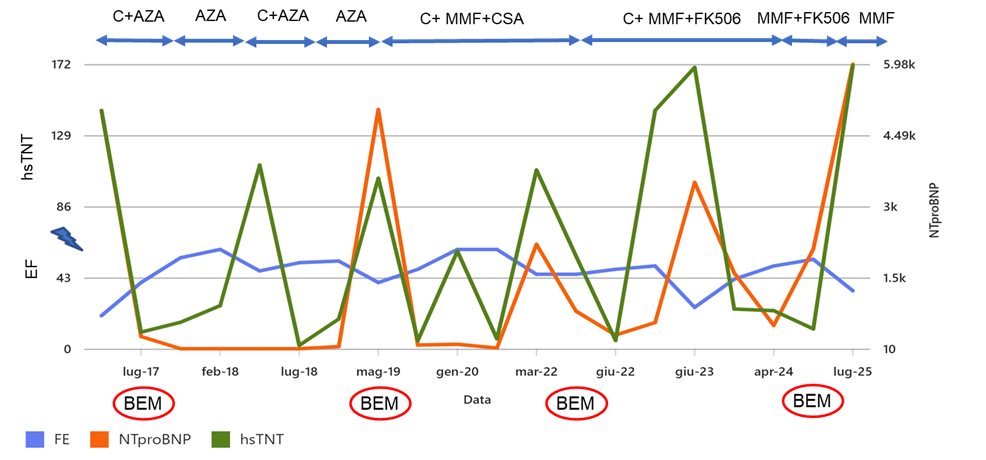
Background and aim: Acute myocarditis (AM) is an important cause of heart failure and mortality in children and adults. We describe a case of a 1-year old girl with relapsing autoimmune myocarditis multi-resistant to conventional immunosuppressive therapy. Case report: A 1-year old girl was referred to our hospital for an incidental finding of heart enlargement at chest X-Ray performed for respiratory infection. Echocardiogram showed dilated cardiomyopathy (DCM) with biventricular involvement, severe systolic dysfunction and severe mitral regurgitation (MR). hsTNT and NTproBNP were high, genetic test and metabolic screening resulted normal. Endomyocardial biopsy (EMB) was performed and showed the presence of lymphocytic myocarditis, virus negative (figure 1). Anti-heart antibodies (AHA) were negative. Patients started corticosteroids and azathioprine with clinical and instrumental improvement. After few months, she showed a complete recovery, but after cortisone tapering DCM reappeared. She performed a second EMB that was no diagnostic and a cardiac magnetic resonance (CMR) confirmed the presence of AM with oedema and fibrosis. She was treated with corticosteroids, Mycophenolate Mofetil (MMF) and Cyclosporine, with cardiac recovery. When the cortisone was tapered, the patient presented again ventricular dysfunction. She was hospitalized, EMB was repeated and confirmed the presence of lymphomonocytic infiltration with necrosis and fibrosis. CMR showed extensive fibrosis (figure 2). She was treated with cortisone, MMF and Tacrolimus. Ventricular function recovered and the child remained stable for a long time with low cortisone dose. After 2 years, EBM was repeated and resulted negative; while AHA were positive. MMF was continued, while Tacrolimus and cortisone were discontinued. After 1 month, she presented again biventricular dysfunction with severe MR, and she experienced ventricular fibrillation with cardiac arrest. She was resuscitated and treated with ECMO. After few days, she presented cerebral bleeding and brain death. Autopsy showed the presence of lymphomonocytes myocardial infiltration with necrosis and fibrosis. Conclusions : This is the younger case reported in literature with autoimmune myocarditis multi-resistant to combined immunosuppressive therapy. These patients are very rare and the management remain challenging. A multidisciplinary approached for targeted advanced therapy is demanded.