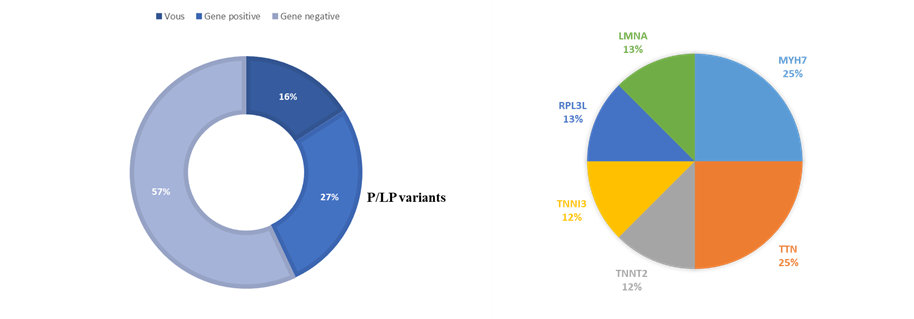
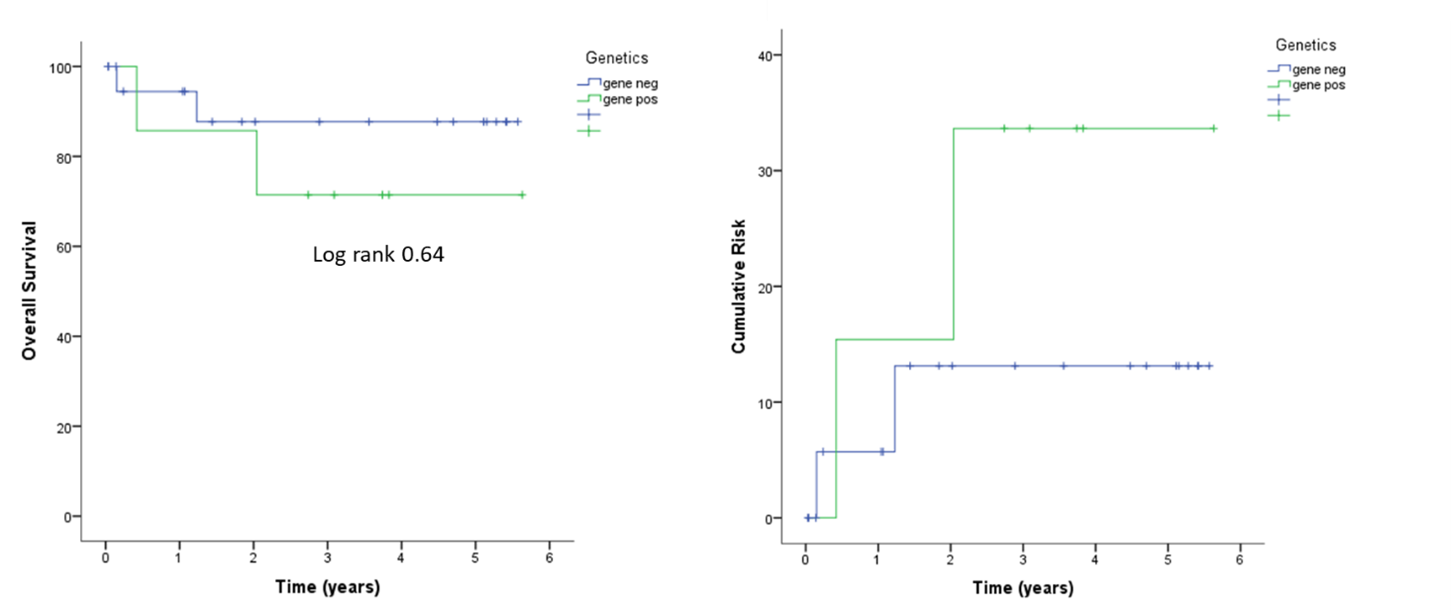
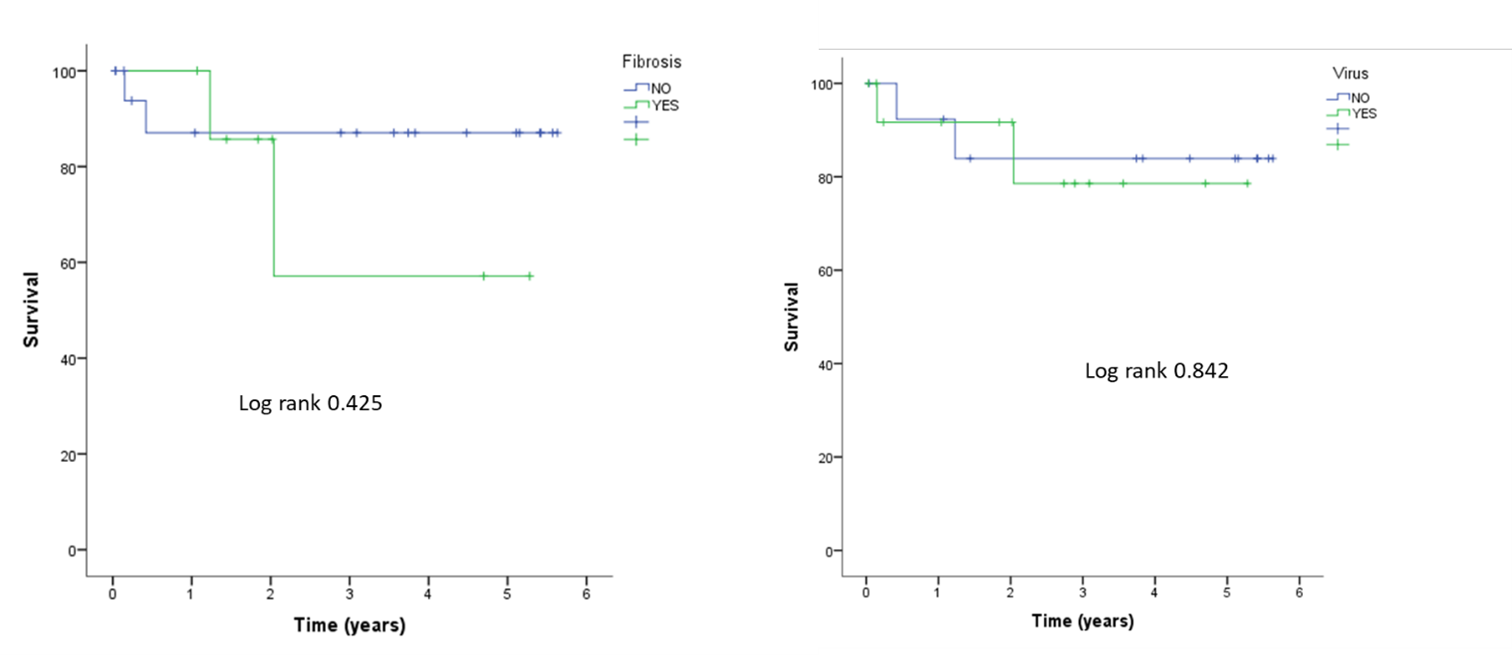
Background and aim: Acute myocarditis (AM) is an important cause of heart failure in children and adults. The pathogenesis is not completely understood and pathogenetic (P) variants in cardiomyopathy genes may play a role in determining the clinical course and outcomes of patients with AM. We aim to determinate the prevalence of pathogenic/likely pathogenic (P/LP) cardiomyopathy gene variants in a cohort of pediatric patients with biopsy-proven (BP) AM and the correlation with outcome. Methods: We collected data from a cohort of 124 paediatric patients with BP-AM, we selected only patients that performed genetic tests. We compared gene positive and gene negative groups. T-student test and Kaplan Meier analysis were used. Outcome included death and heart transplantation. Results: 30 contemporary consecutive patients performed genetic test and were included in the study. Prevalence of P/LP gene variants was 27%, with a prevalence in sarcomeric genes (figure 1). No pathological mutations in desmosomial genes were found. No statistically significant differences were detected between gene positive and gene negative groups. In particular, analysis showed no difference in terms of fibrosis, viral infection or coinfenction, ejection fractions and outcome (figure 2 and 3). Moreover, no differences were found in recovery or in requiring mechanical circulatory support (MCS) (table 1). Conclusions : The link between genetics and myocarditisremained. Probably myocarditis has a multifactorial pathogenesis in which a genetic predisposition interacts with environmental or other triggers. Our pediatric experience didn't show any difference in outcomes between gene positive and gene negative patients. However, this result required a validation in a larger population.