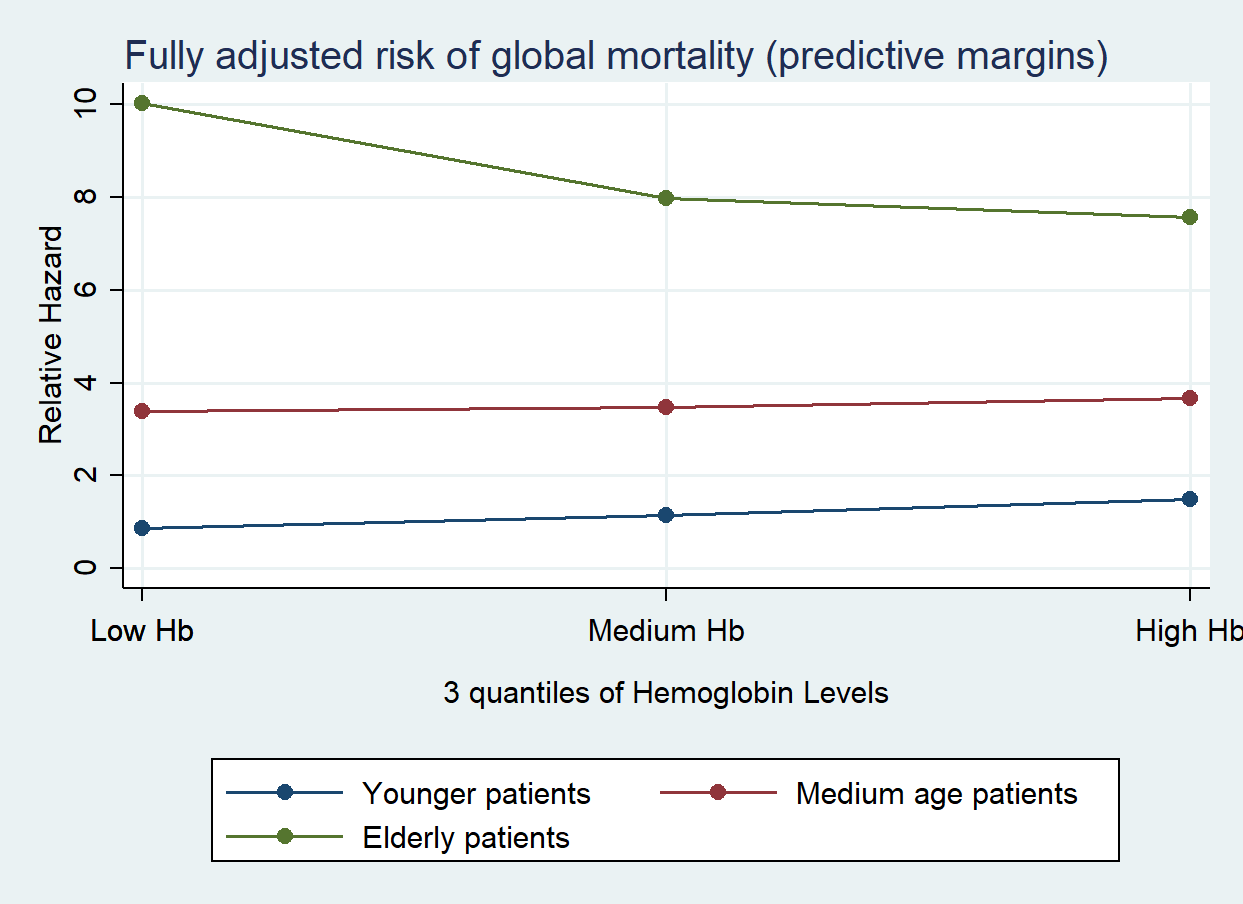
Introduction: The impact of baseline blood hemoglobin (Hb) levels, as a marker of anaemia, on long-term mortality after acute coronary syndrome (ACS) is not well established. Methods: To evaluate the association between low Hb levels during hospitalization for ACS and very long-term overall mortality, we enrolled 571 patients admitted with ACS to three Italian hospitals and discharged alive. Patients were followed prospectively for 26 years or until death. Continuous variables were analyzed as tertiles, and categorical variables as proportions. Survival analysis was performed using Cox regression models. All analyses were carried out using STAT 18.0 StataCorp LLC, (TX) USA. Results: All but three patients completed follow-up, for a total of 7091 person-years. The mean age was 66±12 years, and 30% were female. Baseline Hb levels were 13.5±0.8 g/dL overall, 14.0±1.6 in males and 12.6±1.5 in females (p‹0.0001). During follow-up, 483 patients (85%) died from any cause. The incidence rate was 68 per 1000 person-years, 60 in males and 97 in females. At univariable analysis, baseline Hb was not associated with mortality (HR: 0.9; 95% CI: 0.8–1.0; z=–1.8; p=0.07). After adjustment for age and gender, Hb remained not associated with the outcome (age: HR: 3.0; 95% CI: 2.6–3.4; z=16.0; p‹0.0001; female gender: HR: 1.0; 95% CI: 0.8–1.2; z=–0.1; p=0.95). When a formal interaction term was set in the Cox model, Hb showed a positive association with mortality (HR: 1.5; 95% CI: 1.1–2.2; z=2.6; p=0.01) and a negative interaction with age (HR: 0.8; 95% CI: 0.7–0.9; z=–2.6; p=0.01). Results remained very similar in the fully adjusted model (HR: 0.8; 95% CI: 0.7–0.9; z=–2.5; p=0.01). Covariates included in the fully adjusted model were gender, heart failure, hypertension, antiplatelet treatment, history of acute myocardial infarction, and estimated glomerular filtration rate. Conclusions: This very long-term prospective study suggests that older patients with low blood Hb levels during ACS have an higher long-term overall mortality risk than elderly patients with higher Hb levels and young patients. This observation highlights the prognostic importance of anaemia chiefly in elderly ACS patients.