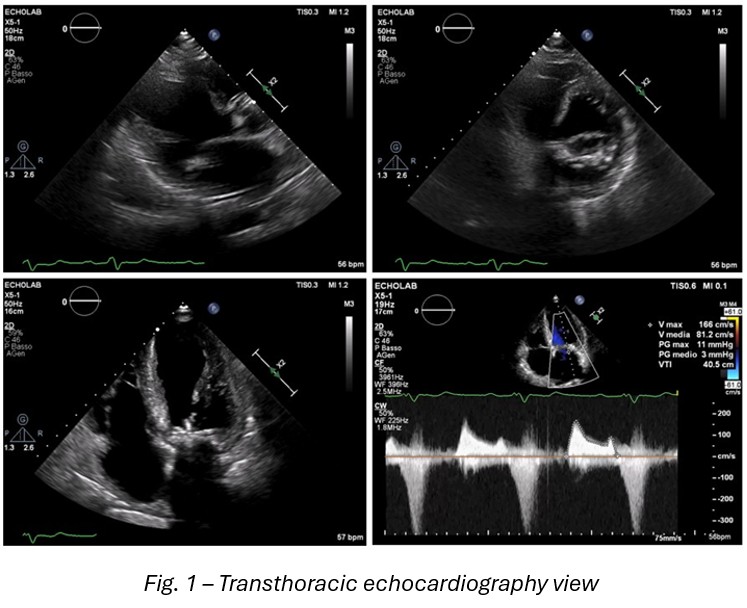
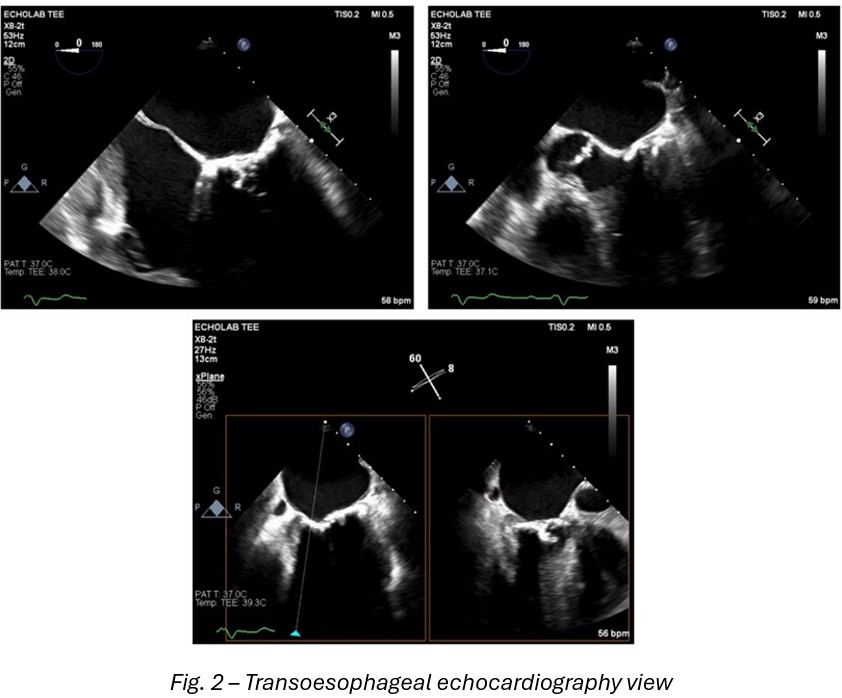
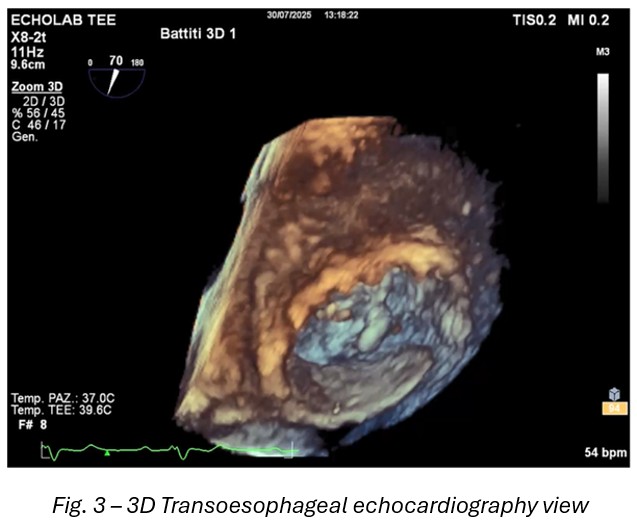
Introduction: Calcified Amorphous Tumor (CAT) of the heart is a rare non-neoplastic cardiac mass, characterized microscopically by nodular calcium deposits and amorphous fibrinous material. The pathogenesis remains poorly understood, though some hypotheses suggest a close association with hypercoagulable states and dysregulated calcium-phosphorus metabolism. Case presentation: We report the case of a 77-year-old male patient with chronic ischemic heart disease, prior coronary artery bypass grafting, reduced ejection fraction heart failure, type 2 diabetes mellitus, and moderate chronic kidney disease, who was admitted to our department for acute decompensated heart failure. Transthoracic (Fig.1) and transesophageal (Fig.2, Fig.3) echocardiography revealed an intracavitary, hyperechogenic, elongated, and mobile cardiac mass measuring approximately 15 mm in length and 3 mm in thickness, arising from extensive calcification of the posterior mitral annulus at the ventricular side. These echocardiographic findings, together with the patient’s history of moderate chronic kidney disease and the absence of clinical signs suggestive of endocarditis, raised suspicion for a Calcified Amorphous Tumor (CAT) associated with Mitral Annular Calcification (MAC). Mild mitral stenosis and mild-to-moderate mitral regurgitation were also observed. During hospitalization, diuretic therapy and guideline-directed heart failure therapy were optimized and coronary angiography was performed showing progression of coronary artery disease. Due to high surgical risk the patient was declined for surgical treatment and underwent percutaneous coronary intervention, with a conservative approach regarding the MAC-CAT lesion. Conclusion: Calcified Amorphous Tumor (CAT) is a rare and benign cardiac mass. Accurate differential diagnosis from other cardiac masses, such as endocarditis, is crucial for guiding appropriate treatment. Additionally, echocardiographic characteristics help assess embolic risk and guide the choice between surgical excision and clinical monitoring.