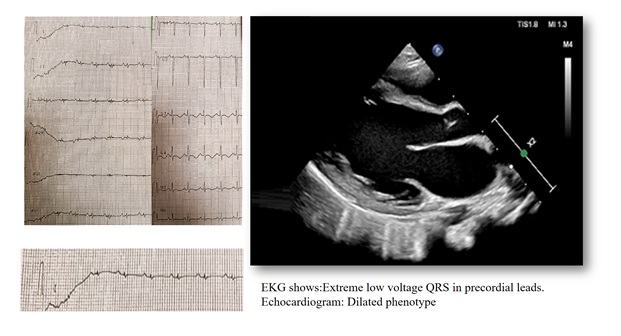
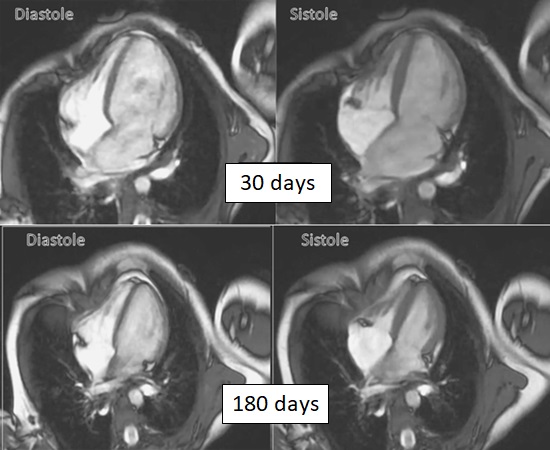
INTRODUCTION Parvovirus B19 is one of the main etiological agents implicated in myocarditis and post-infectious dilated cardiomyopathy. Clinical presentation may be insidious, with progressive evolution toward chronic heart failure. In the absence of specific antiviral therapy, management relies on early cardioprotective treatment and targeted hemodynamic support. CASE We report the case of a previously healthy 5-year-old girl referred to our center for progressively worsening heart failure occurring approximately one month after a nonspecific febrile illness. At presentation, she showed clinical signs of congestion (NYHA II–III). Transthoracic echocardiography revealed dilated phenotype with severe LV systolic dysfunction (LVEF 20–25%) and moderate mitral regurgitation. Cardiac biomarkers were markedly elevated (NT-proBNP >20,000 pg/mL, troponin ~100 ng/L). The etiological diagnosis of subacute Parvovirus B19 myocarditis was confirmed by the concomitant presence of serology (IgM antibodies) and a high viral DNA load. TREATMENT Guideline-oriented heart failure therapy was promptly initiated, including intravenous diuretics, ACE inhibitors, beta-blockers, mineralocorticoid receptor antagonists, and ivabradine, resulting in rapid clinical improvement and partial recovery of ventricular function. Given the persistence of significant systolic dysfunction, levosimendan infusion was performed under continuous monitoring. In the hours following administration, a further and marked improvement in left ventricular ejection fraction was observed (EF 50%), accompanied by a reduction in biomarkers. Cardiac magnetic resonance imaging excluded active myocardial edema and showed no significant fibrosis in the acute phase. At mid-term follow-up (6 months), complete normalization of left ventricular dimensions and function was documented, with minimal residual fibrotic changes. CONCLUSIONS This case demonstrates that even severe dilated phenotypes secondary to Parvovirus B19 myocarditis may be potentially reversible when managed with an early and structured therapeutic approach. Myocarditis management in the pediatric setting presents specific features and levosimendan has a wider clinical application, supported by observational evidence and more robust pathophysiological rationale. Levosimendan, due to its pharmacologic characteristics, represents a valuable option for hemodynamic support and functional recovery although available data remain limited and not definitive.