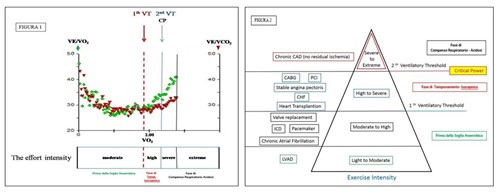
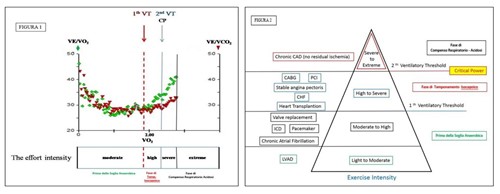
In the field of cardiac rehabilitation, but not only, it is essential to have respiratory parameters and functional capacity derived from instrumental tests that can guide the correct prescription of physical exercise. One of the most comprehensive instrumental tests in functional assessment is the cardiopulmonary exercise test (CPET). During the CPET, numerous parameters can be measured: O2 and CO2 gas kinetics, ventilation, workload, electrocardiogram and heart rate monitoring, and hemoglobin saturation. The graphical representation and analysis of the data breath by breath and their relationship/ratio make up the final panel of 9 plots on which the final report is ultimately based.The measurement of peak oxygen consumption (PeakVO2) defines the functional capacity of the subject, but the complete analysis of the data and graphs obtained allows for the identification of numerous other parameters and, above all, the definition of the transition through the different phases of the exercise.The phases that may be evident during CPET are: 1) identification of the anaerobic threshold (1Vt); 2) the isocapnic buffering phase during which lactic acid is buffered by bicarbonates with consequent production of CO2 and H2O; 3) the respiratory compensation point CP (or second threshold 2 Vt); 4) respiratory compensation for acidosis. The behavior of the ventilatory equivalents (VE/VO2 and VE/VCO2) shown in Figure 1 defines the different phases, which are closely related to exercise intensity. Figure 2 shows and correlates the recommended exercise intensity for different clinical conditions. CONCLUSIONS:In addition to its diagnostic, prognostic, and functional assessment role, CPET offers the opportunity to obtain numerous parameters on which to base a correct and guided prescription of physical exercise not only in patients (rehabilitation exercise) but also in healthy subjects (training exercise). Certainly, not all patients who undergo cardiac rehabilitation will have performed a CPET, but when available, in our experience, it is particularly helpful. Furthermore, it is advisable to perform a follow-up CPET (4-6 months) after a cycle of physical rehabilitation or training in order to document the results and any functional improvements and validate the correct prescription of the type of exercise.