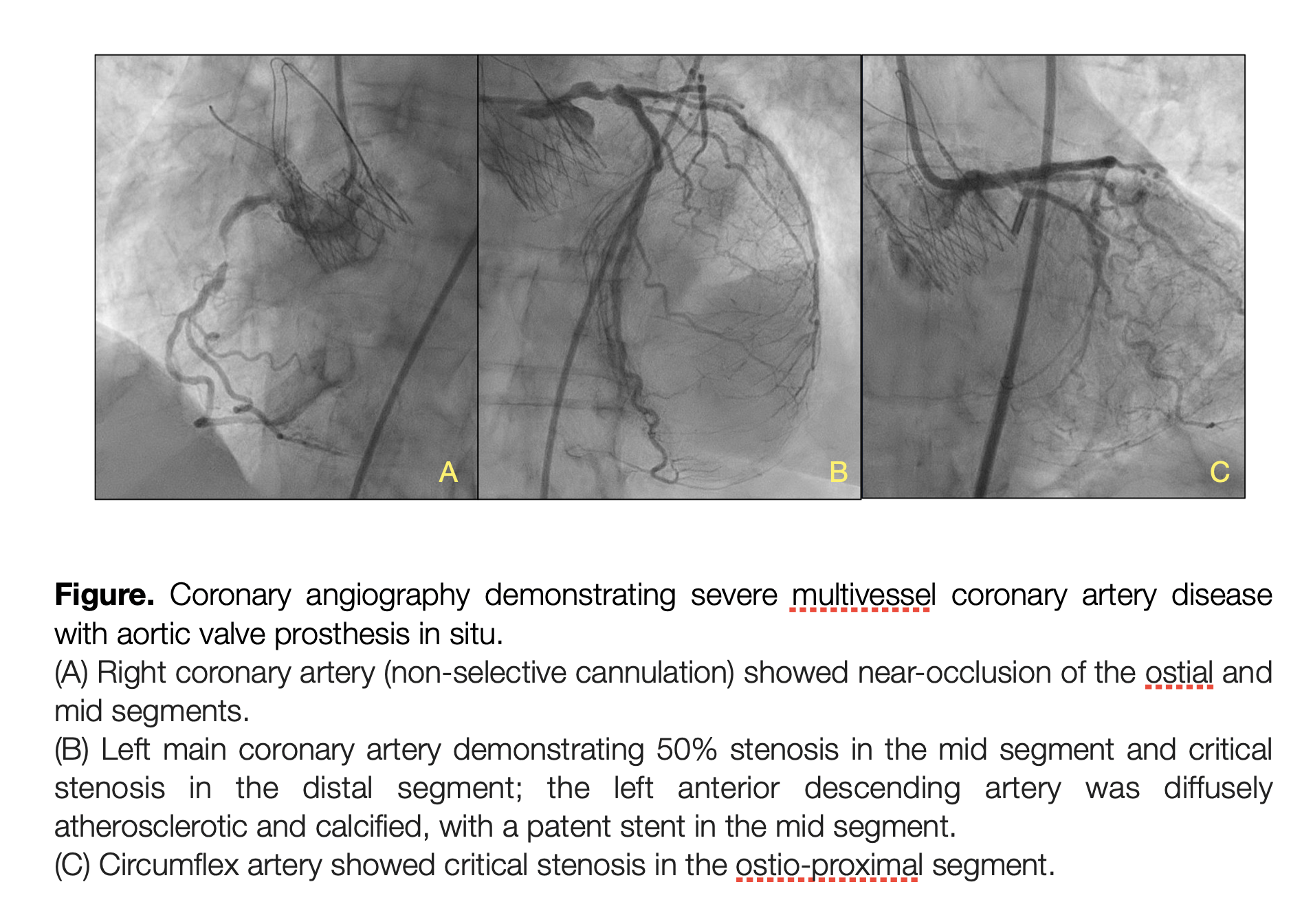
An 84-year-old woman with arterial hypertension, dyslipidemia, carotid atherosclerosis, and multifactorial anemia with a positive fecal occult blood test presented with worsening dyspnea, chest pain, and acute hypertensive pulmonary edema (BP 150/100 mmHg). Her medical history included PCI with DES implantation in the mid LAD and TAVI for severe aortic stenosis in 2022. Chronic therapy included bisoprolol, ASA, atorvastatin/ezetimibe, valsartan, and amlodipine. At admission, hemoglobin was 9.4 g/dL and hs-TnI increased from 99 to 16,000 pg/dL. ABG analysis showed severe respiratory and metabolic acidosis (pH 7.1, pCO₂ 54 mmHg, pO₂ 54 mmHg, lactate 5 mmol/L, sO₂ 73%, HCO₃⁻ 16.8 mmol/L). NIV and intravenous diuretics led to clinical improvement. ECG showed ST-segment depression in the lateral leads with ST elevation in aVR. Transthoracic echocardiogram demonstrated preserved LVEF with inferior wall hypokinesia, mild-to-moderate paravalvular aortic regurgitation, and right ventricular dysfunction. Urgent coronary angiography revealed critical left main disease with severe three-vessel involvement. Recurrent acute pulmonary edema required IABP placement and transfer to the intensive cardiac care unit. The case was discussed by the Heart Team, which recommended PCI due to prohibitive surgical risk. A protected high-risk PCI was performed using a crossover approach to the LAD, with implantation of a DES covering the Left Main ostium. Post-dilatation and kissing balloon inflation of the LAD–LCx bifurcation achieved an optimal angiographic result (TIMI 3). Residual lesions were managed conservatively. The IABP was removed at the end of the procedure, and cangrelor infusion was initiated, followed by clopidogrel oral loading dose. After the procedure, hypotension and anemia occurred due to femoral bleeding related to the vascular access site, where arterial closure had been performed using a FemoSeal device. CT angiography revealed a femoral pseudoaneurysm, which was successfully treated by endovascular exclusion. Hemoglobin levels stabilized after blood transfusions, and the remaining hospital course was uneventful. Post-TAVI patients with ACS and complex coronary anatomy represent a high-risk population. In this setting, protected high-risk PCI after Heart Team discussion is crucial when surgical revascularization is contraindicated, and mechanical circulatory support should be carefully selected.