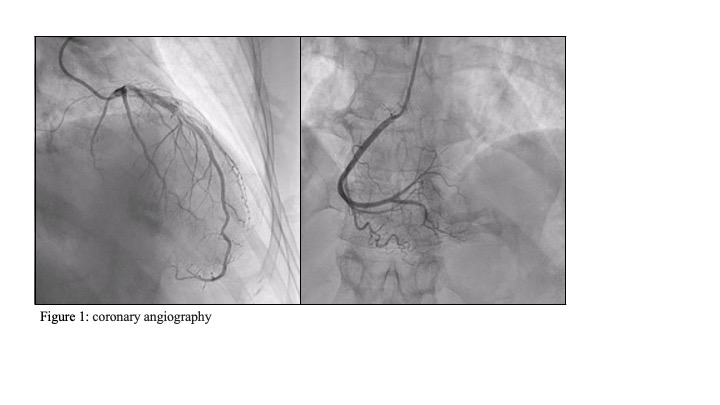
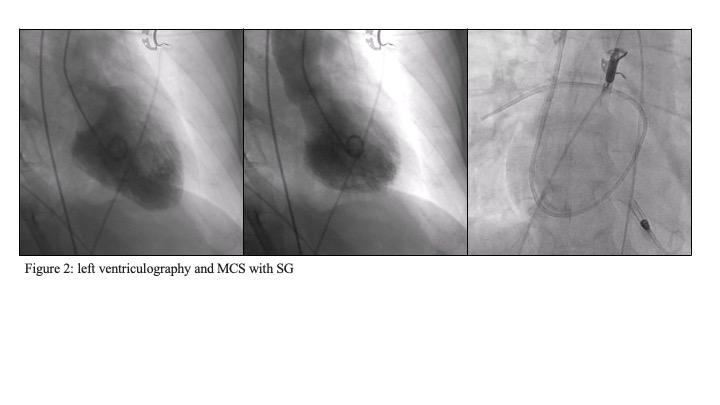
Background Inverse Takotsubo syndrome is a rare variant of stress-induced cardiomyopathy, characterized by transient basal and mid-ventricular dysfunction with preserved or hyperkinetic apical contraction. Although generally associated with a favorable prognosis, it can occasionally present with complications, including malignant arrhythmias and cardiogenic shock. Case presentation We report the case of a 49-year-old woman with no previous clinical history and no cardiovascular risk factors developing sudden cardiac arrest after hysteroscopic endometrial polypectomy. Diffuse ST-segment changes, metabolic acidosis with hyperlactatemia (9 mmol/L) and left ventricular systolic dysfunction without pathognomonic regional dyskinesia was shown at initial evaluation. Urgent coronary angiography revealed angiographically normal coronary arteries and left ventriculography demonstrated akinesia of the mid-basal segments with preserved apical contractility, consistent with inverse Takotsubo syndrome. Despite normal arterial pressure, the patient rapidly deteriorated, developing pulmonary edema, severe left ventricular dysfunction, functional mitral regurgitation, persistent hyperlactatemia, and low cardiac output, fulfilling criteria for normotensive cardiogenic shock. An Impella CP for percutaneous mechanical circulatory support was promptly implanted through an echo-guided puncture of the common right femoral artery. Depth from the aortic annulus with the inflow part was about 40 mm in diastole for the apical hyperkinesia, allowing effective left ventricular unloading. After device implantation, metabolic parameters, end-organ perfusion, and respiratory status improved. Over the following five days, progressive recovery of left ventricular function occurred, enabling stepwise weaning and removal of mechanical support. Hemostasis was achieved with two prostyles, which were pre-implanted in the first procedure. Conclusions This case highlights that inverse Takotsubo syndrome may present with cardiac arrest and fulminant cardiogenic shock, even in young patients without comorbidities. Implanting percutaneous mechanical circulatory support in proper position with hyperkinetic apex can be challenging as suction alarm can occur; early recognition and timely use of MCS can be lifesaving. Bibliography Kunduvayil A, Elangovan A, Karanth S, Shetty R. Non-invasive investigation of inverse takotsubo cardiomyopathy in a young woman. Br J Hosp Med (Lond). 2015 Sep 2;76(9):544-5.