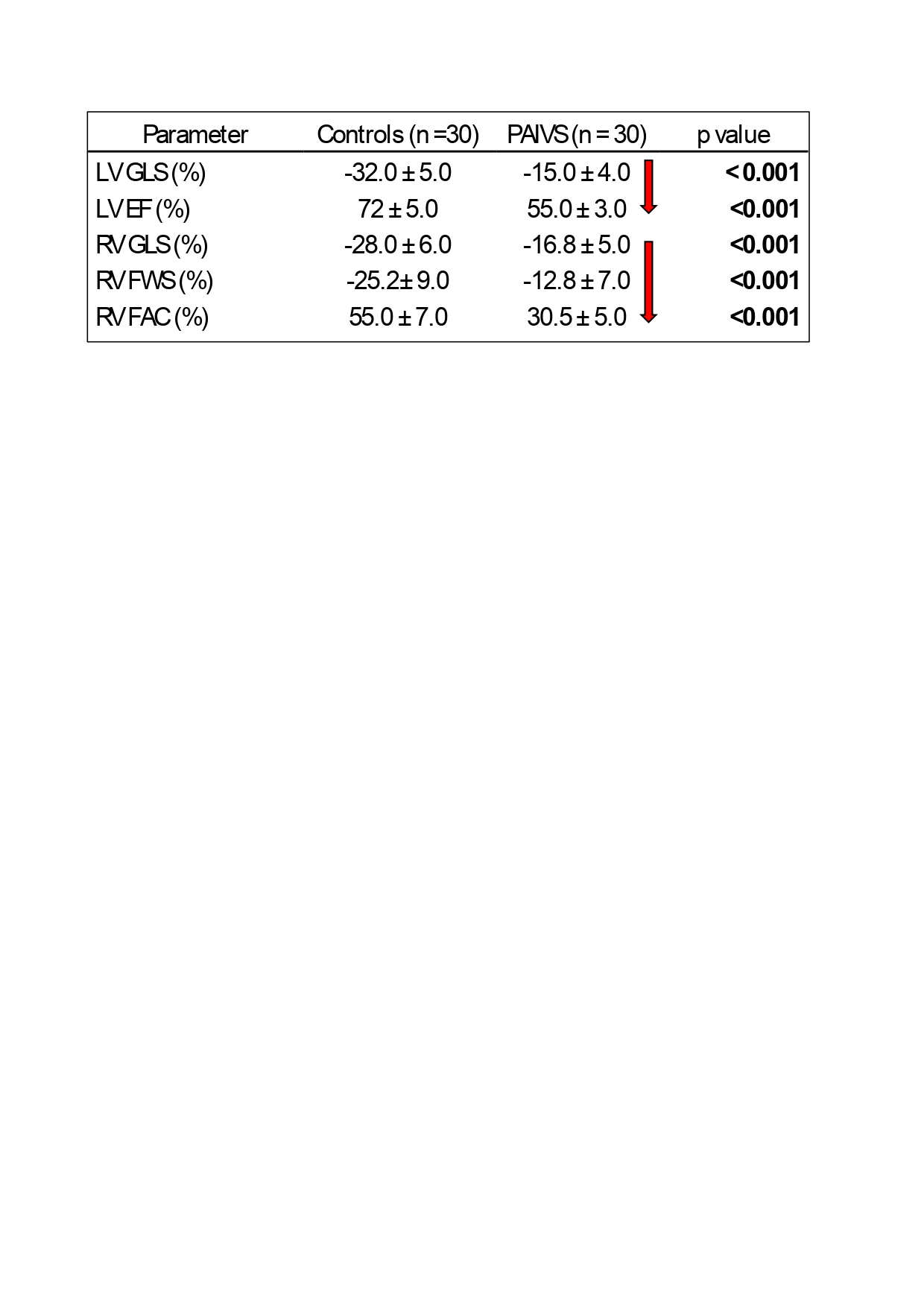
Background Ventricular interdependence plays a crucial role in the pathophysiology of congenital heart disease (CHD), particularly in fetuses with pulmonary atresia with intact ventricular septum (PAIVS). It may contribute to fetal heart failure and has major implications for perinatal management. This study aimed to assess biventricular systolic function using speckle tracking echocardiography in fetuses with PAIVS, compared to healthy controls. Methods We conducted a retrospective observational study between 2018 and 2024, including two cohorts: 30 healthy fetuses and 30 fetuses with a prenatal diagnosis of PAIVS. In both groups, right and left ventricular systolic function was assessed using speckle tracking analysis, and intergroup comparisons were performed. Results Fetuses with PAIVS showed signicantly impaired right ventricular function compared to controls, with a mean right ventricular global longitudinal strain (RV GLS) of -16.8 ± 5%, versus -28 ± 6% in the control group, with a p-value less than 0.001. Right ventricular free wall strain was also reduced, with a mean value of -12.8 ± 7% in the PAIVS group, compared to -25.2 ± 9% in controls, p-value less than 0.001. Left ventricular systolic function was similarly impaired in the PAIVS group, with a left ventricular global longitudinal strain (LV GLS) of -15.0 ± 4%, compared to -32.0 ± 5% in controls, p-value less than 0.001. Left ventricular ejection fraction averaged 55 ± 3% in fetuses with PAIVS, compared to 72 ± 5 % in healthy controls, p-value less than 0.001 (Tab. 1). Conclusions These findings demonstrate marked biventricular systolic dysfunction in fetuses with PAIVS, likely reflecting the effects of ventricular interdependence in the setting of severe right ventricular outflow tract obstruction. Speckle tracking assessment may offer valuable functional insight and support prenatal risk stratification and tailored perinatal planning.