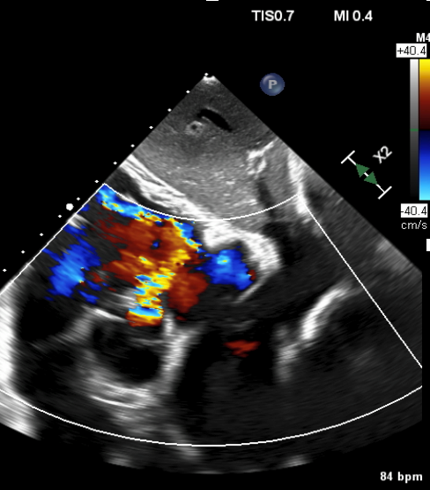
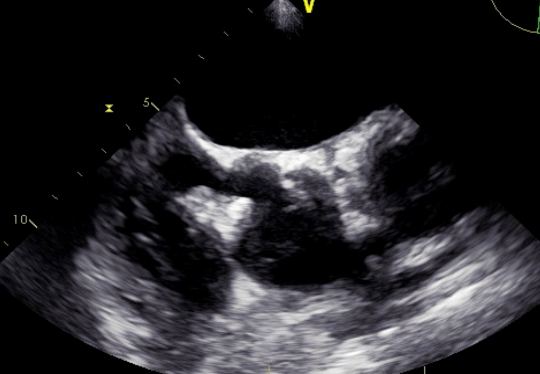
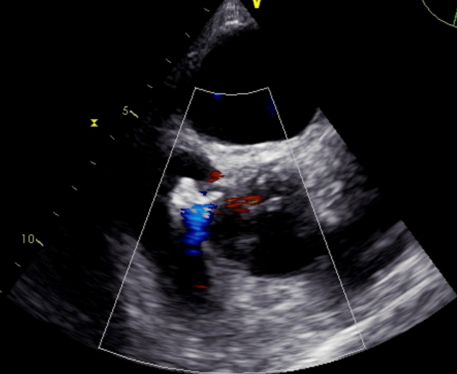
BACKGROUND: aorta-right atrial fistulas are rare extracardiac vascular channels, also termed aortocameral fistulas. Their natural history, clinical presentations, and eligibility for percutaneous treatment remain unclear. CASE SUMMARY: we present the case of a 61-year-old male with an unremarkable medical history who was admitted to the ICU of another centre, on June 19, 2025, with acute heart failure. The final diagnosis was achieved through a comprehensive multimodal workup which revealed a left-to-right shunt between the non-coronary sinus of Valsalva and the right atrium, consistent with an aorto-atrial fistula, an exceedingly rare condition most likely due to the rupture of a small aneurysm of the non-coronary sinus. This anomaly resulted in right-sided chamber dilation with preserved left ventricular systolic function. The case was discussed within the multidisciplinary Heart Team to evaluate the most appropriate therapeutic strategy. Surgical correction was initially considered the first-line treatment. However, the patient firmly refused surgery, expressing a strong preference for a less invasive approach. In light of this decision and the favorable anatomical features, the Heart Team agreed to proceed with a percutaneous solution, therefore the patient was referred to the Our Cardiology Department. Here transesophageal echocardiography confirmed a fistulous tract originating from the non-coronary sinus of Valsalva and draining into the right atrium, without associated septal defects or coronary involvement. Right-heart catheterization documented a significant left-to-right shunt (QP/QS > 2.5) with preserved pulmonary vascular resistance. Thus a percutaneous closure was successfully performed with the implantation of a 10 mm Duct Occluder device. The procedure was uneventful, with immediate almost total shunt abolition and stable device positioning. Dual antiplatelet therapy (aspirin plus clopidogrel) was initiated for 1 month. At 1-month follow-up, the device was correctly positioned and functioning normally with no residual shunt. DISCUSSION : a noncoronary sinus of Valsalva-right atrium fistula is a rare cardiac defect with incompletely understood etiopathogenesis that requires a multidisciplinary approach. In appropriately selected patients with small defects, minimal aortic regurgitation, and no complex associated cardiac abnormalities, transcatheter closure represents a viable therapeutic option with encouraging short- and mid-term outcomes.