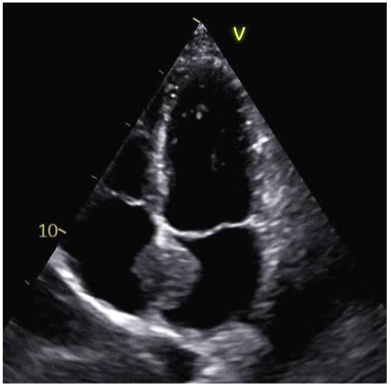
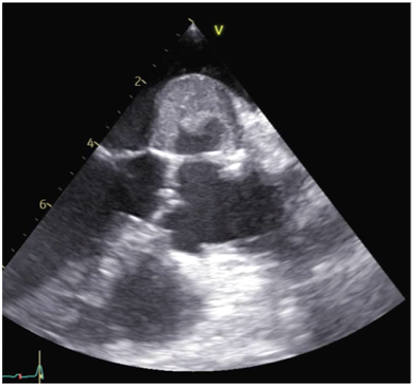
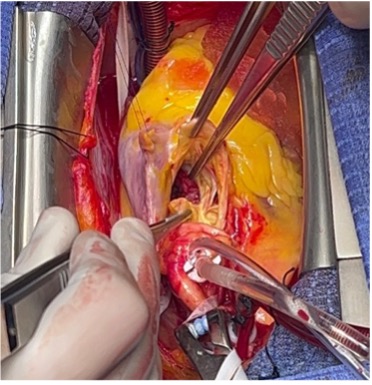
A 68-year-old woman was referred to our attention due to dyspnea on exertion. She denied cardiovascular risk factors, chest pain, syncope, and palpitations. 2D-transthoracic echocardiography (TTE) showed normal systolic and diastolic function of the left ventricle with mild aortic regurgitation and a partially vacuolated mass (31×33 mm) attached to the interatrial septum. The hypothesis of atrial myxoma was tested by transesophageal echocardiography (TEE), which revealed an echo-dense and partially liquefied structure at the level of the non-coronary sinus of Valsalva, compressing and deviating the interatrial septum; mild aortic regurgitation was confirmed. 3D analysis showed an aneurysmatic sac on the non-coronary sinus of Valsalva, suggesting the hypothesis of a pseudoaneurysm. Negative inflammatory markers and blood cultures excluded aneurysmal evolution of a septic abscess. Thoracic CT revealed a large pseudoaneurysm (34x28mm) of the non-coronary sinus, with eccentric thrombotic stratification, impinging on the interatrial septum; additionally, a small and focal outpouching was noted at the level of the left sinus of Valsalva and at the aortic isthmus. The case was evaluated by the Heart Team, and the decision to perform surgery for pseudoaneurysm exclusion was made. A large defect was detected in the aortic wall, at the level of the non-coronary sinus of Valsalva, creating a huge pseudoaneurysm with extensive thrombus. Exclusion of the pseudoaneurysm was performed, with reconstruction of the aortic wall with a heterologous pericardial patch. The postoperative course was uncomplicated. Since secondary causes were not observed, genetic evaluation has been indicated, but results are still ongoing. Aneurysms of the sinus of Valsalva are rare (estimated prevalence of 0.09% in the general population). The right coronary sinus is most frequently involved, followed by the non-coronary and left coronary sinus. Endocarditis and acute aortic syndromes are responsible for acquired aneurysms. Congenital aneurysms result from an incomplete fusion of the aortopulmonary septum with the interventricular septum and are often associated with Marfan syndrome or other genetically determined connective tissue disorders. This clinical case indicates that spontaneous pseudoaneurysms are a rare but not impossible finding. After ruling out infectious or traumatic cause, a genetic origin should be considered even in patients without clear features of collagen disease.