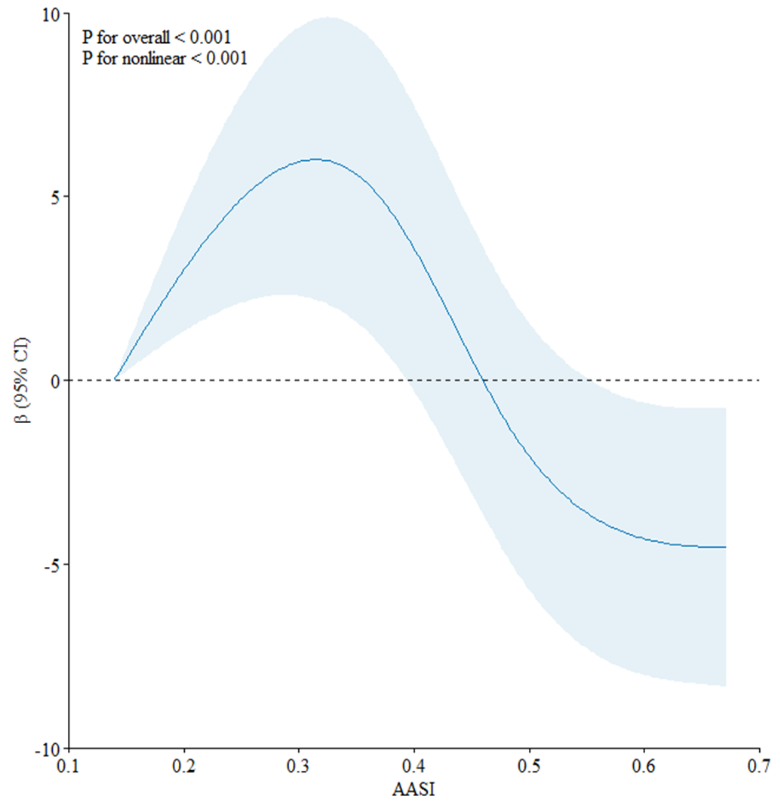
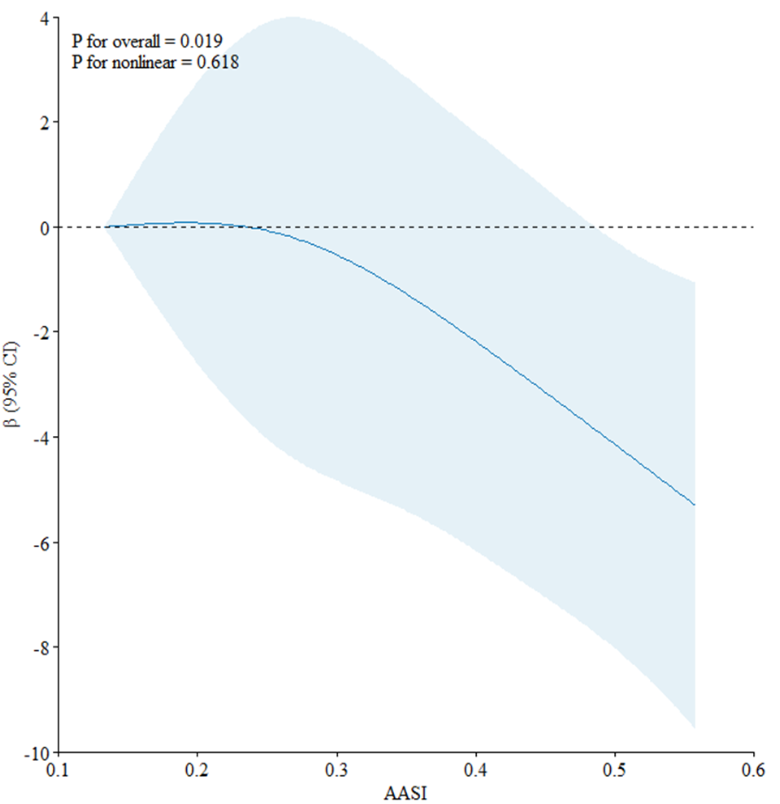
Introduction. The Ambulatory Arterial Stiffness Index (AASI), obtained through 24-hour ambulatory blood pressure monitoring (ABPM), has been proposed as an indirect and simplified measure of arterial stiffness. AASI is associated with both cardiovascular mortality and the presence of target organ damage. Although some studies have highlighted an inverse association between AASI and nocturnal blood pressure reduction, the nature of this relationship has not been fully clarified. Objective. Analyze the type of relationship between AASI and nocturnal blood pressure dipping in an adult population undergoing 24-hour ambulatory blood pressure monitoring. Methods. 188 consecutive subjects (104 men, 84 women) attending our clinic were included in this study. In addition to ABPM, information regarding main cardiovascular risk factors was collected into a predefined medical history form. AASI was calculated as 1 minus the linear regression coefficient of diastolic blood pressure values on systolic blood pressure values (24 hours). Nocturnal blood pressure dipping was determined by the difference between the mean values of day-time and night-time mean arterial pressure according to latest ESH guidelines. Results. The mean age was 56 years; mean BMI was 28.8 kg/m²; mean AASI was 0.40. 64% of our subjects were hypertensive, 11% diabetic, 46% had a family history of cardiovascular disease and 28% were smokers. In the total sample, the relationship between AASI and nocturnal dipping was non-linear. In hypertensive subjects (n=121), a direct relationship was observed for AASI values <0.35 and an inverse relationship for values >0.35. In normotensive subjects (n=67), however, the relationship was linear and inverse, becoming significant starting from AASI >0.42. The associations were found to be independent of major confounding factors such as age, sex, BMI, anti-hypertensive therapy, smoking, diabetes mellitus, and hypercholesterolemia. Conclusions. These results highlight, for the first time, a non-linear relationship between AASI and nocturnal blood pressure reduction in hypertensive subjects, whereas in normotensive subjects, the relationship appears consistently inverse, suggesting distinct pathophysiological mechanisms.