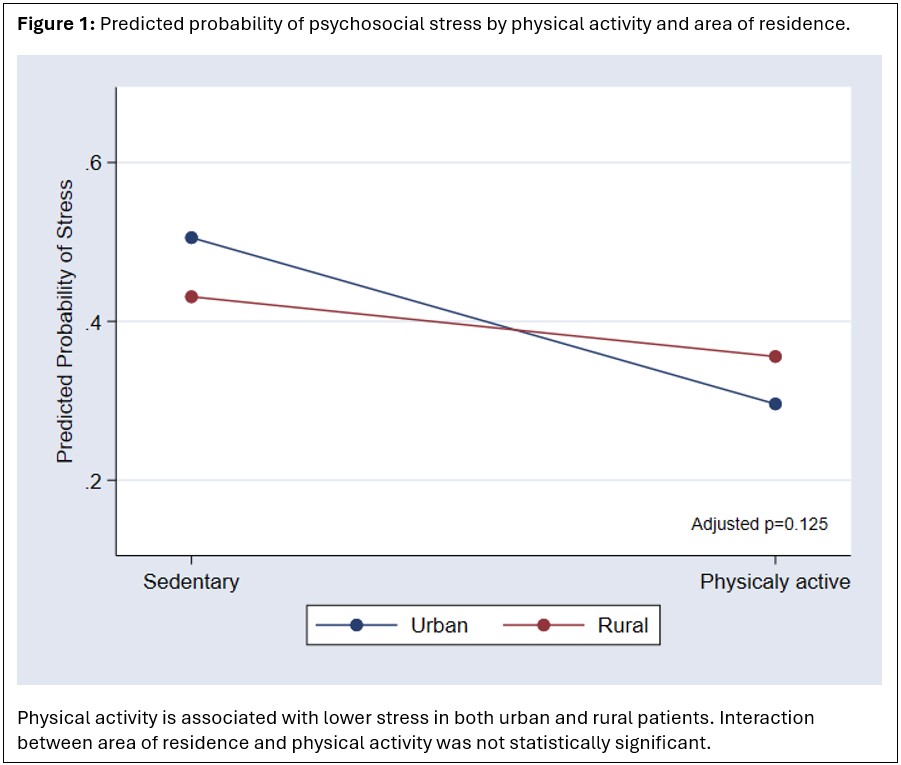
Background Geographical factors may influence cardiovascular risk, lifestyle behaviors, and psychosocial stress. Data on urban–rural disparities in Italian outpatient cardiology populations remain limited. We aimed to compare cardiovascular risk factors, physical activity, psychosocial stress, and pharmacological treatment between urban and rural cardiovascular outpatients in Veneto. Methods We performed a cross-sectional analysis of 649 consecutive cardiovascular outpatients (urban n = 169; rural n = 480). Data included age, sex, systolic (SBP) and diastolic (DBP) blood pressure, hypertension, diabetes mellitus, physical activity, psychosocial stress, and use of antihypertensive or psychotropic drugs. Multivariable linear and logistic regression models were used to assess independent associations. Results Urban and rural patients had similar SBP (147.6 ± 21.8 vs 146.3 ± 22.7 mmHg, p = 0.507) and DBP (81.6 ± 11.4 vs 81.6 ± 11.1 mmHg, p = 0.931). Prevalence of hypertension (51.5% vs 55.6%, p = 0.352), diabetes (9.5% vs 11.0%, p = 0.568), physical activity (63.9% vs 62.5%, p = 0.746), psychosocial stress (36.7% vs 38.5%, p = 0.669), and medication use did not differ significantly. Multivariable analyses confirmed that rural residence was not independently associated with cardiovascular risk factors, lifestyle, or stress. Physical activity was independently associated with lower stress (OR 0.39, 95% CI 0.20–0.76, p = 0.006), with no significant interaction by area of residence. Conclusions In this cohort, urban and rural outpatients showed similar cardiovascular and psychosocial profiles, suggesting equitable care and effective access across areas. Physical activity was associated with lower stress in both groups, highlighting a modifiable lifestyle factor with consistent benefits. These results indicate that geography alone does not determine outcomes, supporting a preventive and lifestyle-focused interventions for all patients regardless of residence.