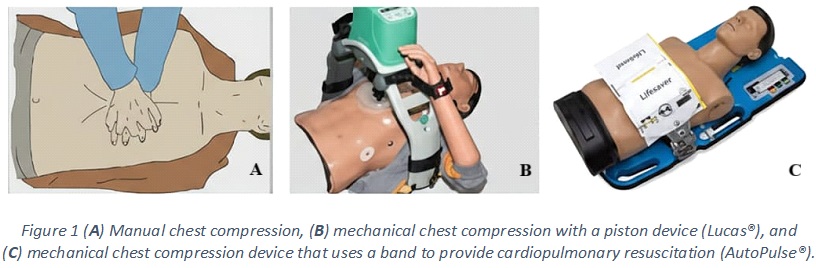
Introduction: Cardiac arrest in the interventional cardiology laboratory (cath lab) is a critical emergency that demands high-quality cardiopulmonary resuscitation (CPR), often under complex conditions and with significant radiation exposure risk for staff. Mechanical chest compression devices, such as LUCAS® and AutoPulse®, provide an alternative to manual CPR, particularly during ongoing interventional procedures. This study aims to summarise the existing literature on the use of such devices in the cath lab, with a focus on their role and impact on nursing practice. Methods: A narrative review of the recent literature was conducted to identify and summarise key findings related to the clinical use of mechanical chest compression devices in interventional cardiology, with specific attention to team dynamics and the role of nursing staff. Results: The reviewed literature highlights several advantages of mechanical CPR devices in the cath lab, particularly from the nursing perspective. Key benefits include the reduction of ionising radiation exposure for staff and the provision of consistent, high quality chest compressions, thereby freeing nurses to carry out other critical life saving tasks. The nursing role emerges as pivotal, encompassing responsibilities in preparation, application and monitoring of the device, as well as coordination with the rest of the team. However, the literature also emphasises the need for specific training and strict adherence to protocols for effective implementation. Comparative studies and meta‐analyses have reported conflicting results regarding the superiority of mechanical devices versus manual CPR in terms of long‐term survival, but confirm their value in specific settings, such as during ongoing CPR through angioplasty. Conclusions: Use of mechanical cardiopulmonary resuscitation devices in the cath lab is a feasible and advantageous practice for managing cardiac arrest, especially with respect to nursing staff safety and CPR quality. To maximise benefit, appropriate training, clear protocols, and effective integration of the device into the team's workflow are essential. The 2025 European Society of Cardiology (ESC) guidelines on mechanical CPR advise against routine use. However, they suggest that mechanical CPR may be considered in specific situations where high-quality manual compressions are difficult or pose a risk; the primary objective remains to perform high-quality manual CPR with minimal interruptions.