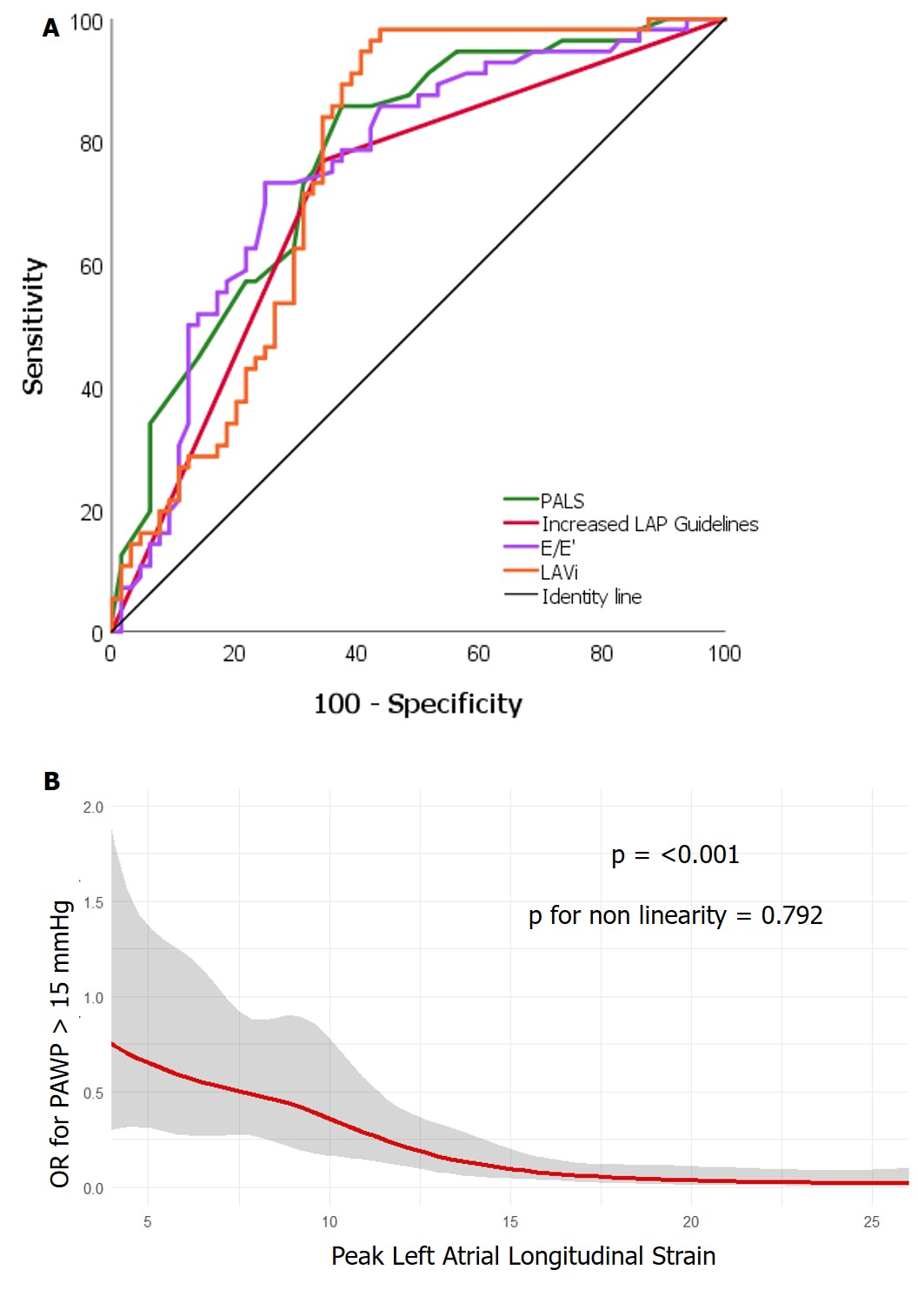
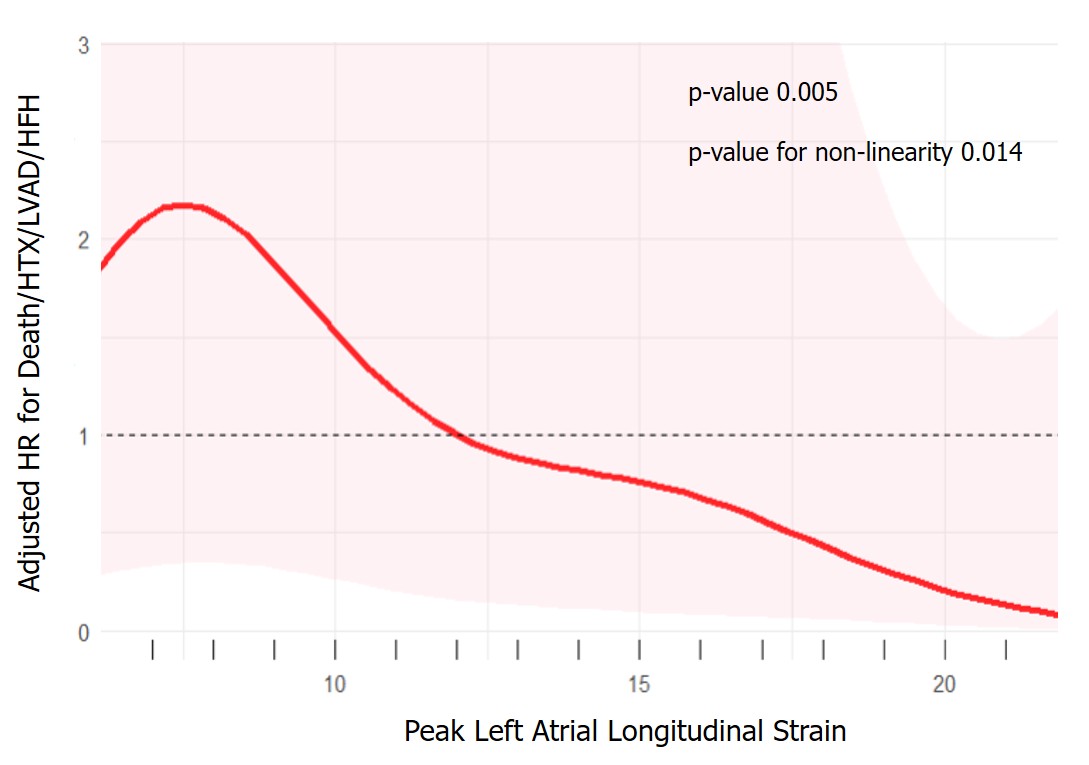
Background . Advanced heart failure (AdHF) presents challenges for haemodynamic assessment and carries a poor prognosis. Left atrial (LA) function by strain imaging has emerged as a promising non-invasive marker in several cardiovascular conditions, but its relationship with invasively measured haemodynamic parameters and its prognostic role in AdHF is poorly understood. Methods . Consecutive patients referred for AdHF were prospectively enrolled. On the same day, patients underwent advanced transthoracic echocardiography and invasive right heart catheterisation (RHC). Elevated pulmonary artery wedge pressure (PAWP) was defined as >15 mmHg at RHC. Primary composite outcome was a death/heart transplant/left ventricular assist device implantation/heart failure hospitalisation. Results . A total of 155 patients were included. Median age was 55 years (IQR 48-61), median peak left atrial strain (PALS) was 11% (7-17), and mean PAWP was 14 mmHg (8-20). Patients with lower PALS showed features of more severe disease. PALS correlated significantly and linearly with PAWP (r=-0.53, p<0.001) and with all other invasive haemodynamic parameters. PALS showed the best performance for identifying increased PAWP (AUC 0.78, p<0.001), outperforming LA volume, E/E’ and guideline-based assessment. Spline analysis demonstrated a non-linear association between PALS and the primary outcome, with steeper risk increases at lower PALS values (p = 0.014), confirmed after multivariable adjustment. Adding PALS to models including clinical variables, echocardiography, and invasive haemodynamics further improved prognostic accuracy for 1-year risk of events (Harrel C-index 0.840). Conclusions . In AdHF, PALS is a robust marker closely related to invasively measured PAWP and identifies patients who require urgent advanced therapies. Routine incorporation of LA strain into the evaluation of AdHF may enhance haemodynamic assessment and substantially improve prognostic stratification.