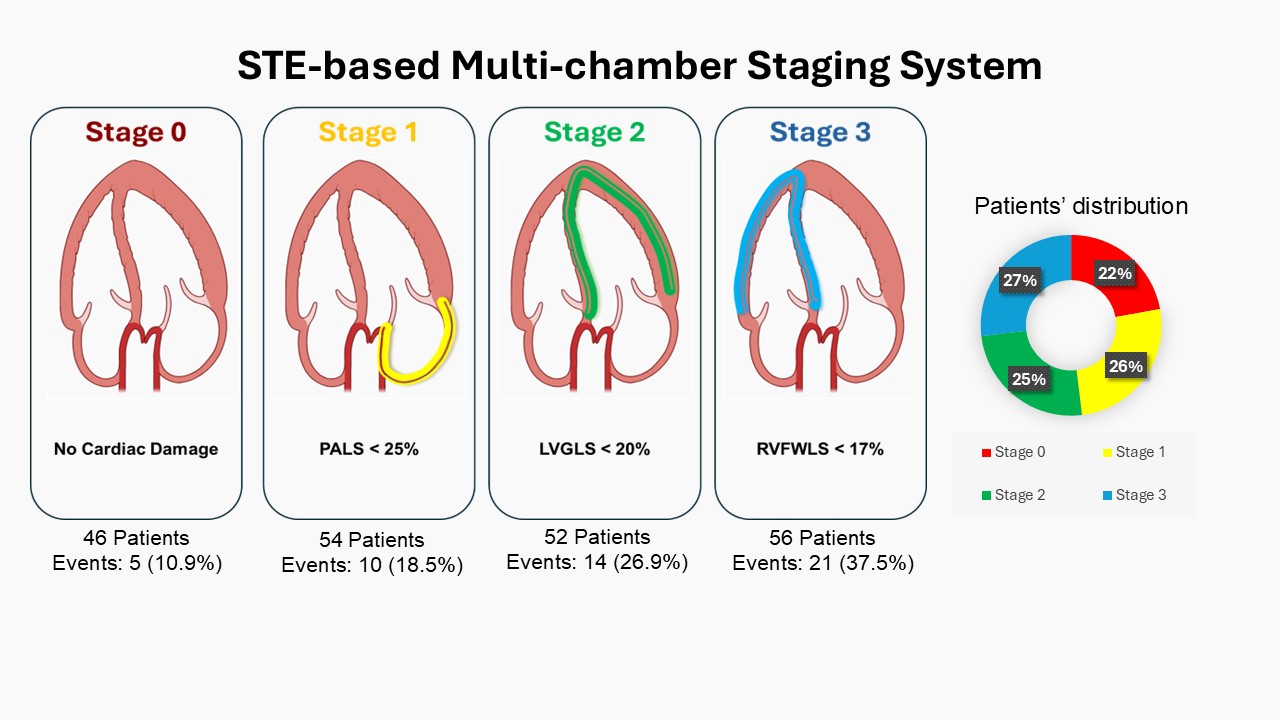
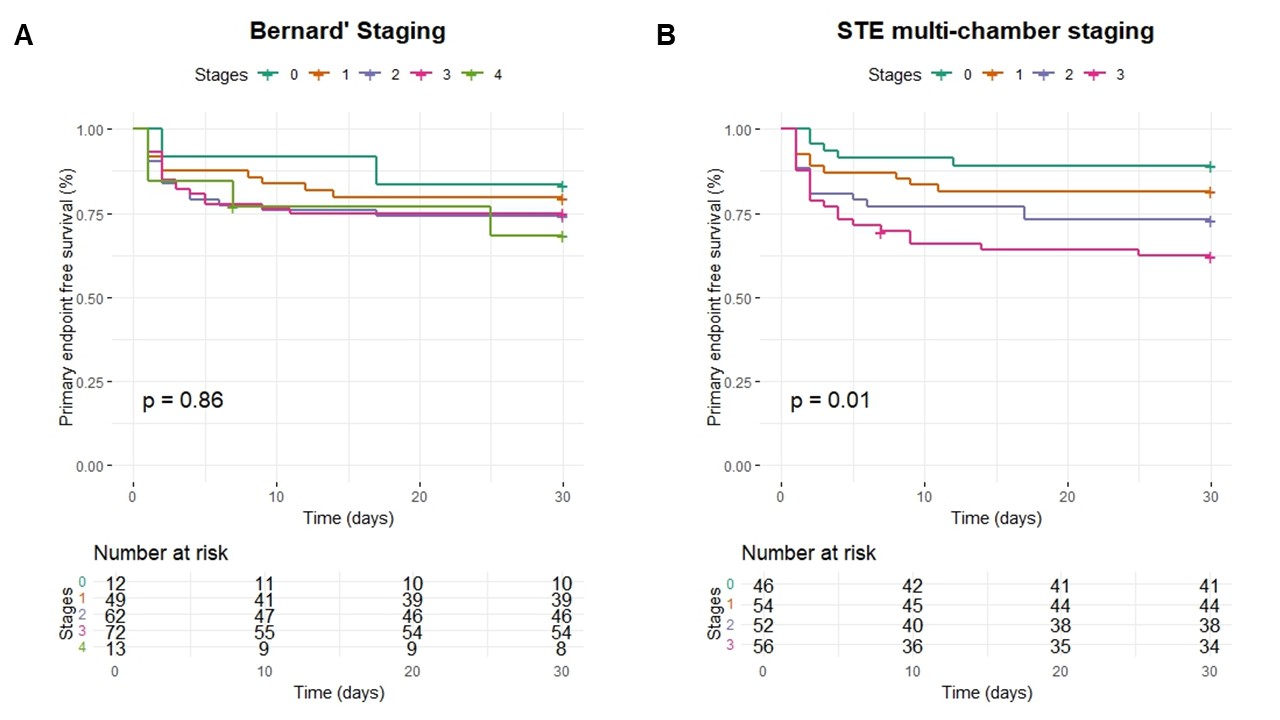
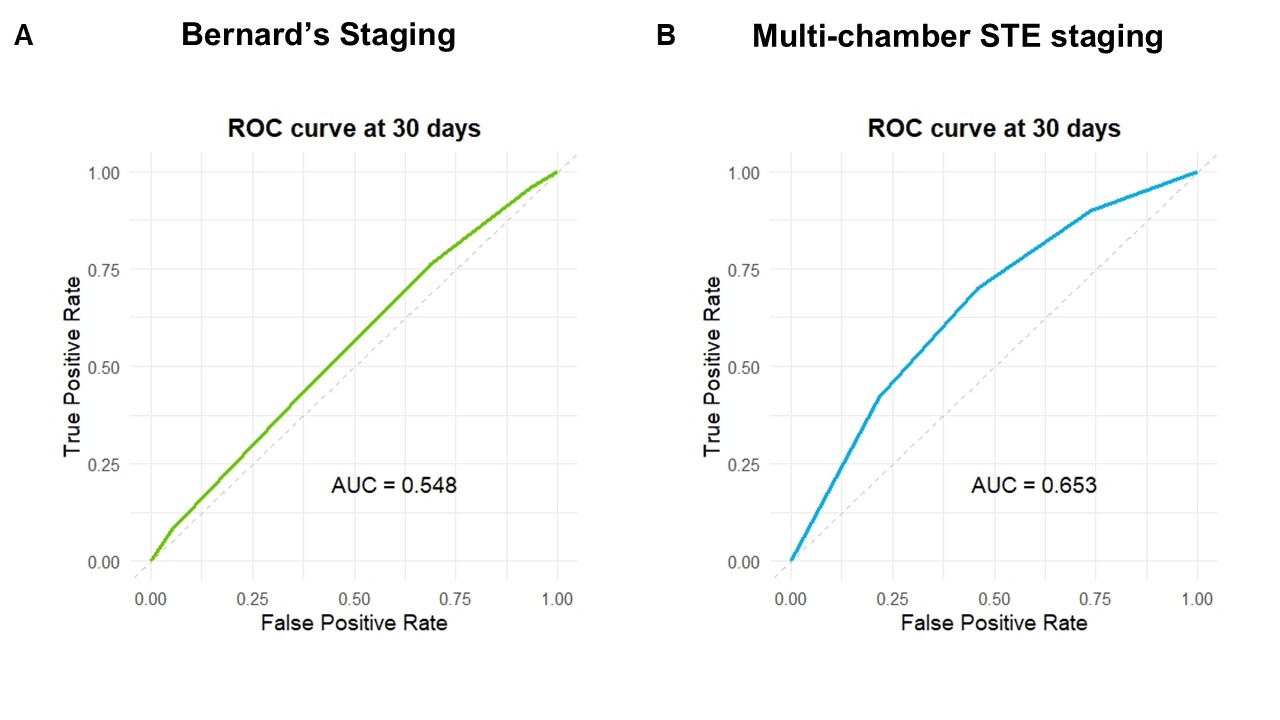
Aims : In asymptomatic patients with severe primary mitral regurgitation (MR), surgical referral is based on two-dimensional echocardiographic indices that often identify advanced myocardial injury. Speckle-tracking echocardiography (STE) may detect earlier, reversible dysfunction. This study evaluated whether a novel multi-chamber STE-based staging system of extra-valvular cardiac damage improves risk stratification in patients with severe degenerative MR undergoing surgery. Methods : Retrospective multicenter cohort study of patients with degenerative MR undergoing surgery: derivation cohort (n = 208; mean age 64 ± 13 years; 59.7% men) and validation cohort (n = 92; mean age 63 ± 12 years; 53.3% men). Receiver operating characteristic curve analysis identified optimal strain cut-offs associated with adverse outcomes: left ventricular global longitudinal strain (LVGLS) < 20%, peak atrial longitudinal strain (PALS) < 25%, and right ventricular free-wall longitudinal strain (RVFWLS) < 17%. Patients were classified into four stages: Stage 0, no damage; Stage 1, left atrial damage (PALS < 25%); Stage 2, left ventricular damage (LVGLS < 20%); Stage 3, right ventricular damage (RVFWLS < 17%) (Figure 1). Results: The STE-based staging system was independently associated with the composite of periprocedural adverse events (mortality, stroke, myocardial infarction, acute kidney injury, life-threatening bleeding or sepsis/wound infection requiring reintervention, complete atrioventricular block requiring pacemaker implantation): odds ratio 1.68 per stage increase (CI 1.24–2.32; p = 0.001) (Figure 2, 3). Predictive accuracy was higher compared with clinical and echocardiographic data, with consistent results in the validation cohort. Conclusions : The multi-chamber STE staging system provides incremental prognostic information beyond conventional parameters, improving perioperative risk stratification.