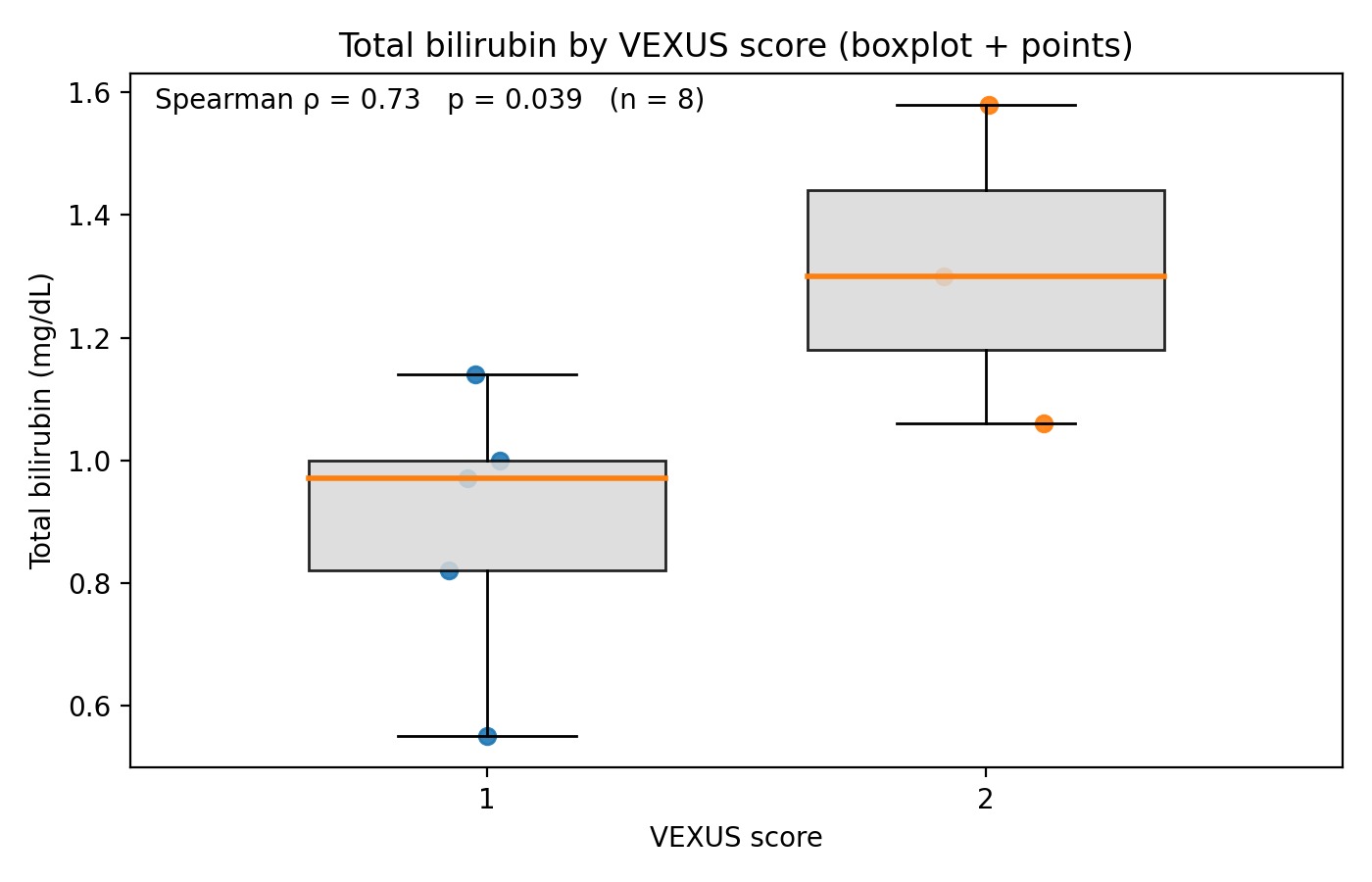
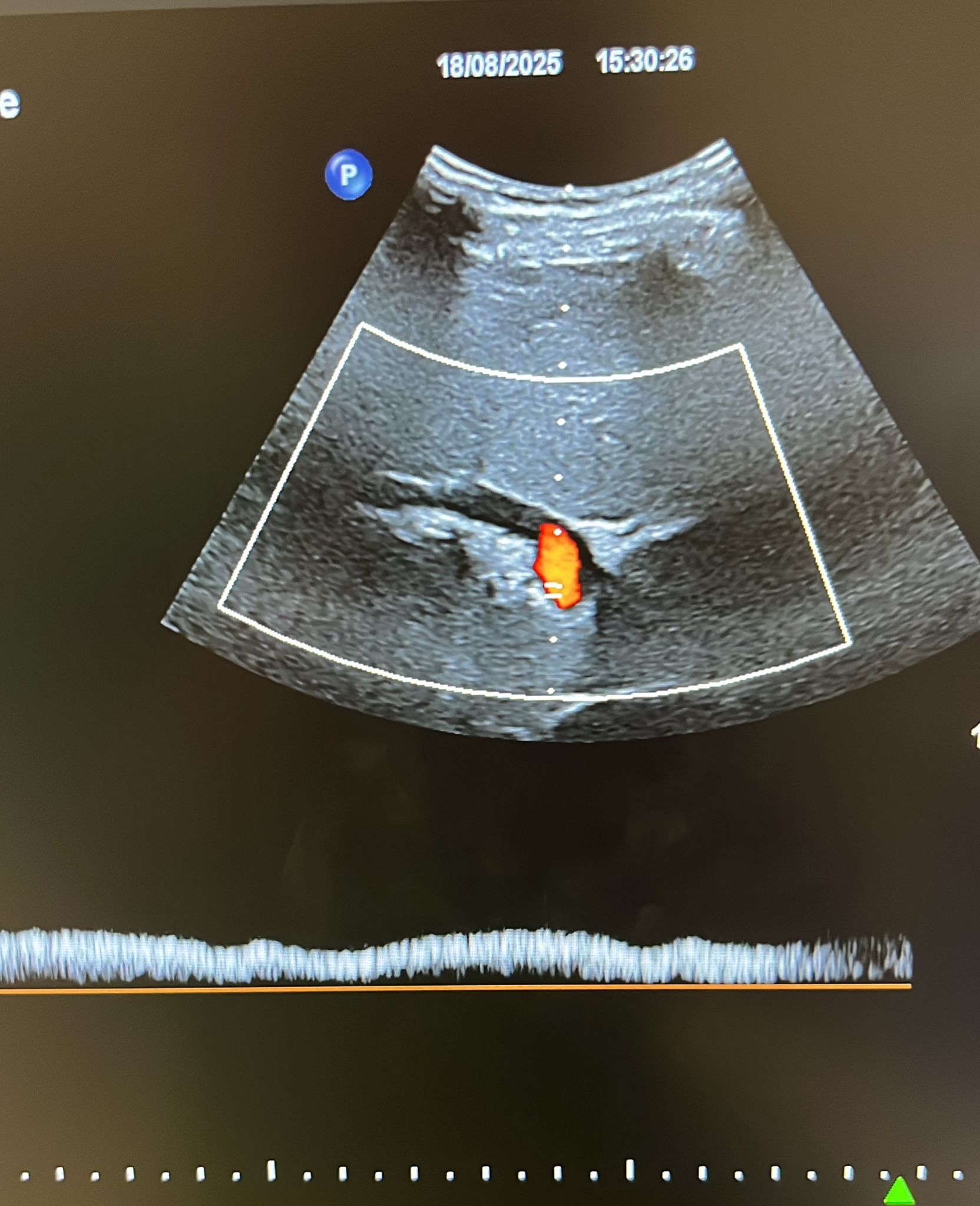
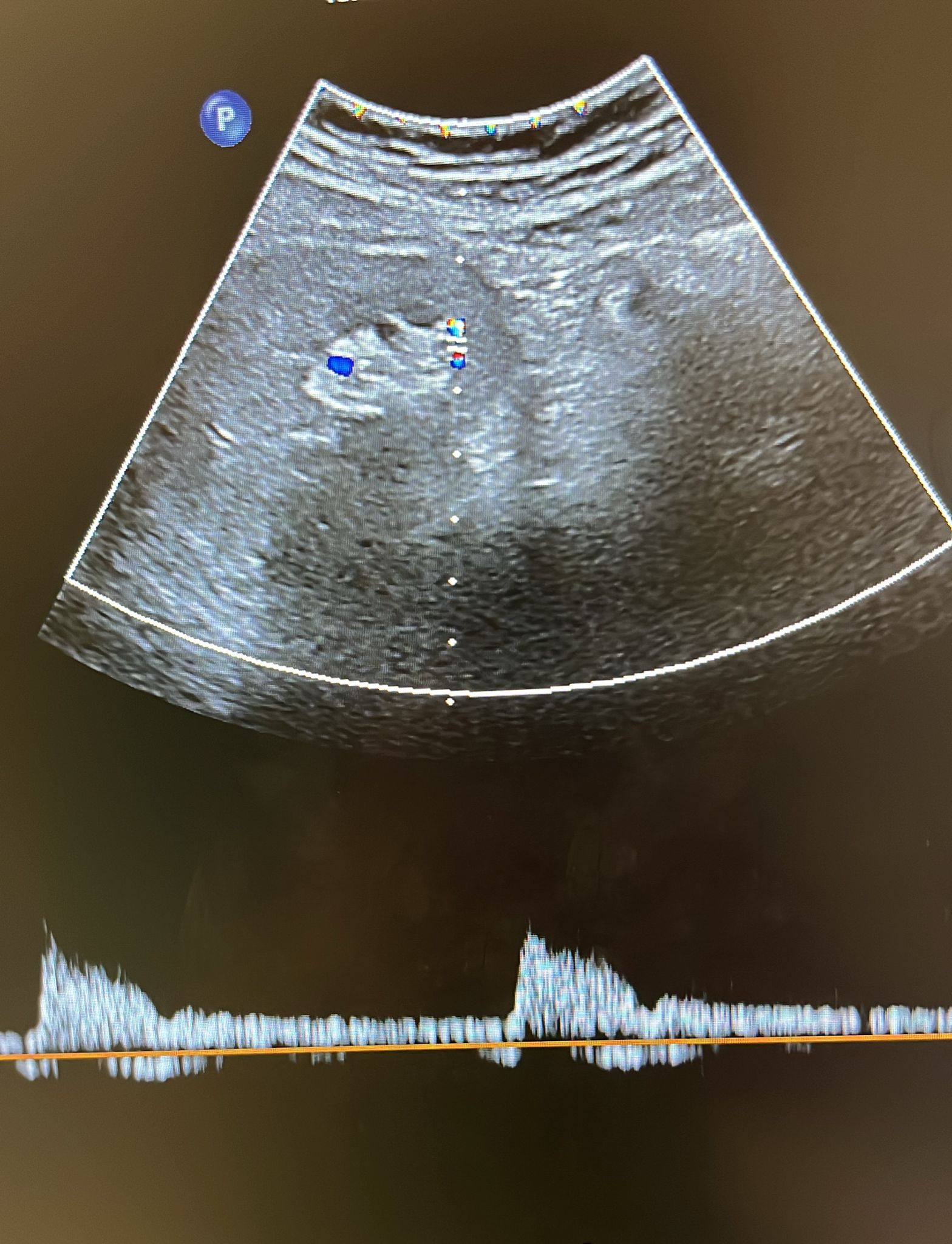
Background : In Fontan physiology, chronic systemic venous congestion is a key haemodynamic determinant and contributes to end-organ damage, particularly liver dysfunction. The Venous Excess Ultrasound Score (VEXUS) integrates inferior vena cava assessment with venous Doppler patterns (hepatic, portal and renal) to estimate venous congestion and may provide a bedside, cardiology-focused marker of venous load. Aim : To assess the relationship between venous congestion (VEXUS) and a marker of hepatic congestion/cholestasis (total bilirubin) in our Fontan patient cohort. Methods : Observational study of 8 Fontan patients (6 extracardiac, 2 intracardiac). Clinical, laboratory and ultrasound data were collected. The association between VEXUS score and total bilirubin was tested using Spearman correlation (ρ). Results : Median age was 30 years (IQR 22.5–36); 62.5% were female. Median oxygen saturation was 91.5% (IQR 87.0–94.3). Hepatosplenomegaly was present in 75% of cases. Median VEXUS was 1.5 (IQR 0–2) and median total bilirubin 2.05 mg/dL (IQR 1.28–3.03). VEXUS score correlated positively with total bilirubin (ρ=0.73; p=0.039), with higher VEXUS values associated with higher bilirubin levels, consistent with greater systemic venous congestion and increased hepatic venous pressure in Fontan circulation. Conclusions : In our cohort, VEXUS was associated with total bilirubin, suggesting that an ultrasound-based congestion index may capture the cardio-hepatic phenotype in Fontan patients and support integrated cardiology follow-up. The small sample size and observational design warrant confirmation in larger prospective cohorts with clinical endpoints and comparison with structural liver assessments (e.g., elastography)